


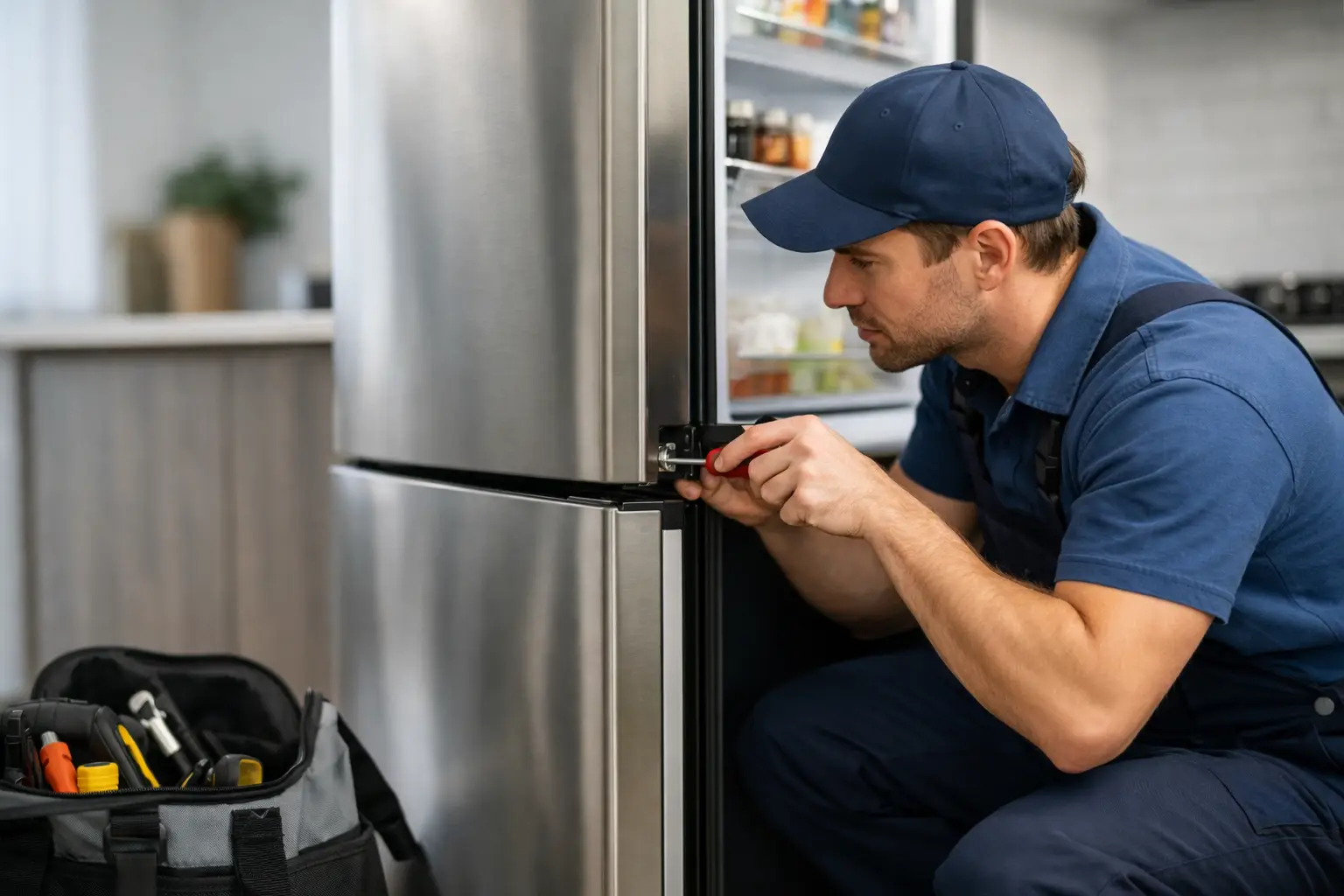
A fridge door that will not close right is not a small annoyance. It can leak cold air, raise energy use, spoil food faster, and put extra strain on the compressor. If you are searching for how to repair fridge door problems, the real question is usually which part has failed – the gasket, the hinges, the alignment, or the closing cam.
Some refrigerator door issues are minor and mechanical. Others point to wear that keeps getting worse until the door stops sealing altogether. The difference matters, because a quick adjustment may solve the problem today, while a worn hinge or damaged liner may require a proper replacement part to keep the repair from coming back.
How to repair fridge door issues starts with the symptom
Refrigerator doors do not all fail the same way. A door that pops back open has a different cause than one that drags, sags, or leaks air along one side. Before anyone reaches for tools, it helps to identify what the door is actually doing.
If the door feels heavy and drops when opened, the hinge may be loose or worn. If it closes but does not seal, the gasket may be dirty, torn, or pulled out of shape. If it swings shut too hard or not at all, the door cam or closer mechanism may be worn. And if the door looks square but still sits unevenly, the refrigerator itself may not be level.
That last point gets missed often. A fridge can develop a door problem even when nothing is broken, simply because the cabinet has shifted on the floor. Tile transitions, settling, and repeated loading of heavy items into door bins can all affect alignment over time.
The most common fridge door repairs
Most service calls for a refrigerator door come down to a handful of parts and adjustments. The repair depends on the age of the unit, the brand, and whether the door has been forcing itself out of position for a while.
Loose or worn hinges
The top and bottom hinges carry the full weight of the door. When screws loosen or hinge parts wear down, the door may sag and rub against the frame. You might notice a wider gap at the top, difficulty opening the crisper drawers, or a door that no longer lines up with the freezer section.
In some cases, tightening the hinge screws restores proper alignment. In others, the hinge itself is worn and needs replacement. If the metal is bent or the mounting area is stripped, tightening alone will not last.
Damaged door gasket
The gasket is the flexible seal around the edge of the door. If it is cracked, stiff, torn, or warped, cold air escapes. That leads to moisture, temperature swings, and a compressor that works harder than it should.
A dirty gasket can also mimic a failed one. Grease, crumbs, and sticky residue prevent a full seal, especially around the corners. If the gasket has simply lost shape, careful warming and reshaping may help temporarily. But once the material becomes brittle or split, replacement is the more dependable fix.
Worn door cam or closing mechanism
Many refrigerator doors use a cam system that helps the door lift slightly as it opens and settle closed when released. When that piece wears down, the door may drift open or close unevenly. This is common on older refrigerators and on units with heavier door storage.
The repair is usually straightforward for an experienced technician, but the exact part varies by brand and model. Installing the wrong cam can create alignment problems that were not there before.
Cabinet leveling problems
If the refrigerator is not level, the door may not swing or seal correctly. A slight rear tilt is often intentional because it helps the door close by gravity. If the front sits too low, the door may hang open unless pushed shut.
This is one of the simpler fixes, but it still requires care. Over-adjusting the front feet can affect door height, cabinet stability, and even how the unit sits against the floor.
When a fridge door problem is safe to check yourself
There are a few basic checks a homeowner can make without getting deep into a repair. These are less about DIY replacement and more about narrowing down what is wrong.
Start by looking at the gasket all the way around the door. If you see food buildup, wipe it clean and check whether the seal sits flat afterward. Then look at the top line of the door. If one side appears lower than the other, hinge wear or loose mounting hardware is likely involved. Open the door slightly and lift gently. If there is excess play, that usually points to hinge or cam wear.
Also check whether overloaded door bins are pulling the door out of alignment. Gallon jugs, large condiments, and packed shelves add a surprising amount of weight. Sometimes the problem improves once excess weight is removed, but if sagging has already started, the underlying hardware may still need repair.
What you should not do is force the door, overtighten visible screws without checking alignment, or use heat aggressively on the gasket. Those shortcuts can crack plastic trim, strip threads, or warp the seal further.
How to repair fridge door sealing problems the right way
A poor seal is one of the most expensive door problems to ignore. Even a small air leak can create frost buildup, condensation, uneven cooling, and food safety issues.
The first step is confirming whether the gasket is actually the cause. A door can leak because the gasket is bad, but it can also leak because the door is sagging and the gasket cannot make proper contact. Replacing the seal without correcting the alignment often wastes time and money.
Once the cause is clear, the repair needs to match the model. Some gaskets press into a channel. Others are secured under an inner liner or mounted with screws. Some can be replaced by themselves, while others are part of a larger door assembly depending on the refrigerator design.
This is where experience matters. On many major brands, door repair looks simple from the outside but involves exact part matching, careful adjustment, and checking the final seal from multiple angles. A good repair is not just getting the door back on – it is making sure the unit closes evenly, seals fully, and does not return to the same problem a month later.
Signs the problem is bigger than the door
Sometimes the door is only the visible symptom. If you notice heavy condensation, interior frost, warm spots, or a motor running constantly, the refrigerator may already be dealing with performance stress caused by the bad seal. A damaged mullion, warped door liner, broken shelf support, or cabinet issue can also be involved.
Built-in and counter-depth models add another layer of complexity because the door swing and spacing are tighter. French door refrigerators can have center mullion issues or uneven door height. Side-by-side units may have dispenser wiring routed through the hinge area, which makes disassembly more delicate.
At that point, the smart move is usually service rather than trial and error. A technician can tell whether the repair is limited to the door hardware or whether other cooling-related problems need attention too.
Repair or replace the fridge door parts?
It depends on the age of the refrigerator and what has failed. A hinge, cam, or gasket repair is often worthwhile if the refrigerator is otherwise cooling properly. Those are common wear items and usually cost far less than replacing the appliance.
If the inner door liner is cracked, the mounting area is broken, or the full door assembly is damaged, the math changes. Some parts are expensive or hard to source on older models. In those cases, a proper diagnosis helps avoid spending money on a partial fix that does not hold up.
For homeowners, the goal is usually simple: stop the air leak, protect the food, and avoid unnecessary downtime. That is why accurate diagnosis matters more than guessing which part to order first.
Why professional fridge door repair is often faster
Refrigerator door repairs sound basic, but the actual job can involve leveling, disassembly, alignment, part verification, and testing the seal under normal load. The repair also has to account for brand-specific hardware and the weight of the door itself.
A rushed fix may get the door closing for the moment, but if the hinge is still worn or the gasket is not seated correctly, the problem comes back. Professional service is usually faster because the technician can identify the failed part, install the correct replacement, and verify that the refrigerator is sealing and operating as it should.
For busy households, that speed matters. A refrigerator that stays partly open overnight can turn a small repair into a larger food loss problem by morning.
If your refrigerator door is sagging, not sealing, or keeps popping open, professional service can save time and prevent further damage. Homeowners in Irvine and across Orange County can check our Google Business Profile to contact a local appliance repair team for prompt, dependable help.