


Dinner was prepped, the control panel lit up, and the oven said it was preheating. Forty minutes later, the food was still half raw. This oven heating issue case study is a good example of why a temperature problem is not always the part homeowners expect – and why the right diagnosis matters more than a fast guess.
The service call came from a homeowner dealing with an electric wall oven that had become unpredictable over the course of two weeks. Some meals took much longer than normal. Baking was inconsistent. On one night, the broiler worked, but the bake cycle barely produced heat. On another, the oven reached temperature eventually, then dropped off hard enough that a casserole never finished properly.
That pattern is common in the field. When an oven still turns on, still lights up, and still gets somewhat warm, many people assume the issue must be the thermostat, the control board, or the temperature sensor. Sometimes that is true. Just as often, the failure is more basic – a heating element that has weakened enough to fail under load, or a relay problem that only shows up during certain cycles.
The oven heating issue case study at a glance
This unit was an electric built-in oven from a major brand, about eight years old, used heavily by a family that cooked at home most nights. The customer’s main complaint was simple: the oven took too long to heat and could not maintain a stable baking temperature.
At first glance, there was no dramatic failure. No sparks, no breaker trip, no error code, and no obvious burnt smell inside the kitchen. That matters because subtle oven failures often get misdiagnosed. A complete no-heat condition is usually more straightforward. Partial heat is where experience counts.
The homeowner had already done the reasonable checks. They confirmed the unit had power. They tried a reset. They tested multiple temperature settings. The problem stayed the same. At that point, more trial and error would not have saved time or money.
What the symptoms actually suggested
The oven preheated slowly and never seemed to cook evenly. The top of dishes browned, but the center stayed undercooked. That symptom pointed away from a total electrical supply issue and more toward a bake-side heating problem.
In most electric ovens, both the bake and broil elements can cycle during preheat, depending on the model. If the broil element still works but the bake element is weak or open, the oven may appear to heat at first. The display can even suggest normal operation while the cavity temperature lags far behind the set point.
There is a trade-off here. If you replace the bake element too quickly without testing, you can miss a failed relay, damaged wiring, or a sensor reading out of range. On the other hand, if you jump straight to the control board because the symptoms seem inconsistent, you can spend far more than necessary. The answer has to come from testing, not assumptions.
The diagnostic process
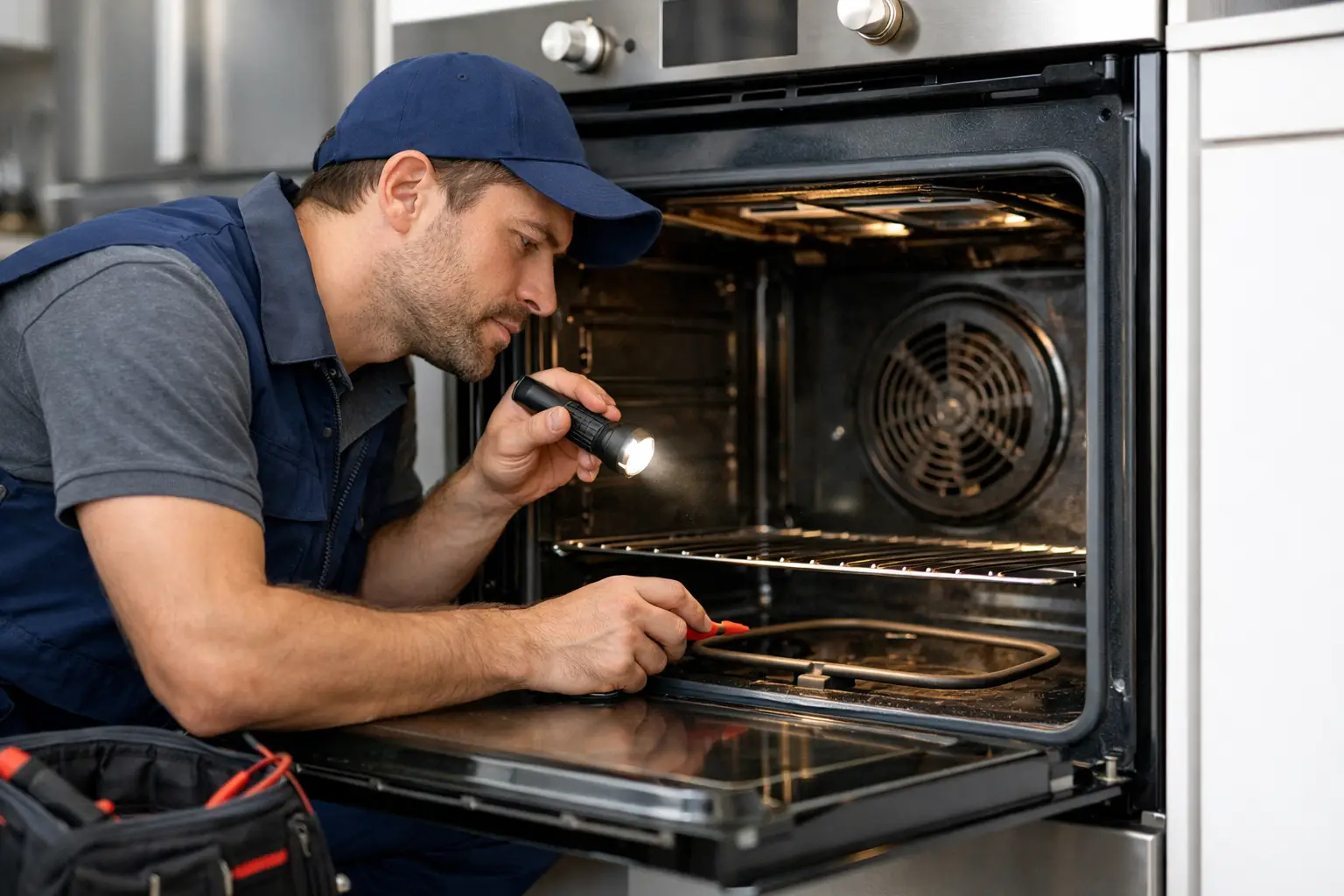
The technician started with the basic operating checks, then moved to component-level diagnosis. Power to the oven was verified at the terminal block. That step sounds simple, but it is essential. An electric oven can have partial voltage problems that create confusing heating complaints.
Next came visual inspection of the bake and broil elements. The broil element looked normal. The bake element showed a slight blistered section near the rear, but not a dramatic break. That is another reason oven heating problems get missed. Elements do not always split in an obvious way. They can fail internally and still look mostly intact.
Resistance testing confirmed the issue. The bake element was reading outside the expected range and showed signs of intermittent failure when energized. Wiring to the element was also checked for heat damage, and the harness connection was intact. The temperature sensor tested within an acceptable range, which helped rule out one of the more commonly blamed parts.
The control board was then evaluated based on output during a bake call. It was sending proper power. That narrowed the failure down cleanly. The oven was not underheating because the board failed to command heat. It was underheating because the bake element could no longer produce consistent heat under normal operation.
Why this repair was not obvious to the homeowner
From the customer’s perspective, the oven was still heating. It just was not heating well. That makes people think the element cannot be the problem because a failed element should mean no heat at all. In practice, weak or intermittent element failure is very real.
The display can also be misleading. Many ovens estimate preheat progress based on sensor feedback and programmed logic. If one heat source is underperforming, the oven may still beep as if it is ready. The food is usually the first thing that tells the truth.
This is one reason a case like this matters. If a homeowner replaces a sensor first, then a thermostat, then maybe even the board, they can spend more than the actual repair would have cost from the start. Accurate diagnosis protects both time and budget.
The actual fix
Once testing confirmed the failed bake element, the repair itself was straightforward. The technician replaced the defective element with the correct manufacturer-approved part and rechecked the terminal connections. Because heating components operate under repeated thermal stress, it is not enough to swap the part and leave. The surrounding wiring and connector condition should always be verified.
After installation, the oven was tested through a full preheat cycle and a temperature hold period. The cavity reached target temperature in normal time and maintained a stable range during operation. Bake performance returned to normal, and heat distribution improved right away.
This was a one-part solution, but it only became a one-part solution because the diagnosis was done properly. That distinction matters. Appliance repair is not just about changing what looks worn. It is about confirming what actually failed.
What this oven heating issue case study shows
The biggest takeaway from this oven heating issue case study is that symptom overlap can lead to wrong assumptions. Slow preheat, uneven baking, and unstable cooking temperatures can point to several parts. The right repair depends on how the unit tests, not how the problem sounds over the phone.
It also shows why partial failures deserve attention early. When an oven can still heat a little, some households keep using it for weeks. That usually leads to wasted groceries, inconsistent meals, and added frustration. In some cases, failing components can also put extra stress on related parts.
There is also a practical cost angle. A heating element repair is usually far more manageable than a control board replacement. Catching the true cause before other parts are replaced helps keep the repair focused.
When an oven heating problem is likely more than normal wear
A single long preheat on a cold day is not always a repair issue. Repeated undercooking, extended bake times, and wide temperature swings usually are. If the oven says 350 but food behaves like it is cooking at 275, that gap should be checked.
Certain patterns are especially telling. If broiling still works but baking does not, the bake circuit becomes a strong suspect. If both functions are weak, supply voltage or control issues move higher on the list. If the temperature is off by a small but consistent amount, calibration or sensor problems may be involved. It depends on the exact symptom pattern.
For most households, the practical question is not how to test every component themselves. It is how fast the problem can be identified and corrected without repeat visits or unnecessary part changes.
Why service quality matters on oven repairs
Oven repairs are often treated as less urgent than refrigerator failures, but for many families they disrupt daily routines just as quickly. If you cook at home regularly, a bad oven changes meal planning, grocery use, and time management right away.
That is why proper appliance service should combine speed with methodical testing. Quick appointments matter, but so does having trained technicians, the right diagnostic process, and access to genuine replacement parts. A rushed guess can turn a manageable repair into multiple service calls.
For homeowners in Irvine and across Orange County, reliable oven repair starts with getting the diagnosis right the first time. If your oven is heating slowly, cooking unevenly, or failing to maintain temperature, professional service can save time and prevent unnecessary part replacement. You can learn more about local service updates and customer feedback through our Google Business Profile.