


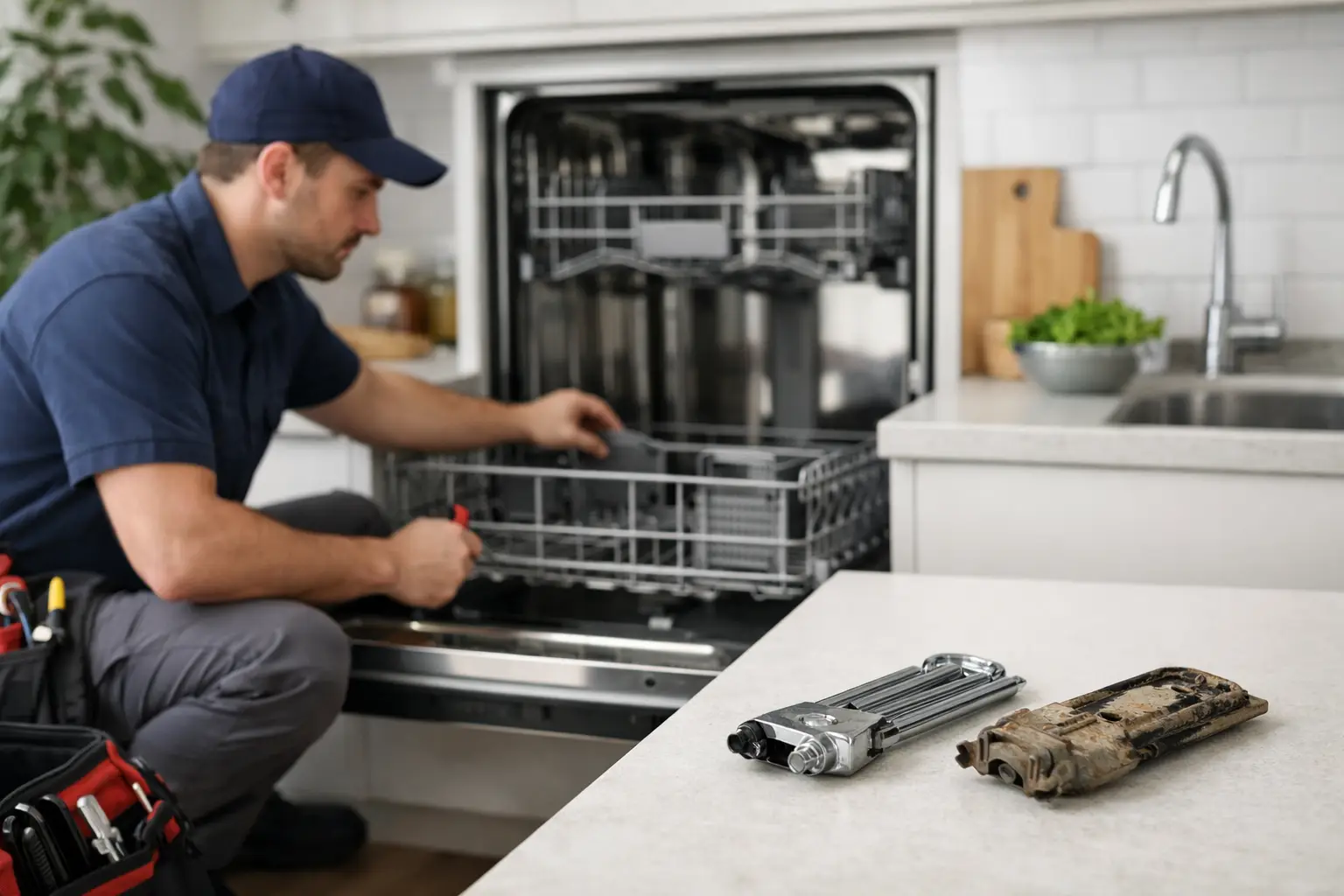
When your dishwasher stops cleaning, starts leaking, or leaves standing water at the bottom, the question usually comes fast – should you repair or replace dishwasher problems, or stop putting money into a machine that is already on its way out? For most homeowners, the right answer depends on three things: age, repair cost, and how well the unit has been performing before the breakdown.
A dishwasher is not a luxury appliance for most busy households. When it goes down, dishes pile up, routines slow down, and a small problem can turn into water damage if it is ignored. That is why the best decision is rarely based on one symptom alone. It comes from looking at the full picture.
How to decide whether to repair or replace dishwasher issues
The first thing to consider is the dishwasher’s age. Most standard dishwashers last around 8 to 12 years, depending on brand, usage, water quality, and maintenance. If your unit is only a few years old, repair usually makes more sense, especially if the problem is tied to a replaceable part like a drain pump, inlet valve, latch, or heating element.
If the dishwasher is closer to the 10-year mark, the decision gets less straightforward. A single repair may still be worth it, but repeated service calls, declining wash performance, and visible wear often point toward replacement being the better long-term value.
Repair cost matters just as much as age. A common rule is this: if the repair cost approaches half the price of a comparable new dishwasher, replacement deserves serious consideration. That does not mean every expensive repair should be avoided. A premium built-in unit may justify a higher repair bill than a basic model because replacement cost is also higher. But if you are facing a major motor, control board, or circulation system issue on an older machine, replacement is often the more practical path.
Signs repair is usually the smarter choice
Some dishwasher problems look worse than they are. A unit that will not drain, will not start, or is not drying properly may still be a good candidate for repair if the core system is in decent condition.
A repair often makes sense when the dishwasher is under 8 years old and has otherwise worked well. It also makes sense when the issue is isolated rather than part of a pattern. For example, a worn door gasket causing a leak is very different from a dishwasher that leaks, runs loudly, leaves residue, and struggles to complete cycles.
Parts availability also matters. If genuine replacement parts are readily available and the repair can be completed efficiently, keeping the existing machine can save money and avoid the hassle of measuring, ordering, and installing a new unit.
Homeowners also sometimes assume poor cleaning means the dishwasher is finished, when the real issue is a failing spray arm, blocked filter, bad wash motor, or heating problem. These are repairable in many cases. A professional diagnosis helps separate a manageable repair from a machine that is truly reaching the end.
Common repairable dishwasher problems
A dishwasher is often worth repairing when the problem involves a failed pump, clogged drain path, faulty float switch, broken latch, worn seal, or defective water inlet valve. These issues can interrupt normal operation, but they do not always mean the entire appliance is worn out.
The key is whether the dishwasher has one clear failure or several signs of decline at once. One repair on an otherwise reliable machine is usually a reasonable investment.
Signs it may be time to replace your dishwasher
Replacement becomes more likely when problems are stacking up. If your dishwasher is over 10 years old, rust is forming inside the tub or on the racks, cycles are becoming inconsistent, and repair costs are rising, continuing to fix it can become more expensive than moving on.
Persistent leaks are another red flag, especially if the source is tied to structural wear rather than a simple seal. Water under or around a dishwasher can damage flooring, cabinets, and subflooring. In that situation, delaying the right decision can cost more than the appliance itself.
Noise is also worth paying attention to. Dishwashers do make some sound, but grinding, buzzing, or harsh mechanical noise can point to pump or motor wear. If an older unit is getting louder and cleaning worse at the same time, replacement is often the more dependable option.
Energy and water efficiency can also influence the decision. Newer dishwashers generally use less water and run more quietly than older models. For a household that runs multiple loads each week, that improvement may matter. Still, efficiency alone is not usually enough reason to replace a dishwasher that can be repaired affordably and has years of service left.
The cost question: repair now or pay more later?
This is where many homeowners get stuck. A repair bill can feel frustrating, especially if the dishwasher failed without warning. But replacement comes with its own costs beyond the appliance price. Installation, haul-away, possible plumbing or electrical adjustments, and the wait for delivery all add up.
That is why a lower-cost repair on a mid-life dishwasher is often the better financial choice. It gets the kitchen back to normal faster and avoids unnecessary replacement expenses.
On the other hand, sinking money into an aging dishwasher with multiple worn components rarely saves money for long. If one major part fails now and another fails six months later, the total cost can easily exceed what a replacement would have been from the start.
A professional assessment should not just identify the broken part. It should also tell you whether the appliance still has solid service life left. That is the difference between making a temporary fix and making a smart repair decision.
When a professional diagnosis matters most
If your dishwasher is tripping breakers, leaking from underneath, not filling, or stopping mid-cycle, guessing can get expensive fast. Symptoms that seem simple are sometimes caused by a different component than expected. Replacing the wrong part wastes time and money and leaves the real problem unresolved.
A trained technician can check the electrical system, pump function, drain path, inlet valve, control response, and seals to determine what failed and whether the unit is worth saving. That diagnosis is especially valuable if the dishwasher is in the gray area – not new, not clearly dead, but no longer dependable.
For busy households, speed matters too. A fast diagnosis lets you decide with confidence instead of spending days comparing models when a practical repair was still on the table.
Repair or replace dishwasher decisions depend on the full picture
There is no one-size-fits-all rule. If your dishwasher is relatively new, has been reliable, and needs one targeted repair, fixing it is usually the right move. If it is older, underperforming, and showing multiple signs of wear, replacement may be the more cost-effective and less stressful option.
The best decision comes from balancing repair cost, appliance age, overall condition, and the risk of future breakdowns. That is especially true when the dishwasher is used heavily and downtime affects the whole household.
For homeowners in Irvine and across Orange County, a quick diagnosis can make that choice much clearer. Prostar Appliance Service provides professional dishwasher troubleshooting and repair with trained technicians, stocked genuine parts, and warranty-backed service designed to reduce repeat visits. If your dishwasher is acting up and you need a dependable local opinion, you can learn more through our Google Business Profile.