


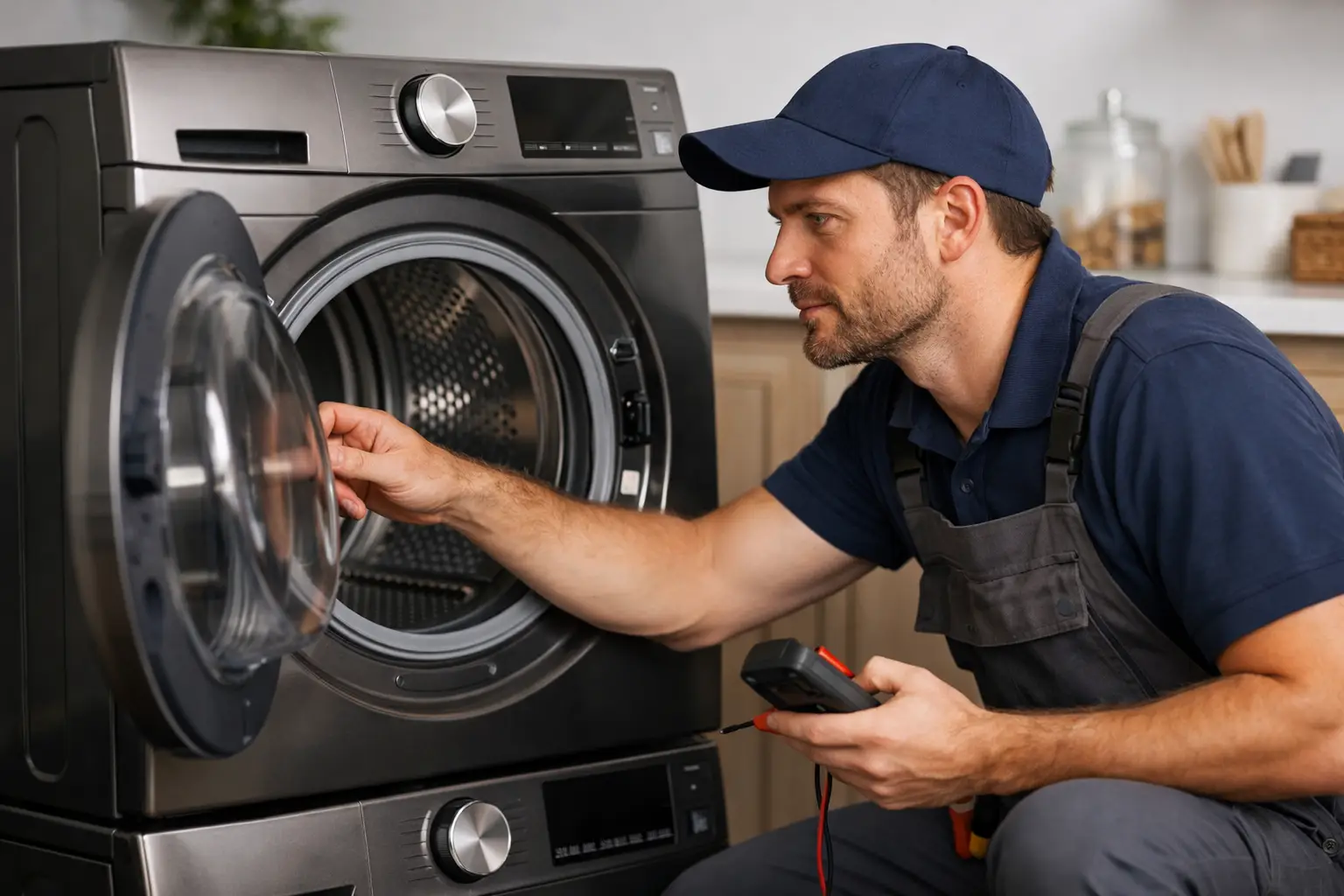
A dryer that runs but never gets hot usually turns a simple laundry day into a pileup. If you are dealing with a Samsung dryer not heating in Lake Forest, the problem is rarely just an inconvenience – it often points to a failed heating component, airflow restriction, power issue, or sensor problem that needs proper diagnosis.
For most homeowners, the main question is not how a dryer works. It is how quickly the issue can be identified, how serious it is, and whether it makes sense to repair it now or risk a larger breakdown later. With Samsung dryers, the answer depends on the model, whether it is gas or electric, and what the dryer is doing besides failing to heat.
What a Samsung dryer not heating in Lake Forest usually means
When a Samsung dryer tumbles normally but clothes stay damp, the heating system is not doing its job. On electric models, that often means a failed heating element, a blown thermal fuse, a bad thermostat, or a power supply problem where the dryer is only receiving part of the required voltage. On gas models, the issue may involve the igniter, gas valve coils, flame sensor, or another burner-related part.
The tricky part is that different failures can create nearly identical symptoms. A dryer may still power on, light up, and spin as if nothing is wrong. That is why guessing based on one symptom often leads to wasted time and unnecessary parts.
In homes with frequent laundry use, especially larger households, a heating issue can also show up after the machine has been under strain for a while. Restricted venting, heavy lint buildup, and repeated overheating can cause safety parts to fail. In that case, replacing one part without addressing airflow may only solve the problem temporarily.
Common causes behind no-heat Samsung dryer problems
A blocked vent is one of the most common reasons a dryer stops heating properly or overheats and trips a safety device. Poor airflow traps heat inside the unit, stresses internal components, and can eventually blow a thermal fuse. Sometimes the dryer still produces a little warmth, but drying times get longer and longer before heat stops altogether.
Electric Samsung dryers can also lose heat because of a power issue that is not obvious at first glance. The control panel may work and the drum may turn, yet the dryer may not receive the full 240 volts needed for the heating element. That can happen because of a tripped breaker, a weak connection, or an outlet problem.
On the component side, the heating element itself is a frequent failure point. Over time, the element can break or short out. Thermostats, thermistors, and thermal cutoffs can fail as well, especially if the dryer has been running hot due to airflow restrictions. On gas Samsung models, burner ignition parts wear out and prevent proper heat even though the dryer appears to be operating normally.
Control board issues are less common, but they do happen. If the board is not sending power correctly to the heating circuit, the machine may act inconsistently. One cycle may seem almost normal, while the next produces no heat at all.
Signs the problem is more than normal wear
Some dryer problems build slowly. Others point to a more urgent service need. If your dryer starts a cycle but shuts off early, gives a burning smell, runs unusually hot on the cabinet, or leaves clothes hotter than normal without actually drying them, those are signs the machine may be overheating or cycling incorrectly.
Another concern is repeated damp loads even after longer run times. That usually means the machine is working harder than it should, which can add wear to other parts and raise your energy use. If you have already cleaned the lint screen and the issue continues, the cause is likely deeper than routine maintenance.
Error codes can help, but they do not always tell the full story. Samsung dryers may display codes related to heating, venting, or temperature sensing, but a code points to a system area, not always a single failed part. Proper testing is still the best way to avoid replacing parts that are not actually bad.
Why professional diagnosis matters
A no-heat dryer issue sounds simple, but the repair process is not always straightforward. Multiple parts affect temperature, safety shutoffs, and cycle performance. A trained technician can test continuity, voltage, resistance, and airflow to isolate the actual cause instead of treating the symptom.
That matters because Samsung dryers are designed with model-specific parts and control systems. Installing the wrong part or overlooking a venting issue can turn a one-visit repair into a repeated service call. In many cases, homeowners spend more trying to self-diagnose than they would have by getting an accurate service call from the start.
There is also a safety side to consider. Dryers combine heat, electricity, moving parts, and in some homes gas connections. If the machine has been overheating or shutting down unpredictably, continuing to run it is not a good bet.
When repair is usually the right choice
If the dryer is otherwise in solid condition and the problem is isolated to the heating system, repair is often the better value. Heating elements, thermal fuses, igniters, thermostats, and similar parts are common service items. Replacing a failed component is usually far more practical than replacing the entire machine, especially if the dryer is not very old.
The calculation changes if the dryer has multiple issues at once, such as no heat, loud operation, control failures, and repeated shutdowns. Age matters too. A newer Samsung dryer with a clear no-heat fault is typically worth repairing. An older unit with several worn systems may call for a closer cost comparison.
For most families, speed matters just as much as price. A dryer that is out of service affects the whole household, especially when school clothes, work clothes, towels, and bedding start stacking up. Fast diagnosis and access to genuine parts can make the difference between a short disruption and a week of inconvenience.
What to expect from service for a Samsung dryer not heating in Lake Forest
A proper service visit should start with diagnosis, not assumptions. The technician should verify power supply, inspect airflow, test heating components, and check for model-specific Samsung issues before recommending repair. That approach protects you from paying for parts that do not solve the problem.
It also helps to work with a local appliance repair company that handles major brands regularly and stocks common parts. That improves the chances of completing the repair in as few trips as possible. When a company is licensed, insured, and backs its work with a labor and parts warranty, you get more confidence that the fix is meant to last.
For homeowners in Orange County, that local responsiveness matters. A dryer problem does not need a long explanation – you need a technician who understands the urgency, arrives prepared, and gives a clear answer on what failed and what it will take to restore heat.
How to avoid repeat dryer heating problems
Most repeat no-heat calls come back to airflow. Even a correctly repaired dryer can run into trouble again if the vent line stays restricted. Keeping the lint filter clean after every load helps, but it is not the whole job. The exhaust path behind the dryer and through the home needs to move air freely.
Load habits matter too. Consistently overloading the dryer puts extra strain on the heating system and lengthens dry times. That does not always cause immediate failure, but it can speed up wear on temperature-related parts.
The practical takeaway is simple. If heat has stopped once, it is worth making sure the full system is checked, not just the failed part. That reduces the chance of another service call for the same symptom a few weeks later.
If your Samsung dryer is not heating and you need dependable local service, Prostar Appliance Service helps homeowners with fast diagnosis, professional repair, and warranty-backed workmanship. You can see local business details and contact information on our Google Business Profile.