


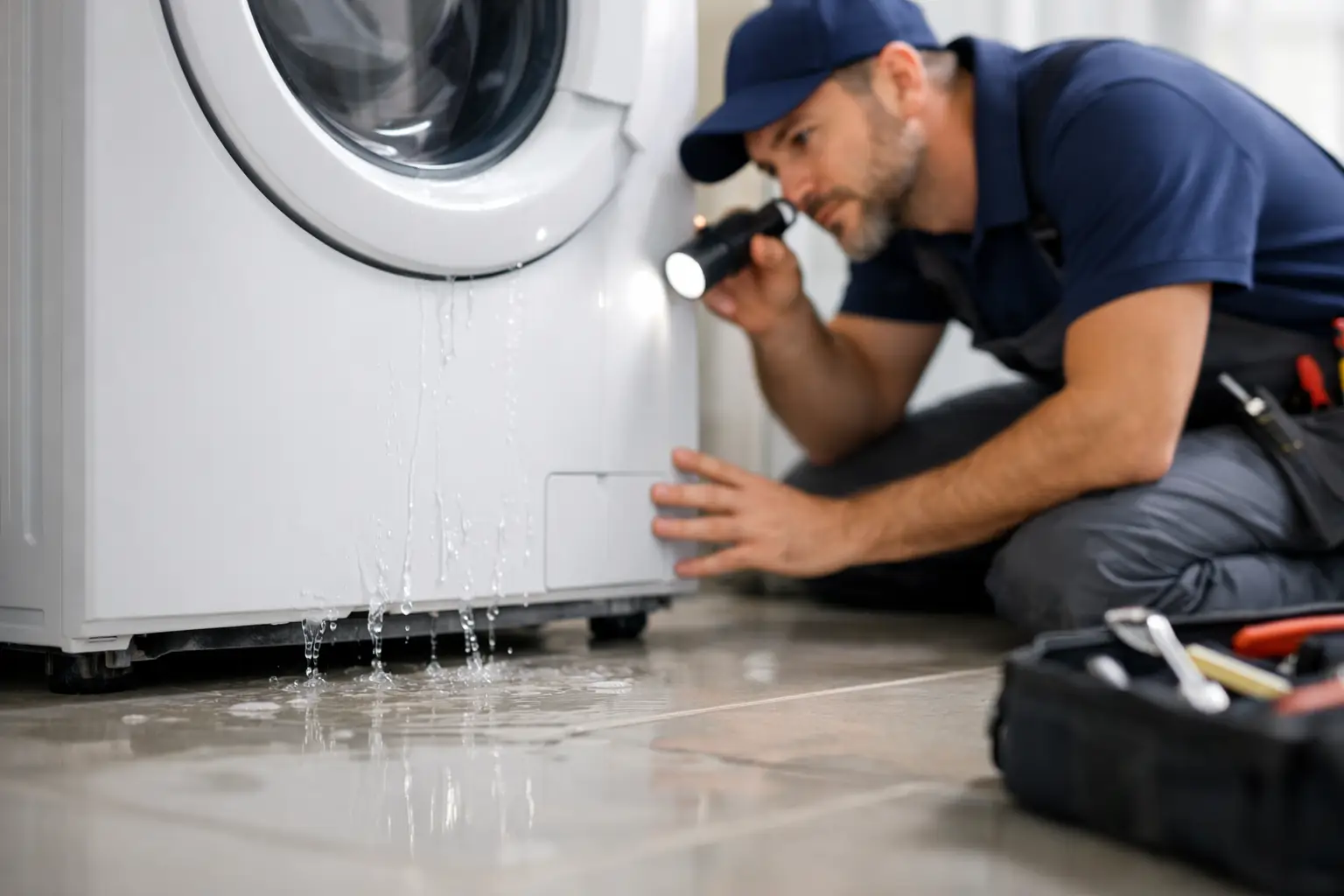
A puddle under the washer usually shows up at the worst possible time – right before work, in the middle of a full laundry day, or after a cycle you assumed had finished normally. If you are asking why is washer leaking water, the answer depends on where the water is coming from, when the leak starts, and whether the machine is leaking clean water or wash water.
In most homes, a leaking washer is not one single problem. It can point to a cracked hose, a worn door boot, a loose drain connection, an overloaded tub, or an internal part that is starting to fail. Some causes are simple and visible. Others only appear during fill, agitation, drain, or spin, which is why accurate diagnosis matters.
Why is washer leaking water from the front, back, or underneath?
The location of the leak is often the fastest clue. Water at the back of the machine usually points to the supply hoses or the drain hose. Water collecting at the front is more common with front-load models and may involve the door seal, detergent oversudsing, or a dispenser issue. Water appearing underneath the washer can be harder to track because it may come from the tub-to-pump hose, drain pump, internal seals, or a crack in a component that only leaks while the machine is running.
Timing matters too. If the leak starts as soon as the washer begins filling, the issue may be tied to inlet hoses, the water valve, or the dispenser. If it happens during draining or spin, the drain pump or drain path is more suspect. If the machine leaks only after the cycle ends, leftover water may be escaping slowly from a damaged hose or a compromised seal.
The most common reasons a washer leaks
A washer leak usually comes down to a few high-probability problems. The challenge is that several of them can look the same from the outside.
Loose or damaged water supply hoses
The hot and cold inlet hoses are one of the first things a technician checks. Over time, connections can loosen, rubber washers can wear out, and braided or rubber hoses can crack. Even a small drip at the connection can run down the back panel and pool under the washer, making it look like the machine itself is leaking.
If the leak is strongest during the fill portion of the cycle, supply hoses are high on the list. In some cases, tightening the connection is enough. In others, the hose or internal washer needs replacement. A hose that is swollen, brittle, or visibly kinked should not be ignored, especially if the washer is used frequently.
Clogged, loose, or poorly seated drain hose
The drain hose carries used water out of the washer. If it is cracked, partially dislodged, or pushed too far into the standpipe, water can end up on the floor during drain and spin. A partial clog can also force water back in the wrong direction or cause splashing at the drain opening.
This is one of those problems where the leak may seem minor at first, then become much worse on larger loads. The washer is moving a high volume of water quickly during drain, so even a small installation issue can create a noticeable mess.
Worn door boot or door seal on front-load washers
Front-load washers commonly leak from the door area when the rubber boot becomes torn, warped, or coated with debris. Small items like hairpins, pet hair, fabric threads, and detergent residue can prevent a proper seal. If the gasket is ripped, water may escape during tumble or spin and run down the front of the machine.
Sometimes the problem is visible right away. Other times, the tear is hidden in a fold of the rubber and only opens under movement. If water is coming from the lower front of a front-load washer, the door boot is a strong possibility.
Too much detergent or the wrong detergent
This cause is more common than many homeowners expect. High-efficiency washers are designed for HE detergent and measured amounts. If standard detergent is used, or if too much soap is added, excess suds can push water out through the door, venting system, or dispenser.
When oversudsing is the issue, the leak may be intermittent. One load leaks, the next does not. That usually depends on load size, detergent amount, fabric type, and rinse behavior. The fix may be simple, but it is worth ruling out mechanical problems too, especially if the machine has leaked more than once.
Cracked dispenser drawer or dispenser housing
If water appears near the front left or right corner during fill, the detergent dispenser area may be the source. A cracked dispenser, buildup inside the drawer, or a misdirected spray from the inlet system can cause water to spill forward instead of flowing into the tub.
Hard water residue and detergent buildup can gradually redirect water. This is one reason a leak may start slowly and get worse over time rather than appearing all at once.
Drain pump or internal hose failure
When a washer leaks from underneath, an internal hose or the drain pump often needs inspection. Pumps can crack, seals can wear, and hose clamps can loosen with age and vibration. These leaks are not always visible without opening the cabinet, and they often happen only during the drain phase.
This is where guesswork tends to waste time. Replacing the wrong external hose will not solve an internal pump leak, and continued use can lead to water damage in the laundry area.
Tub seal or bearing-related leaks
A tub seal leak is a more serious issue. Water can escape around the drive shaft area and move underneath the washer, sometimes along with noise during spin. Depending on the washer model, this repair may be extensive because major components must be disassembled to reach the failed seal.
This is a good example of why the answer to why is washer leaking water is not always simple. Some leaks are inexpensive to correct. Others involve labor-intensive repairs where replacement of multiple related parts may be the better long-term decision.
Top-load vs. front-load washer leaks
Top-load and front-load washers do not leak in exactly the same ways. Top-load models are more likely to leak from fill hoses, drain components, tub overflow, or issues related to an unbalanced or overloaded load. Front-load models are more prone to door boot leaks, dispenser leaks, and problems caused by residue buildup around the seal.
That does not mean either design is more problem-prone across the board. It just changes where an experienced technician looks first. Brand, age, usage level, and maintenance history matter as much as washer style.
When a washer leak is a repair issue, not a cleanup issue
A small leak can seem easy to put off if the machine still runs. The problem is that washer leaks rarely stay small. Water can damage flooring, baseboards, drywall, and nearby cabinets. In some homes, repeated moisture also leads to mold or warped surfaces in the laundry area.
There is also the appliance side of the risk. If water reaches electrical components, motor areas, or control parts, one failure can turn into several. What began as a hose or gasket issue can become a much more expensive repair if the washer keeps running in that condition.
If the leak is recurring, worsening, or hard to trace, a professional diagnosis is the smart move. A trained technician can isolate whether the problem is external, internal, cycle-specific, or tied to installation. That helps avoid replacing parts that were never the real cause.
What to do before service arrives
If your washer is actively leaking, shut off the water supply if possible and stop using the machine until the source is identified. Dry the area around the unit, especially if water is moving toward outlets or walls. If it is safe to do so, note when the leak occurs – during fill, wash, drain, spin, or after the cycle ends. That detail can speed up diagnosis.
It also helps to check whether the leak is clean water or dirty water. Clean water often points to supply or fill-related issues. Dirty water tends to suggest drain or tub-related problems. That is not a firm rule, but it is useful information for service.
Why professional diagnosis saves time
Washer leaks are one of the more misleading appliance problems because water travels. The puddle on the floor is not always directly below the failed part. A leak from the back can run forward. A pump leak can appear on one side. A dispenser overflow can look like a door problem.
That is why experienced service matters. A proper diagnosis looks at hose condition, pump function, door seals, dispenser flow, water pressure, drain setup, and model-specific failure points. For busy households, the goal is not just to identify the leak. It is to fix it correctly and get laundry back to normal without repeat visits.
If your washer is leaking and you need dependable local service, Prostar Appliance Service helps homeowners across Irvine and Orange County diagnose and repair washer problems quickly. You can learn more about our reputation for responsive appliance repair on our Google Business Profile.