


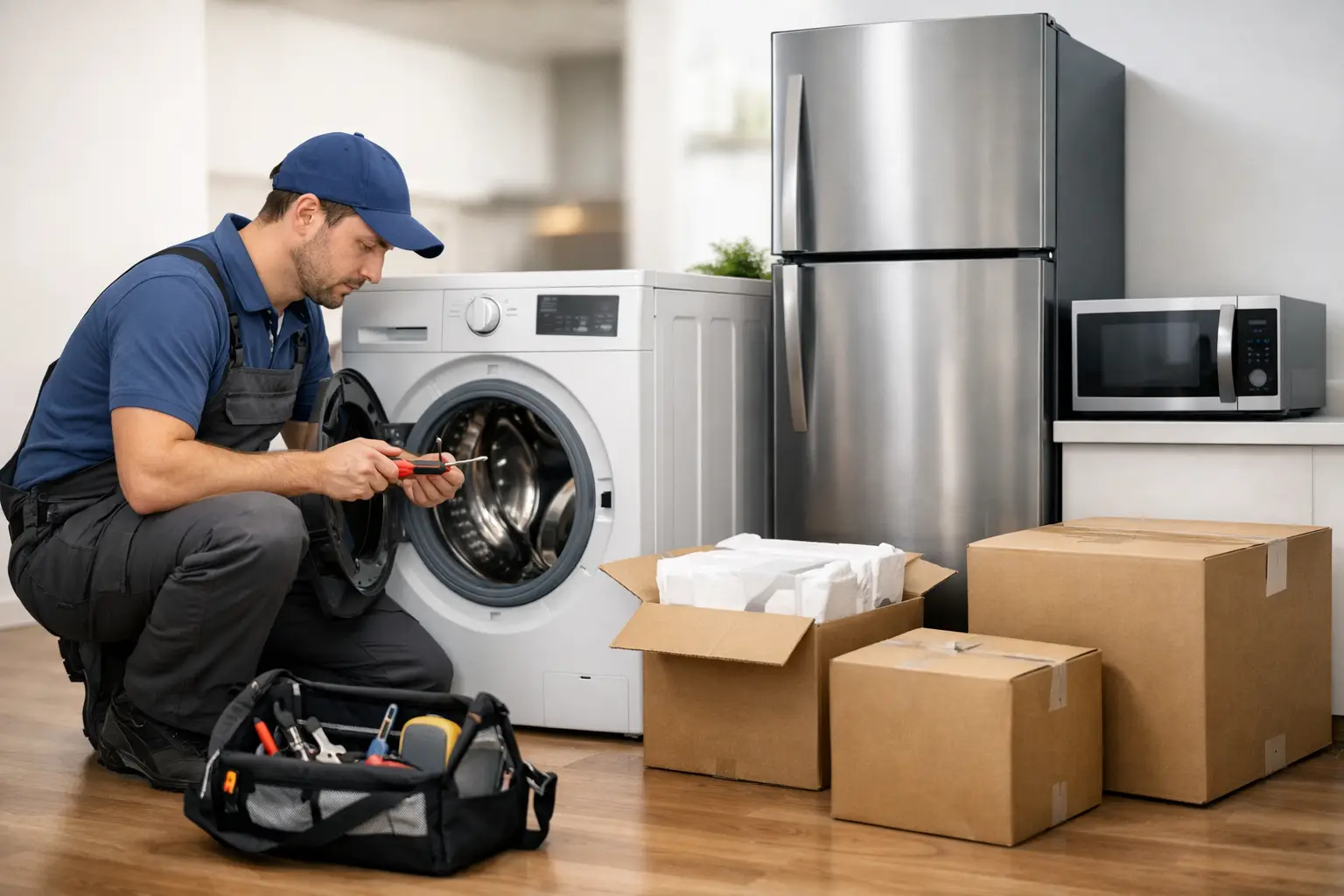
That moment usually happens at the worst time – the refrigerator is not cooling before a full week of groceries, the washer stops mid-cycle, or the oven quits right before dinner. When homeowners start weighing appliance repair versus replacement, the real question is not just cost. It is how fast you need the problem solved, how reliable the appliance will be after service, and whether putting more money into it still makes sense.
For most households, the best choice comes down to a few practical factors: the age of the unit, the type of failure, the cost of the repair, and how the appliance has been performing overall. A good diagnosis matters because two appliances with the same symptom can lead to very different decisions. One may need a straightforward part replacement. The other may be showing signs that the system as a whole is wearing out.
How to think about appliance repair versus replacement
A lot of homeowners have heard the old rule about replacing an appliance if the repair cost is more than half the price of a new one. That rule can be helpful, but it is not always enough on its own. A built-in refrigerator, premium range, or higher-end washer may still be worth repairing even when the number looks high at first glance. On the other hand, a lower-cost appliance with repeated failures may not be worth another service call.
The better way to look at it is this: will the repair restore dependable use at a reasonable cost, or are you likely to face another breakdown soon? If a technician can replace a failed igniter, drain pump, heating element, or control component and the rest of the machine is still in solid condition, repair is often the smarter move. If the appliance has multiple problems, major wear, or declining performance over time, replacement may save more money and stress in the long run.
When repair usually makes sense
Repair is often the right choice when the appliance is still within a reasonable service life and the failure is limited to one main component. This is especially true for appliances that have worked well up to this point and have not needed repeated service.
A refrigerator that needs a fan motor, a dishwasher with a bad pump, or a dryer that needs a heating element can often be repaired without turning the job into a major investment. In many cases, the right part and a proper diagnosis can get the appliance back to normal operation quickly. That matters when the appliance is essential to the daily routine and waiting on a full replacement would create more disruption.
Repair also makes sense when the appliance is a better-quality model. Well-built units from major brands are often worth fixing because the overall construction and expected remaining life can justify the repair cost. If the machine is only a few years old, replacing it too early usually costs more than addressing the actual fault.
Another factor is fit and installation. Built-in units, wall ovens, and certain specialty appliances can be expensive and complicated to replace. When a repair can extend the life of that appliance by several more years, it is often the more practical option.
When replacement is probably the better move
There are times when replacing the appliance is simply the cleaner decision. If the appliance is near the end of its normal life and the repair is significant, it may not be wise to keep putting money into it.
This is especially true when the problem involves expensive core systems. Sealed system refrigerator issues, transmission problems in some washers, or major control failures in an older appliance can push repair costs high enough that replacement becomes easier to justify. The same applies when parts are discontinued or difficult to source. Even if a repair is technically possible, the timeline and expense may not work for a busy household.
Repeated breakdowns are another strong sign. If you have already repaired the same appliance more than once and new issues keep coming up, the unit may be entering a stage where wear is no longer isolated. At that point, replacement is less about giving up on the appliance and more about avoiding ongoing inconvenience.
Performance also matters. An oven that heats unevenly, a refrigerator that struggles in warm weather, or a washer that leaves clothes too wet may still run, but not well. If the appliance is no longer doing its job consistently and a repair would only address part of the problem, replacement may offer better value.
Age matters, but not by itself
Homeowners often ask for a simple age cutoff, but age should be treated as one factor, not the only one. Some appliances fail early because of heavy use, poor maintenance, or electrical issues. Others continue working well past their expected lifespan with only minor repairs.
In general, if an appliance is still on the younger side and the repair is focused and affordable, repair is often reasonable. If it is older and showing multiple symptoms, replacement starts to make more sense. But the key is still the condition of the appliance overall.
A 6-year-old dishwasher with one failed part is very different from a 6-year-old dishwasher with rust, chronic draining issues, and poor cleaning performance. Likewise, a 12-year-old dryer with a simple component failure may be a better repair candidate than a newer appliance with a costly electronic issue. That is why an experienced diagnosis matters more than a guess based on age alone.
The hidden costs people forget to include
The price of a repair is only one side of the decision. Replacement has its own costs, and they are not always obvious at first.
A new appliance may involve delivery delays, haul-away charges, installation fees, modification to fit cabinetry or hookups, and time spent shopping for the right model. If the appliance you want is backordered, you may also be dealing with days or weeks without a working kitchen or laundry setup. For a family managing school, work, and home responsibilities, that disruption has a real cost.
Repair has hidden costs too, especially if the work is not done correctly the first time. A misdiagnosis can waste both time and money. That is why professional service matters. A trained technician should be able to tell you whether the issue is isolated, whether other wear is likely, and whether the repair is expected to hold up.
Why the diagnosis is the real turning point
The decision between appliance repair versus replacement gets much easier once you know exactly what failed. Symptoms alone can be misleading. A refrigerator not cooling could point to anything from a fan problem to a thermostat issue to a sealed system failure. A washer that will not drain may need a relatively straightforward pump replacement, or it could have broader control problems.
Without a proper diagnosis, homeowners tend to make one of two expensive mistakes. They replace an appliance that could have been repaired for far less, or they approve a repair on a unit that is already declining in several areas. Neither option feels good after the fact.
A good service technician should explain the issue in plain terms, outline the expected repair, and be honest about whether the appliance is worth saving. That kind of answer is especially valuable when you need to make a decision quickly and get the household back to normal.
Reliability is just as important as price
A cheap repair is not a good value if the appliance is likely to fail again soon. On the other hand, a repair that restores reliable operation for several more years can be the best financial decision available.
This is where workmanship and parts quality matter. If the appliance is worth repairing, it should be repaired properly with the right parts and a standard of service that gives you confidence afterward. Warranty coverage also matters because it gives homeowners some protection and reassurance after the work is done.
For families trying to control costs, the goal is not simply to spend the least amount today. The goal is to make the choice that gives the most dependable use for the money spent.
A practical way to decide
If the appliance is relatively young, has been reliable, and needs one clear repair, fixing it is often the smart move. If it is older, breaking down repeatedly, or facing a high-cost repair tied to major system wear, replacement is often the safer investment.
When the answer is not obvious, professional diagnosis is what turns a stressful guess into a sound decision. For homeowners in Irvine and across Orange County dealing with a refrigerator, oven, washer, dryer, dishwasher, or other major appliance problem, Prostar Appliance Service provides quick, experienced repair backed by trained technicians, stocked parts, and a 90-day warranty on parts and labor. You can learn more about local service through our Google Business Profile.