


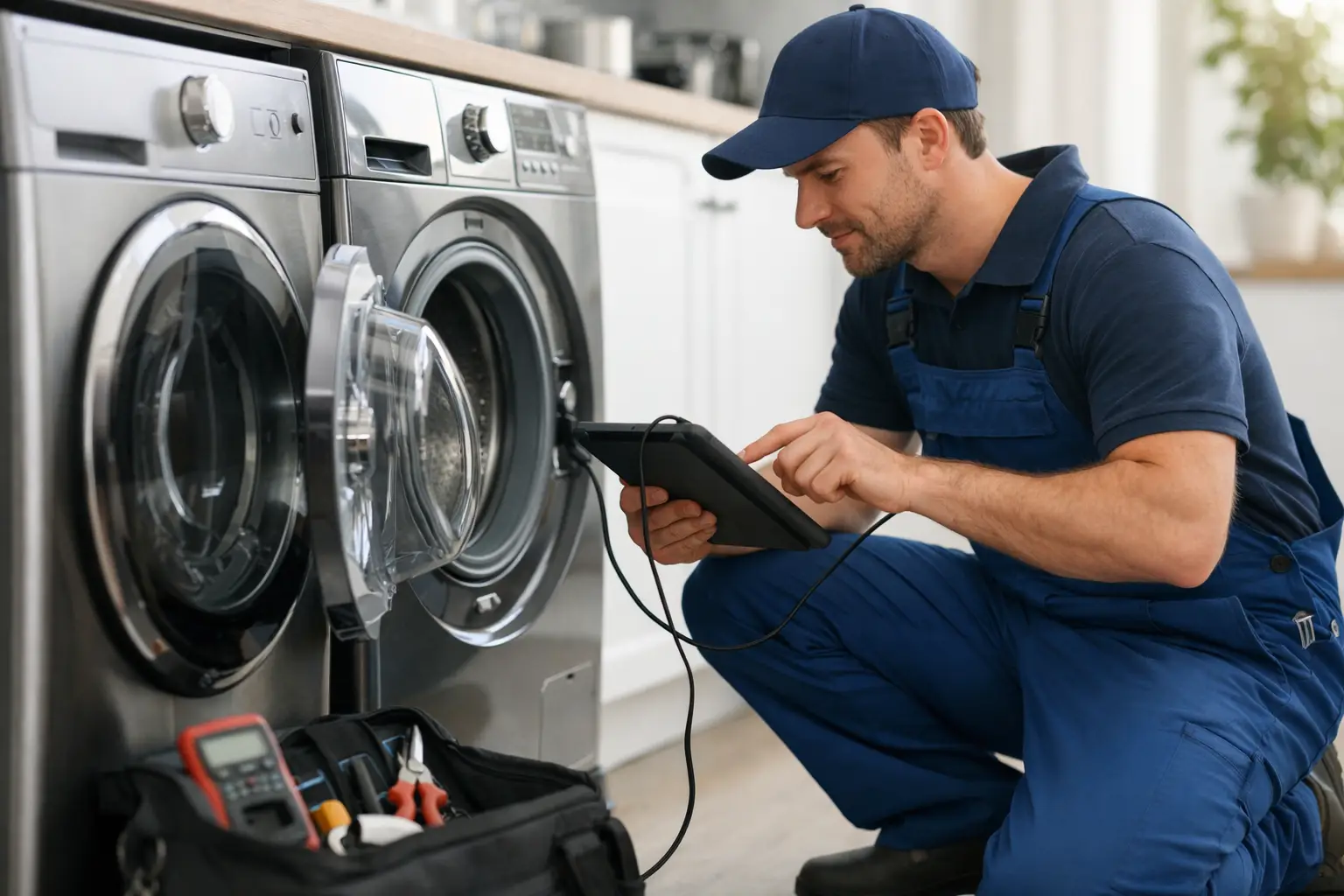
A refrigerator that stops cooling at night, a washer that will not drain before work, or an oven that quits before dinner usually creates the same reaction – fix it fast. In moments like that, homeowners want to know how appliance diagnostics save money, not just how soon someone can show up. The answer is simple: a proper diagnosis keeps you from paying for the wrong repair, prevents repeat visits, and helps you decide whether repair or replacement makes more financial sense.
How appliance diagnostics save money from the start
The biggest cost mistake in appliance repair is guessing. When an appliance shows one obvious symptom, the actual cause is often somewhere else. A refrigerator may seem like it has a bad compressor when the issue is a failed start relay, sensor, or control problem. A dryer that will not heat might look like it needs a heating element, but restricted airflow, a thermostat issue, or a power supply problem could be the real cause.
Without diagnostics, money gets spent on parts that do not solve the issue. That can mean one service call turns into two or three, with more labor, more downtime, and more frustration. A trained technician tests the system, checks the related components, and confirms the failure before recommending a repair. That process protects your budget because the repair is based on evidence, not trial and error.
Good diagnostics also reduce hidden costs. Every extra day with a failing refrigerator can mean lost groceries. Every delayed washer repair can mean trips to the laundromat. When a diagnosis is accurate early, the repair path is usually shorter and less disruptive.
Why the cheapest first step is not always the lowest cost
Some homeowners hesitate at the idea of paying for diagnostic service because they want the lowest immediate bill. That is understandable. But a low upfront price is not always the same as a low total cost.
If someone replaces a part based on a guess and the appliance still does not work, you have paid for labor and time without solving the problem. If the wrong repair stresses other components, the final bill can grow even more. By contrast, diagnostics narrow the issue before major work begins. You get a clearer picture of what failed, what it will cost to fix, and whether the appliance is worth repairing.
That matters most with major household appliances because they are connected systems. One symptom can have several possible causes. Professional diagnostics separate a minor issue from a major one before you commit money.
The real savings come from accurate repair decisions
When people ask how appliance diagnostics save money, they are often thinking only about the repair itself. The larger savings come from making the right decision overall.
Repairing the right component
Replacing the exact failed part is more cost-effective than replacing several possible parts to see what works. In modern appliances, boards, sensors, motors, switches, and valves all interact. One failure can mimic another. Proper testing avoids unnecessary part replacement.
Avoiding repeat breakdowns tied to the same problem
A partial fix can leave the root cause in place. For example, clearing standing water from a dishwasher does not solve much if the drain pump is failing or the drain path is blocked. Restarting a freezer may get it running temporarily, but if the defrost system is failing, the same problem may return. Diagnostics help identify the underlying issue so the repair lasts longer.
Knowing when replacement is the better move
Not every appliance should be repaired. Age, condition, brand, part availability, and the extent of damage all matter. A proper diagnostic visit can keep you from spending several hundred dollars on an appliance that is near the end of its useful life. That is still a money-saving outcome, because it prevents a repair bill that does not make sense.
How appliance diagnostics save money on common household problems
Different appliances fail in different ways, but the financial logic is the same.
With refrigerators, accurate diagnosis can prevent expensive miscalls involving compressors, control boards, evaporator fans, or defrost components. Because food loss adds urgency, getting the problem identified quickly matters. Learn more about our refrigerator diagnostic and repair process.
With washers, symptoms like leaking, not spinning, or not draining can come from a pump, door lock, control board, suspension issue, or simple obstruction. Guessing wrong means the machine stays out of service longer and the repair cost climbs.
With dryers, poor heating can involve airflow, thermal fuses, igniters, thermostats, elements, or gas valve coils. Replacing one likely part without testing the circuit can waste time and money.
With ovens and ranges, temperature issues may point to a sensor, igniter, bake element, relay, or electronic control. A diagnosis tells you whether you are dealing with a manageable repair or a bigger electrical problem.
Dishwashers are similar. Poor cleaning, leaks, draining issues, and failure to start can each have several causes. Diagnostics keep a relatively small problem from turning into water damage, mold concerns, or repeated service calls.
Diagnostics also protect part and labor costs
An experienced repair company does more than identify a failed component. It matches the diagnosis to the right part and the right repair plan. That matters because ordering the wrong part, using low-quality substitutes, or missing related failures can add delays and extra charges.
For homeowners, that means the value of diagnostics is tied to who performs them. A trained technician who works on major brands regularly is more likely to recognize common failure patterns, test efficiently, and spot issues that less experienced service providers may miss. If the company also keeps genuine parts in stock, the benefit increases because diagnosis and repair can often happen with fewer trips.
That is one reason professional diagnostics often save more than they cost. You are not just paying for someone to identify a symptom. You are paying for a clearer repair path, better parts planning, and a lower chance of paying twice for the same problem.
When diagnostics may show you should wait or replace
There are cases where the most cost-effective answer is not immediate repair. If an appliance has multiple failing components, visible internal damage, or a repair cost that approaches replacement value, diagnostics can reveal that before more money is committed.
This is especially useful for older units. A homeowner might assume a machine only needs one part, when testing shows broader wear. At that point, the smartest financial move may be replacement rather than repair. That may not feel like good news in the moment, but it is still valuable information. Spending less on a repair that will not hold is not really saving.
It also works the other way. Sometimes an appliance that seems finished only needs a focused repair. A refrigerator making unusual noise may not need full replacement. A washer that will not start may have a repairable latch or switch issue rather than a failed motor. Diagnostics prevent premature replacement, which can be one of the biggest unnecessary household expenses.
What homeowners should expect from a professional diagnosis
A useful diagnostic appointment should produce clarity. You should come away understanding what failed, what repair is recommended, what the likely cost is, and whether the appliance is worth fixing. If the answer is uncertain, a good technician should say so directly and explain the variables.
That transparency is part of the savings. It helps you compare the repair cost to the age and value of the appliance, instead of making a rushed decision based on frustration. It also gives you a chance to avoid temporary patchwork that leads to more service later.
For busy households, speed matters too. The longer an essential appliance is down, the more indirect costs add up. Reliable diagnostics shorten that window by moving the process forward with less guessing and fewer delays.
In practical terms, how appliance diagnostics save money comes down to three things: they identify the real problem, reduce wasted repair spending, and help homeowners make better decisions under pressure. That is especially important when the appliance is essential and the failure affects daily routines.
If you need a professional diagnosis for a refrigerator, washer, dryer, oven, dishwasher, or another major household appliance in Irvine or across Orange County, ProStar Appliance Service provides experienced repair support backed by trained technicians and a 90-day warranty on installed parts and labor. For local service details and recent customer feedback, visit our Google Business Profile.