


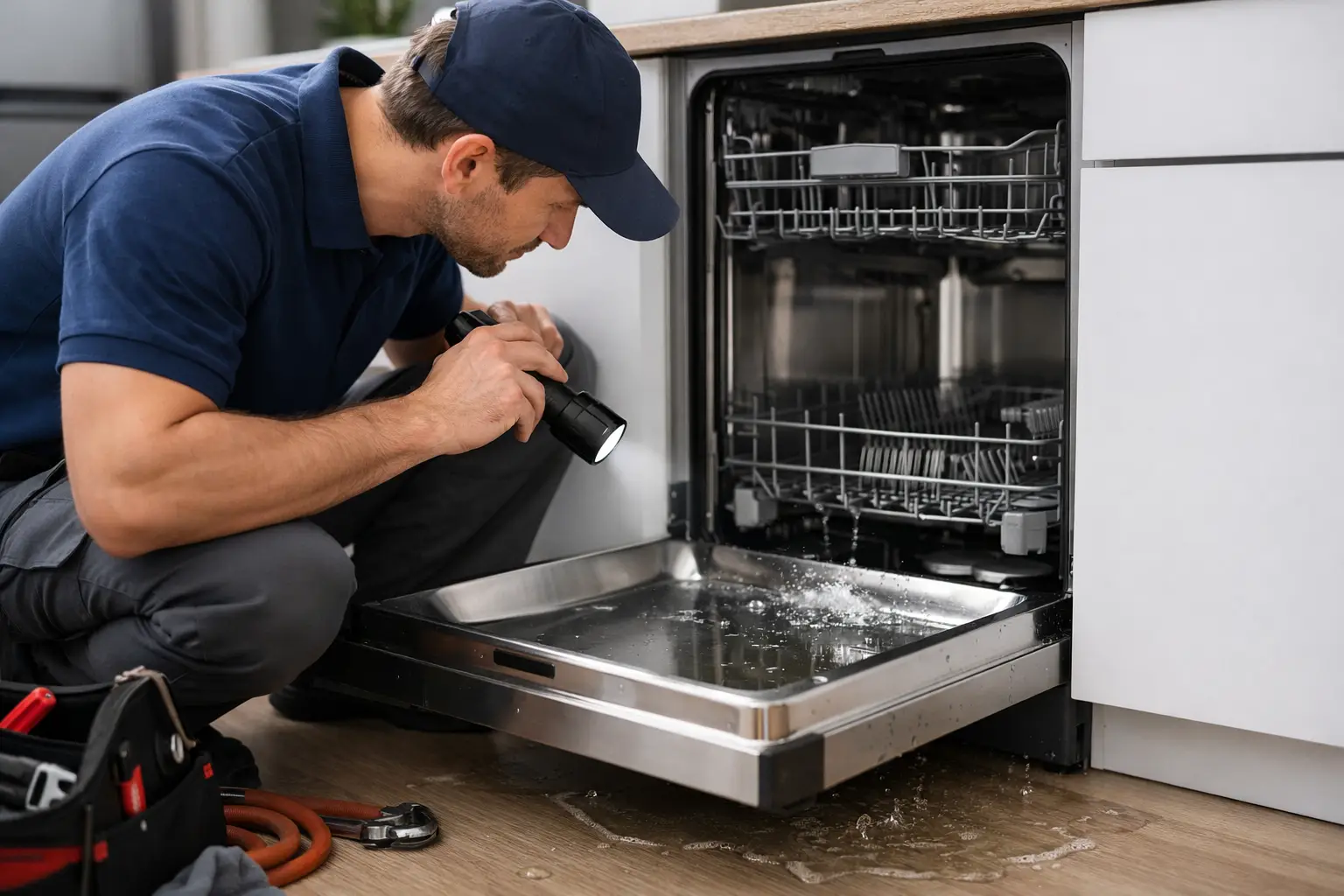
A puddle under the dishwasher usually shows up at the worst time – right before work, after dinner, or when you already have a full kitchen to manage. If you are searching for how to fix leaking dishwasher problems, the first priority is not guessing. It is finding where the water is coming from and deciding whether the issue is simple, unsafe, or likely to get worse with the next cycle.
Dishwasher leaks are not all the same. Some come from a worn door gasket or loose connection that starts small and stays visible near the front of the unit. Others come from internal parts, drain components, or cracked hoses, which can send water underneath the appliance and into the floor before you notice anything. That difference matters because a minor drip can turn into cabinet damage, flooring issues, or an electrical hazard if it is ignored.
How to fix leaking dishwasher starts with the leak source
Before doing anything else, turn off the dishwasher and avoid running another cycle “to test it.” If water is spreading, shut off power at the breaker if the outlet or wiring area could be wet. Then dry the area around the machine so you can tell whether new water appears at the front, underneath, or near the water supply side.
The location of the leak gives you the best clue. Water at the front edge often points to the door seal, overfilling, or dishes blocking the door from closing fully. Water under the center or left side may suggest a pump, motor seal, or internal hose problem. Water near the right or rear side can come from the inlet valve, drain hose, or supply line connection.
If your dishwasher is built in tightly under the counter, access is often limited. In many homes, pulling the unit out without damaging the flooring, cabinet edges, or water line takes more care than people expect. That is one reason leaking dishwasher repairs can quickly move from basic troubleshooting to a service call.
Check the door gasket first
A worn or dirty door gasket is one of the more common causes of visible leaking. Open the door and inspect the rubber seal around the perimeter. If it is cracked, flattened, brittle, or pulling away from the channel, water may escape during the wash cycle.
Sometimes the problem is not total seal failure. Grease, soap residue, or food buildup can keep the gasket from sealing correctly. Cleaning it carefully may help if the material is still in good shape. But if the gasket is damaged, cleaning will not fix it for long. Replacement is usually the correct repair.
Also look at the bottom door seal or sweep if your model uses one. This area takes direct spray during operation, and when it wears out, you may see water collecting right under the door.
Make sure the dishwasher is not overloaded
This is one of the few leaking issues that can be caused by normal use instead of a broken part. Large pans, cutting boards, or tall dishes can deflect water toward the door. If spray hits the inner door at the wrong angle, it can force water past the seal even when the gasket is still usable.
Overloading can also stop the door from closing evenly. If one rack is misaligned or a utensil is sticking out, the latch may engage while the seal remains slightly compromised. That kind of leak often appears only on certain loads, which makes it easy to misread as a random problem.
Look for too much detergent or the wrong detergent
Excess suds can cause leaks, especially near the front of the dishwasher. This happens when too much detergent is used or when the wrong product is added by mistake. Dish soap, for example, creates heavy sudsing and can push water out where it normally would stay contained.
If suds are visible, stop using the machine until the interior is cleared. Running repeated cycles without correcting the detergent issue can keep forcing water out and may strain other components. If there is no sign of oversudsing, move on to the mechanical causes.
Inspect the float and water inlet system
Dishwashers are designed to fill only to a certain level. If the float switch sticks or the inlet valve does not close properly, the tub can overfill and leak. The float is usually a small plastic component inside the tub near the bottom. It should move freely up and down.
If it is obstructed by debris or mineral buildup, the dishwasher may keep taking in water longer than it should. Inlet valve problems are less obvious because the valve is typically underneath the unit and not always easy to access. When it fails, water may continue entering at the wrong time or leak from the valve body itself.
This is where trade-offs come in. Checking the float is reasonable for many homeowners. Diagnosing the inlet valve, electrical response, and fill timing is more technical. If you are not comfortable working around water and electrical parts, this is usually the point to bring in a trained technician.
Check the spray arms for cracks or blockage
A damaged spray arm can send water in the wrong direction. Instead of distributing water evenly across the dishes, it may shoot a concentrated stream toward the door seal or side wall, creating a leak that looks like a gasket problem.
Remove and inspect the spray arms if your model allows easy access. Look for splits, warping, or clogged holes. A partially blocked spray arm can create pressure imbalance, while a cracked arm can change the spray pattern enough to force water where it should not go.
This repair depends on the model. Some spray arms are simple to replace. Others are tied into assemblies that require more disassembly than most homeowners want to handle under a kitchen counter.
How to fix leaking dishwasher issues underneath the unit
When the water is showing up from under the dishwasher instead of the front edge, the repair becomes more serious. Internal hoses, the circulation pump, drain pump, seals, and clamps can all leak during wash or drain cycles. In many cases, the dishwasher has to be partially or fully removed to inspect these parts correctly.
A drain hose may be loose or cracked. A pump seal may be worn. A hose clamp may have shifted just enough to drip only under pressure. These are not always expensive parts, but they can be time-consuming to diagnose because the leak may appear only at one stage of the cycle.
The age of the dishwasher matters here. On an older machine, a single leak can be part of broader wear. Replacing one seal may solve the immediate water problem, but another hose or pump component may not be far behind. On a newer dishwasher, a targeted repair often makes more sense and can restore reliable performance quickly.
Do not ignore the water supply line
Not every dishwasher leak comes from the dishwasher itself. The water supply connection can drip slowly and run along the floor or cabinet base before becoming visible. If the leak seems worse when the machine is idle or just beginning a cycle, the supply line and inlet connection deserve a close look.
Braided lines, compression fittings, and shutoff valves can all develop leaks over time. Tightening a fitting may help in some cases, but over-tightening can create a different problem. If corrosion is present or the line shows wear, replacement is usually safer than trying to force a temporary fix.
When professional dishwasher leak repair is the better choice
If the leak is coming from underneath, if the machine needs to be pulled out, or if the source is still unclear after a basic inspection, professional repair is usually the more cost-effective move. Guessing at parts can waste time and money, especially on major brands with model-specific seals, pumps, and valve assemblies.
A leaking dishwasher is also one of those problems that gets more expensive the longer it sits. Water can damage wood flooring, base cabinets, insulation, and subfloor materials even when the leak seems minor. Fast diagnosis matters more than trying several trial-and-error fixes.
An experienced appliance technician can determine whether the issue is the door seal, float system, pump, hose, inlet valve, or something less obvious like a spray pattern problem or installation issue. Just as important, the repair can be done with the right part instead of a temporary workaround that fails again in a few weeks.
If your dishwasher is leaking in Irvine or nearby Orange County communities, prompt service can prevent a small appliance problem from turning into a kitchen repair project. Prostar Appliance Service provides professional dishwasher diagnostics and repair with trained technicians, stocked genuine parts, and warranty-backed workmanship. For local service details, visit our Google Business Profile.