


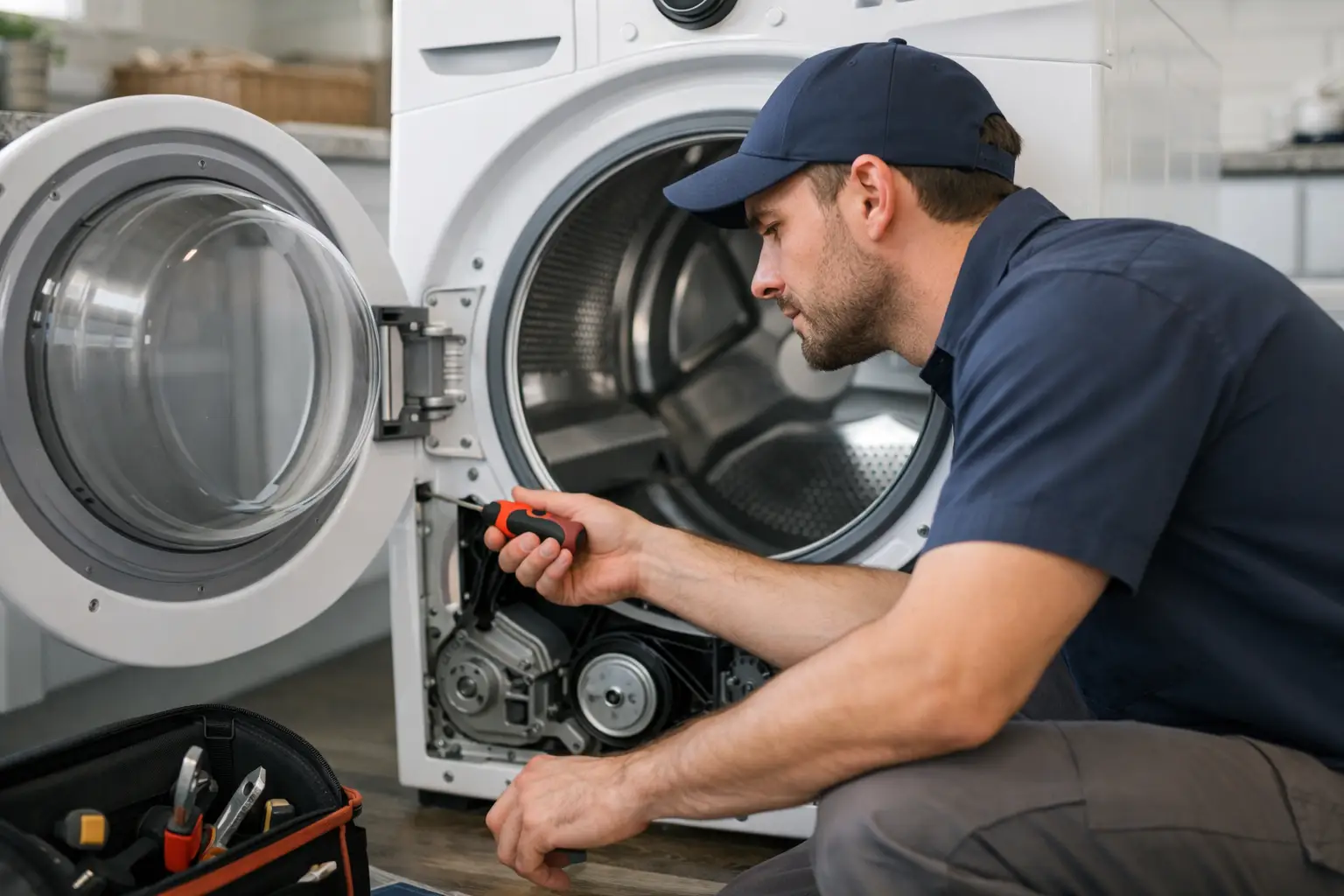
That high-pitched squeak from the laundry room usually starts small, then gets harder to ignore with every load. If you are wondering how to stop dryer squeaking, the real answer depends on which moving part is wearing out and how long the dryer has been running with that noise.
A squeaking dryer is not just an annoyance. It is often an early warning sign that a support roller, idler pulley, belt, glides, or motor bearing is starting to fail. Catching it early can keep the repair simpler. Waiting too long can turn a minor wear issue into a belt break, drum damage, overheating, or a dryer that stops mid-cycle.
How to stop dryer squeaking without guessing
Most dryers squeak because one friction point inside the machine is no longer moving smoothly. The challenge is that several parts can create a very similar sound. That is why homeowners often search for a quick fix, only to find the noise comes back after a few days.
The first step is paying attention to when the squeak happens. If the sound begins as soon as the drum starts turning, worn drum support components are common. If it gets louder as the dryer heats up, that can point to parts that are expanding under heat or bearings losing lubrication. If the squeak turns into a scraping or thumping sound, the problem may already be getting worse.
For gas and electric dryers alike, the safest approach is to stop using the unit until the source is identified. Running a dryer with failing internal parts can put extra strain on the motor and belt, and that often increases the final repair cost.
The most common causes of a squeaking dryer
Worn drum rollers
Drum rollers support the weight of the drum as it rotates. Over time, they can wear flat, dry out, or become noisy. When that happens, the dryer may squeak at first and then develop a rumbling or thumping noise later.
This is one of the most common causes, especially in dryers that see frequent use. A roller problem can sometimes seem minor at first, but once the drum starts moving unevenly, it places more stress on nearby components.
Failing idler pulley
The idler pulley keeps tension on the dryer belt. When the pulley bearing begins to wear, it often makes a sharp squealing sound that is easy to hear across the room. In many cases, the sound is strongest right when the dryer starts.
A bad idler pulley can eventually damage the belt. If both parts are worn, replacing only one may not solve the issue for long.
Belt wear
A dryer belt usually causes more of a slipping or squealing noise than a metal-on-metal squeak, but it is still a common source. If the belt is frayed, glazed, or stretched, it may not grip properly as the drum turns.
Belt issues often show up alongside pulley or roller wear. That is why experienced technicians inspect the full drive system instead of replacing a single part in isolation.
Drum glides or slides
Some dryer models use glides or slides at the front of the drum instead of rollers in certain positions. When these wear down, the drum can start rubbing directly against the housing. That can create a squeak that gradually becomes a scraping sound.
If this is ignored, the drum edge itself can become damaged. At that point, the repair may involve more than the original wear part.
Motor bearings
A dryer motor with worn bearings can produce a persistent squeak or squeal, often with a harsher tone than roller or glide noise. This is usually a more serious repair because the motor is a major component and not every motor issue makes financial sense to fix on an older dryer.
This is one of those cases where it depends on the age, brand, and overall condition of the machine. A technician can usually tell whether repair is the practical option or whether replacement should be considered.
What homeowners should do first
If the dryer is squeaking, avoid the temptation to keep running load after load until it fully quits. That usually leads to more damage and a more inconvenient failure.
Start by stopping the cycle and checking for obvious issues such as an overloaded drum, loose items like shoe hardware, or objects caught near the drum seal. Sometimes the sound is external and simple. If the noise is clearly coming from inside the cabinet, unplug the dryer and avoid further use until it can be inspected.
You may also notice related symptoms that help narrow down the cause. A burning smell, longer dry times, excessive heat, a drum that feels loose, or a unit that struggles to start all point to internal wear that should be addressed quickly.
Can you lubricate the squeak away?
This is where many online tips cause trouble. Homeowners sometimes try adding lubricant to quiet the noise, but that is rarely a real fix. In most dryers, the squeaking part is worn, not just dry. Applying the wrong product can attract lint, create residue, or interfere with parts that are meant to stay clean and dry.
There is also a safety issue. Dryers generate heat, and lint buildup is already a fire risk. Spraying products into the cabinet without disassembly and proper diagnosis is not a good trade-off.
If a component such as a roller or pulley bearing is failing, replacement is usually the correct repair. Temporary quiet does not mean the underlying problem is solved.
Why dryer squeaks should not be ignored
A squeak is often the earliest warning your dryer will give. Once that sound changes into grinding, thumping, or scraping, the repair may involve more parts and more labor.
There is also the risk of a breakdown at the worst time. Many homeowners wait because the dryer still works. Then the belt snaps, the drum seizes, or the motor overheats in the middle of a busy week. For households that rely on daily or near-daily laundry, that disruption matters.
From a cost standpoint, early repair is usually the better move. Replacing a worn support component is often more straightforward than repairing secondary damage caused by continued use.
When professional dryer repair makes more sense
For most homeowners, dryer disassembly is not worth the risk. Accessing the drive system requires opening the cabinet, handling electrical components, and in gas models, working around fuel connections. Even for electric dryers, getting to the source of the squeak takes time and model-specific knowledge.
More importantly, the sound alone does not always identify the failed part. Two different problems can sound nearly identical. A trained technician can inspect the rollers, pulley, belt, glides, motor, drum alignment, and signs of overheating in one visit. That kind of diagnosis matters because it prevents repeat repairs.
Professional service also helps when parts availability is a factor. Some dryer repairs are simple if the correct genuine part is on hand. If the wrong part is ordered or a worn companion part is missed, the same machine can end up down for longer than necessary.
Repair or replace? It depends on the dryer
Not every squeaking dryer should automatically be replaced. If the appliance is in otherwise good condition, a repair is often the practical choice. Rollers, belts, glides, and pulleys are common wear parts, and replacing them can extend the life of the machine.
On the other hand, if the motor is failing and the dryer is already older, the numbers may not work in your favor. The right decision depends on the brand, age, repair history, and overall condition of the unit. That is why an honest diagnosis is more useful than a one-size-fits-all answer.
A good service call should tell you what is causing the squeak, what else may be wearing, and whether the repair is likely to hold up. That gives you a clearer path forward instead of guessing.
How to reduce future dryer noise
Some wear is unavoidable, but a few habits can help. Do not overload the dryer, clean the lint filter every cycle, and have the vent checked if drying times suddenly increase. Restricted airflow makes the dryer run hotter and longer, which accelerates wear on internal parts.
It also helps to pay attention to new sounds early. Dryers rarely go from perfectly quiet to fully broken without warning. In many cases, the squeak starts weeks before a major failure. Acting early keeps the problem smaller.
If your dryer is squeaking and you want a dependable answer instead of trial and error, professional diagnosis is the fastest way to stop the noise and protect the appliance. For homeowners in Irvine and across Orange County, Prostar Appliance Service provides quick, reliable dryer repair backed by experienced technicians and warranty-covered work. You can learn more or request service through our Google Business Profile.