


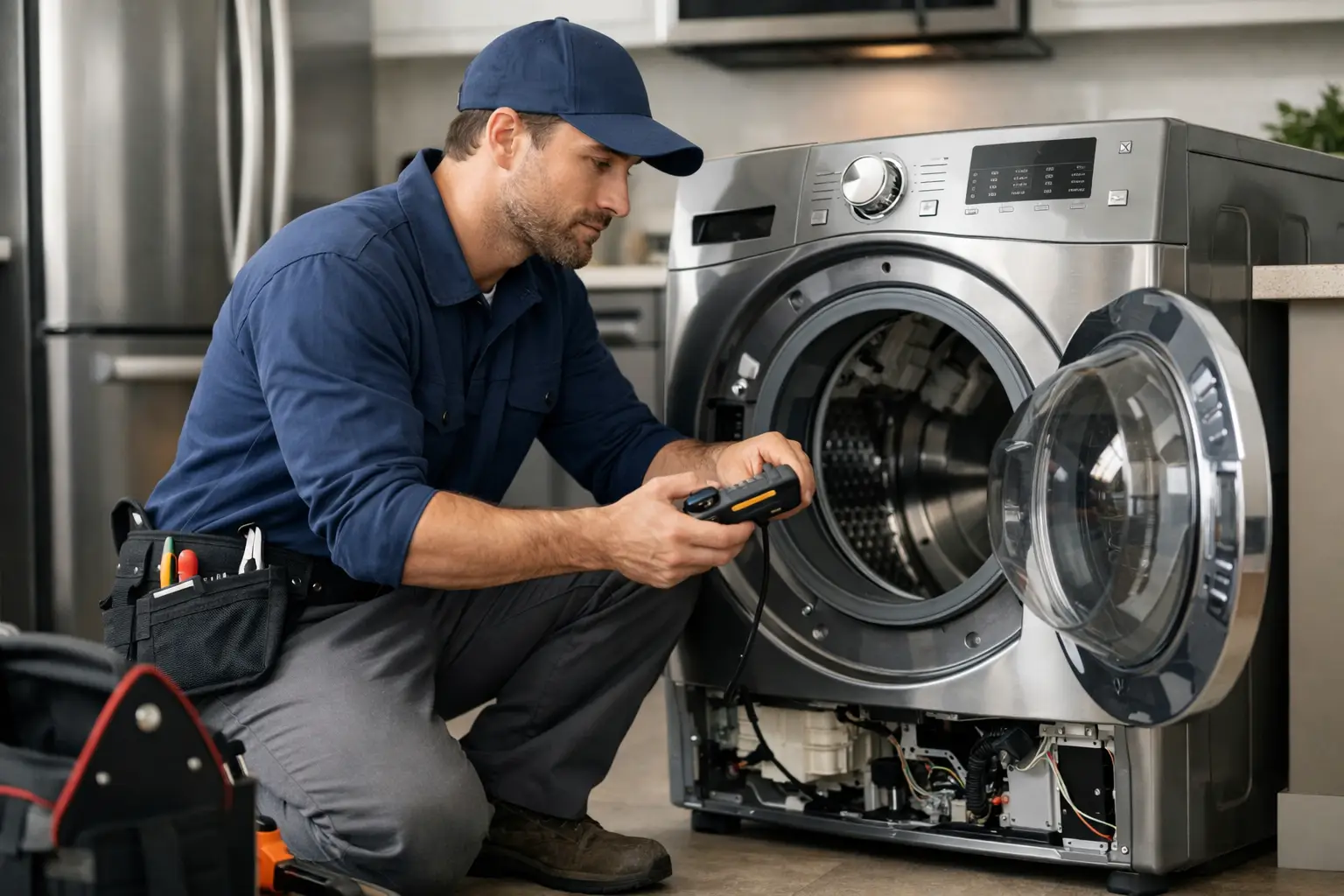
A refrigerator stops cooling on a Tuesday night, or the washer quits with a full load still inside. In that moment, “is appliance repair worth it” stops being a general question and becomes a budget decision, a time decision, and a household disruption all at once.
For most homeowners, repair is worth it more often than people assume. The key is not whether an appliance is broken. The key is what failed, how old the unit is, what the repair will cost, and whether the machine still has solid years of service left after the fix. A good diagnosis matters because two appliances with the same symptom can have very different answers.
Is appliance repair worth it in most cases?
Often, yes. A repair is usually worth it when the issue is isolated, the appliance is still within a reasonable service life, and the repair cost is significantly lower than replacement. That is especially true for major kitchen and laundry appliances where buying new means not just the purchase price, but delivery delays, installation costs, disposal fees, and the inconvenience of waiting.
A common mistake is comparing a repair bill only to the sticker price of a new unit. That comparison leaves out a lot. If your refrigerator can be repaired with a new fan motor, control board, or thermostat, the real alternative is not just a new refrigerator at retail price. It is also food loss, delivery scheduling, possible cabinet fit issues, and time without a working appliance.
The same logic applies to washers, dryers, ovens, dishwashers, and freezers. A focused repair on a good machine is often the most practical option, especially when the unit fits your space well and has otherwise been reliable.
When repair usually makes sense
Repair is generally the better choice when the appliance is under 8 to 10 years old and the problem is mechanical or electrical rather than structural. Replacing a heating element in a dryer, a drain pump in a washer, an igniter in an oven, or a door gasket on a dishwasher can restore normal operation without forcing you into a much larger purchase.
It also makes sense when the appliance is a higher-end model. Better-built units often justify repair because replacement at the same quality level costs much more than owners expect. If the machine has features you use regularly, fits built-in dimensions, or matches a kitchen set, repair can preserve value beyond simple dollars.
Another factor is speed. If a trained technician can diagnose the issue quickly and has access to genuine parts, repair can get a household back to normal faster than shopping for a replacement, waiting for delivery, and arranging installation.
When replacement is the smarter move
There are cases where repair is not worth it. If the appliance is near the end of its expected lifespan and has had multiple recent problems, another repair may only delay replacement. The same is true if the cost of repair starts approaching a large share of the cost of a comparable new unit.
Replacement is also often smarter when the failure involves the sealed system in an older refrigerator, a major transmission issue in an aging washer, or severe rust, frame damage, or repeated control failures. In those situations, you are not just paying to fix one issue. You may be paying into an appliance that is becoming less dependable overall.
A useful rule of thumb is this: if the appliance is old, the repair is expensive, and reliability has already been slipping, replacement deserves serious consideration. Not because repair is bad, but because you do not want to keep spending on a machine that is likely to fail again.
How age changes the answer
Age matters, but it should not be the only factor. Some seven-year-old appliances are ready for replacement because they have had heavy use and repeated breakdowns. Some 12-year-old appliances are still good candidates for repair because they were well built and the current issue is minor.
In general, most homeowners can think about it this way. A refrigerator, washer, dryer, dishwasher, oven, or range in the earlier half of its life is usually worth repairing if the problem is not severe. For a dryer-specific comparison, see whether it is worth getting a dryer repaired. In the later half of its life, the question becomes more selective. You want to know whether the repair is likely to buy you meaningful time or just a few uncertain months.
That is why a professional diagnosis matters more than internet averages. The age of the appliance gives context, but the actual condition tells the real story.
Cost is not just the repair bill
When people ask, “is appliance repair worth it,” they are usually focused on the invoice. That is understandable, but household cost includes more than the repair itself.
If your refrigerator fails, replacement may mean spoiled groceries, last-minute food storage problems, and a rush purchase. If your washer is down, you may be paying for laundromats or losing time you do not have. If your oven fails before a family event or holiday, convenience starts carrying real value.
There is also the issue of installation compatibility. New appliances do not always fit older spaces as cleanly as expected. Counter depth, venting, hookups, electrical requirements, and trim dimensions can complicate what looked like a simple replacement.
In many cases, a repair is worth it because it controls the total disruption, not just because it costs less on paper.
The appliance type matters
Not every appliance should be judged the same way. Refrigerators and freezers usually deserve quick professional evaluation because delay can lead to food loss. Washers and dryers are often very repairable, especially when the failure involves belts, rollers, pumps, switches, or heating components.
Dishwashers can go either way. A pump, inlet valve, or latch problem may be worth fixing, while major leaks, tub damage, or repeated electronic failures in an older unit can tilt toward replacement.
Ovens, cooktops, and ranges are often strong repair candidates because many common issues involve igniters, bake elements, sensors, or control components. Garbage disposals and microwaves depend more on age, brand, and the exact failure, since replacement can sometimes be more economical.
The point is simple: the answer is not one-size-fits-all. A smart repair decision depends on the appliance category and the actual failed part.
Is appliance repair worth it if you plan to sell your home?
Usually, yes, if the repair is straightforward and restores normal use. A working kitchen and laundry setup helps avoid buyer objections and reduces one more item that needs attention before listing. Repair is often the quickest way to present the home well without taking on the cost and delay of full appliance replacement.
That said, if an appliance is visibly worn out, unreliable, or mismatched with the rest of the home, replacement may make more sense from a presentation standpoint. This is less about resale value in theory and more about avoiding obvious red flags during showings and inspections.
Why professional diagnosis changes the decision
Homeowners often make the repair-or-replace decision with incomplete information. A refrigerator that seems “done” may have a fixable start relay or evaporator fan issue. A dryer that stopped heating may need a thermostat or thermal fuse rather than full replacement. On the other hand, an appliance that still runs may have a deeper problem than it first appears.
That is why the first step should be diagnosis, not assumption. A trained technician can identify the failed component, estimate remaining service life, and explain whether the repair is a practical investment. This keeps you from replacing a good appliance too soon or sinking money into one that is already on its way out.
For homeowners with busy schedules, that clarity has real value. You want a direct answer based on the machine in your home, not a generic rule pulled from a chart.
A practical way to decide
If you are trying to make the call quickly, ask four questions. How old is the appliance? What exactly failed? How much will repair cost compared with replacement? And if repaired, is the unit likely to be dependable for a reasonable amount of time?
If the appliance is relatively mid-life, the failure is limited, and the repair restores reliable function, repair is usually worth it. If the appliance is older, the repair is costly, and there are signs of broader wear, replacement is often the safer financial choice.
For many Orange County homeowners, the best outcome is not the cheapest immediate option. It is the option that restores normal life fast and avoids repeat problems. That is where experienced service makes a difference.
If you need a clear answer on whether your appliance is worth repairing, Prostar Appliance Service provides professional diagnosis and dependable repair for major household appliances across Irvine and surrounding Orange County areas. You can learn more or check recent local feedback on our Google Business Profile.