


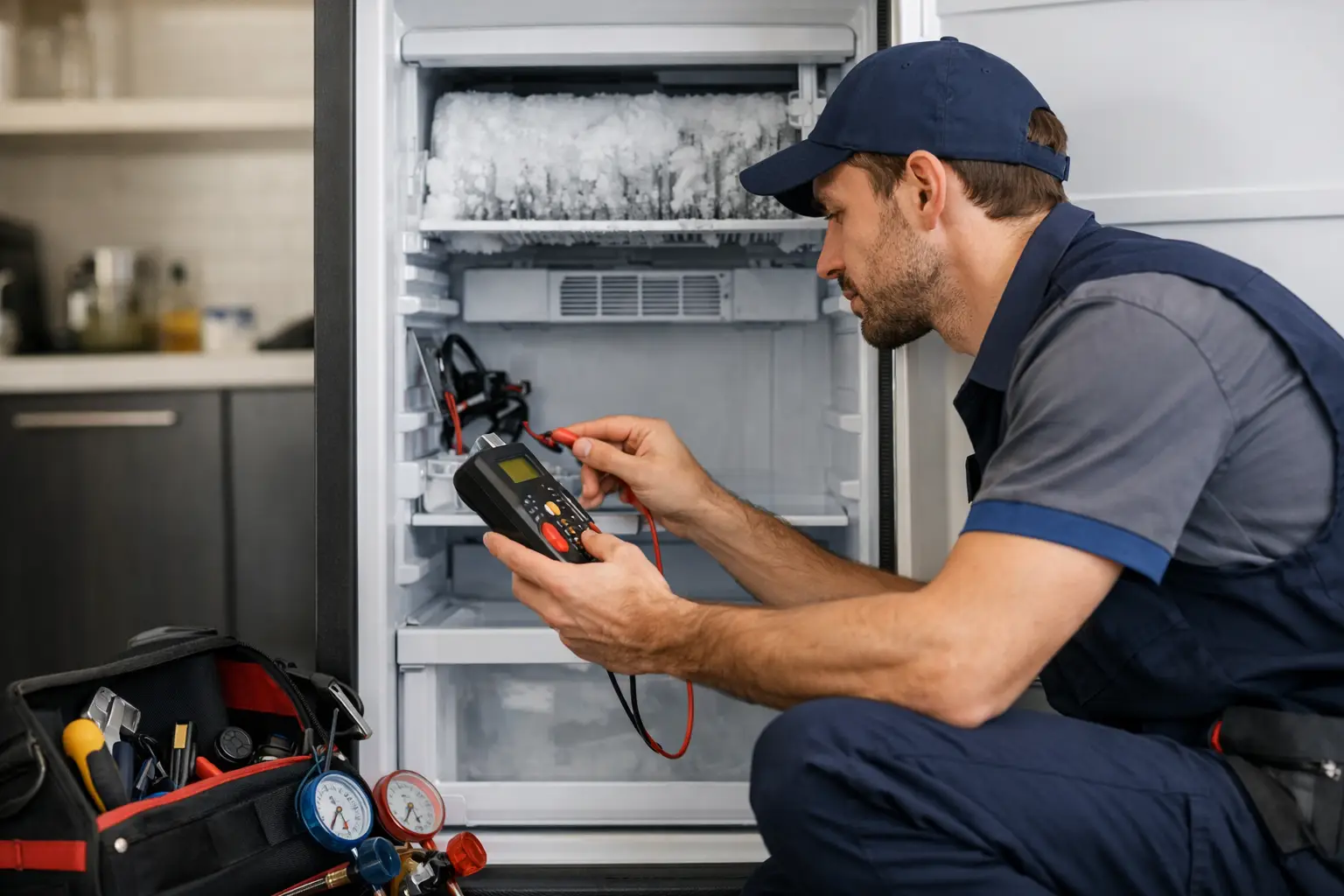
You usually notice refrigerator cooling problem examples at the worst possible time – milk is warm, produce goes soft early, or the freezer starts turning solid food into something half-thawed. In most homes, that is not a minor inconvenience. It is a time-sensitive appliance problem that can lead to food loss, wasted money, and a bigger repair if it keeps running in the wrong condition.
Some cooling issues are obvious, while others build slowly over days or weeks. The important part is recognizing the pattern. A refrigerator does not have to stop completely to have a serious cooling problem. Uneven temperatures, frost buildup, constant cycling, or a warm fresh food section can all point to specific component failures.
Common refrigerator cooling problem examples
One of the most common refrigerator cooling problem examples is a fresh food section that feels warm while the freezer still seems cold. Homeowners often assume the refrigerator itself is fine because frozen items are still hard, but this pattern usually means cold air is not moving properly from the freezer into the refrigerator compartment. A failed evaporator fan motor, blocked air vent, or frost-covered evaporator coil can all cause this.
Another frequent example is the opposite problem – the refrigerator section is too cold and starts freezing eggs, vegetables, or drinks. That can happen when a thermostat is misreading temperature, a control board is not cycling correctly, or the damper system is stuck open and allowing too much cold air into the fresh food area. It may look like overperformance, but it is still a cooling control issue.
A freezer packed with frost is another clear sign. If you see thick frost on the back wall of the freezer or around stored food, the unit may have a defrost system problem. In many cases, the defrost heater, defrost thermostat, or control board is not doing its job. Frost buildup eventually restricts airflow, and once airflow drops, both compartments can start warming up.
Then there is the refrigerator that runs constantly but never gets cold enough. This is one of the more frustrating cases because the appliance sounds active, yet performance keeps getting worse. Dirty condenser coils, a weak compressor, sealed system trouble, or a refrigerant issue may be involved. The trade-off here is simple: some causes are relatively straightforward service calls, while others require more advanced diagnosis and can be more expensive.
What these cooling symptoms often mean
When a refrigerator is warm inside and you hear clicking or short cycling, the compressor start device may be failing. That component helps the compressor turn on. If it struggles, the compressor may try to start repeatedly without staying on long enough to cool the cabinet. In some units, that symptom can also point to compressor failure, which is why accurate diagnosis matters.
If the refrigerator seems fine in the morning but warms up by afternoon, the issue may be intermittent. That can happen with electronic control failures, fan motors that stop under load, or a condenser fan that works only part of the time. Intermittent problems are easy to overlook until food starts spoiling more often.
Water under the refrigerator can also connect to cooling complaints. A clogged or frozen defrost drain may lead to water pooling, but in some cases, excess moisture and temperature swings happen together because the defrost cycle is not operating correctly. A leak does not always mean a cooling problem, but it can be part of the same failure pattern.
Loud humming, rattling, or unusual fan noise is another example worth taking seriously. Refrigerators make normal operating sounds, but a sudden change often points to a fan blade hitting ice, a failing motor, or vibration from a component under stress. When that noise appears with poor cooling, it usually helps narrow the diagnosis.
Refrigerator cooling problem examples by part failure
A dirty condenser coil is one of the simpler examples. When dust and debris build up on the coil, heat cannot dissipate efficiently. The refrigerator then has to work harder to maintain temperature. In early stages, you may notice longer run times and slightly soft freezer items. If ignored, performance can decline further and wear on major components increases.
A failed evaporator fan motor creates a different pattern. Because that fan circulates cold air, its failure often leaves the freezer somewhat cold while the refrigerator section warms up first. Some homeowners also notice the unit becomes oddly quiet, then too warm.
A bad condenser fan motor can lead to overheating around the compressor area and weak cooling overall. On many models, the compressor and condenser fan need to work together. If the fan stops, internal temperatures rise where they should not, and the refrigerator loses efficiency fast.
Defrost system failures usually create frost-heavy symptoms. At first, the refrigerator may cool normally. Then airflow starts choking off behind a sheet of ice. By the time the fresh food section is clearly warm, the problem may have been developing for days. This is one reason a refrigerator can seem to fail suddenly when the actual cause built up slowly.
Temperature sensor and control board issues tend to be less predictable. You might see freezing in one section, warming in another, or cycling that makes no sense. These are not ideal situations for guesswork because replacing parts based only on symptom overlap can waste time and money.
Sealed system or compressor problems are more serious examples. Signs may include both compartments warming, very long run times, weak frost pattern on the evaporator, or no cooling even though interior lights and fans still work. These repairs require professional testing and experience, especially when refrigerant pressures and compressor performance have to be evaluated.
Why the same symptom can have different causes
A warm refrigerator is not one diagnosis. It is a symptom. That matters because two units with the exact same complaint can need completely different repairs.
For example, a refrigerator that is not cooling may have something as simple as a failed fan motor, or it may have a sealed system issue. Both can leave food warm. The difference is in the details – sound changes, frost patterns, compressor behavior, temperature spread between compartments, and how the unit has been performing over time.
This is also why online symptom charts only go so far. They can be useful for identifying common refrigerator cooling problem examples, but they do not replace a trained inspection. A proper diagnosis looks at the full system, not just the most obvious sign.
When a cooling problem needs fast service
If dairy, meat, or leftovers are warming above safe storage temperatures, the problem should be treated as urgent. The same applies if the freezer is softening food, the unit is clicking repeatedly, or there is visible frost buildup getting worse by the day. Waiting can turn a manageable repair into a larger one, especially if the refrigerator runs nonstop and places extra strain on the compressor.
It also makes sense to act quickly when the issue is inconsistent. Intermittent cooling is still a real failure. In fact, it can be harder on a household because it creates uncertainty. You do not know whether the refrigerator will hold temperature overnight or spoil a full week of groceries while appearing normal from the outside.
For busy households, speed matters just as much as the repair itself. A prompt appointment, accurate diagnosis, and access to genuine replacement parts can make the difference between one visit and several days of disruption.
What homeowners should pay attention to before service
Before a technician arrives, it helps to notice a few specific details: whether the freezer is still cold, whether the refrigerator is freezing food or warming it, whether there is frost on the back wall, and whether you hear clicking, buzzing, or fan noise. Those details often point the service call in the right direction from the start.
It is also helpful to know whether the issue started suddenly or gradually. A sudden failure can suggest a fan, start device, or control problem. A gradual decline may point more toward airflow restriction, dirty coils, or a developing sealed system issue. There are exceptions, but the timing often matters.
If your refrigerator is showing any of these refrigerator cooling problem examples, professional diagnosis is the safest next step. For homeowners in Irvine and across Orange County, Prostar Appliance Service provides fast, experienced refrigerator repair backed by trained technicians and warranty-covered workmanship. You can learn more or contact us through our Google Business Profile.