


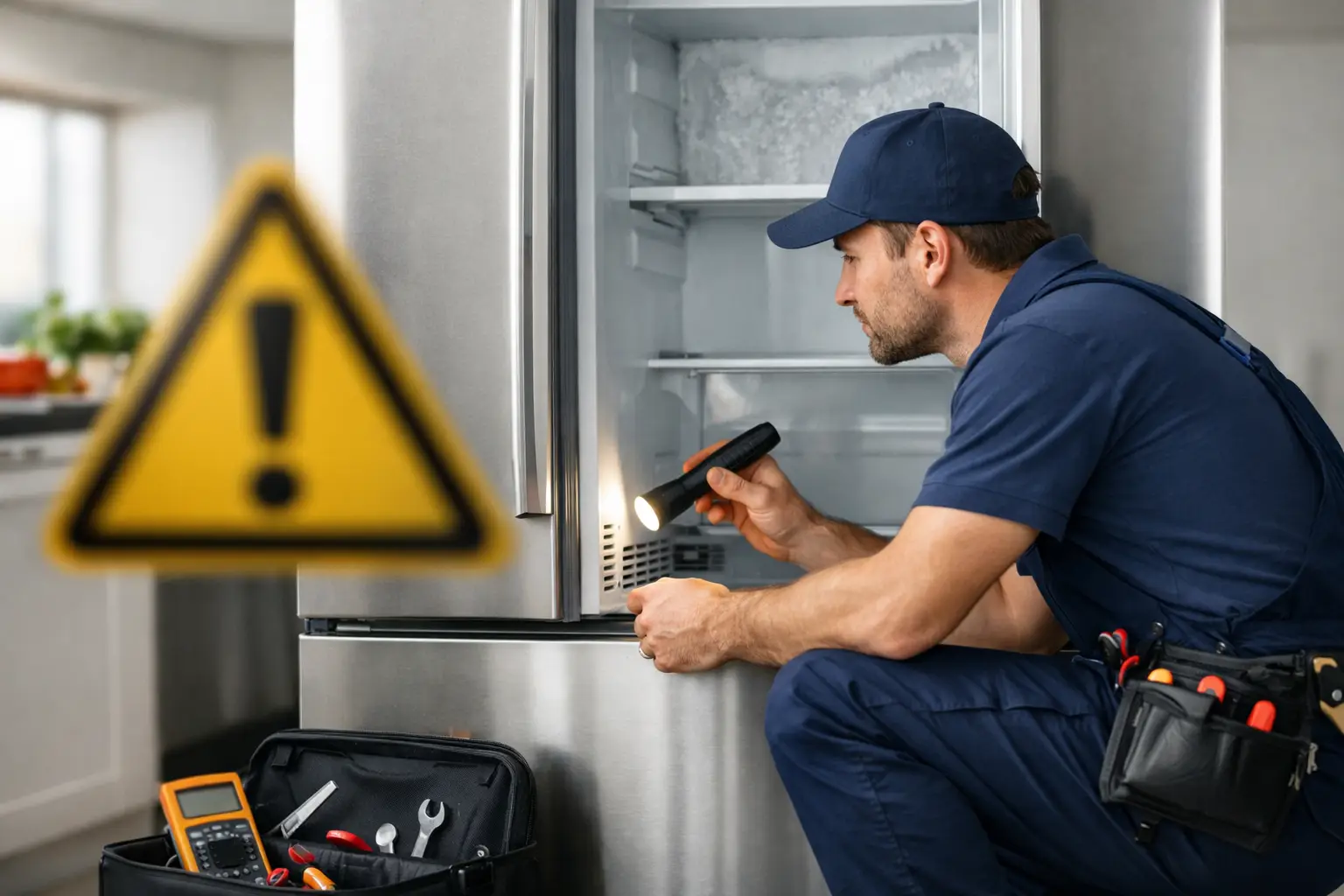
You usually notice refrigerator trouble at the worst possible time – after a grocery run, before guests arrive, or when you open the door and realize the milk is warm. This refrigerator repair warning signs guide is built for that moment. If your fridge is acting differently than it did last week, small changes can point to a larger mechanical problem that is better handled before you lose food or end up needing a more expensive repair.
A refrigerator rarely fails without giving some kind of warning first. The challenge is that many of those warnings seem minor at the start. A little extra noise, a small puddle under the door, frost where it should not be, or food that spoils sooner than expected can all signal that a part is starting to fail. Knowing which signs matter helps you act before a temporary inconvenience turns into an urgent household problem.
Refrigerator repair warning signs guide: what deserves quick attention
The most obvious sign is inconsistent cooling. If one shelf keeps drinks cold while another leaves leftovers lukewarm, the refrigerator is no longer holding temperature evenly. That can happen because of a failing evaporator fan, dirty condenser coils, a weak compressor, a thermostat problem, or restricted airflow. Sometimes the fix is straightforward. Sometimes it points to a more serious sealed system issue. Either way, uneven cooling is not something to watch for another week.
Food spoilage is another major signal. If produce softens faster than usual, dairy turns early, or meat does not stay cold enough, your refrigerator may still feel cool without actually holding a safe food-storage temperature. That difference matters. A unit can appear to be working while cycling poorly in the background, and homeowners often do not realize there is a problem until they have already thrown out a full shelf of groceries.
Excessive frost also deserves attention, especially in a frost-free refrigerator. A thin layer in the freezer may not seem serious, but heavy frost buildup on the back wall, around vents, or near the freezer door often suggests trouble with the defrost system, door seal, or airflow. Left alone, that buildup can reduce cooling performance and force the refrigerator to work harder than it should.
Strange noises are often early warning signs
Most refrigerators make some sound. A brief hum, a soft click, or the occasional fan noise is normal. What is not normal is a sudden change in sound. Buzzing that gets louder, repeated clicking, rattling, grinding, or a fan that sounds strained can all point to worn components.
A clicking refrigerator that does not fully start may be having compressor relay problems. A loud fan noise can mean ice is interfering with the evaporator fan blade or that the motor itself is failing. Rattling can be something simple like a loose drain pan, but it can also come from a compressor area that needs inspection. The key is the pattern. If the sound is new, frequent, or getting worse, it should not be ignored.
This is one of those cases where it depends on the source. Some noises lead to relatively contained repairs. Others are early signs of a more expensive issue. Waiting does not usually improve that math.
Water leaks and moisture problems are not just cosmetic
A puddle under the refrigerator often looks like a housekeeping issue before it looks like a repair issue. In reality, water around the unit can come from a clogged defrost drain, a cracked water line, a problem with the ice maker supply, or a door that is not sealing correctly and causing excess condensation.
Moisture inside the refrigerator matters too. If you see water collecting under drawers, droplets forming on interior walls, or sweating around the door gasket, the appliance may be losing temperature control or airflow. In some homes, especially busy kitchens where the refrigerator gets heavy daily use, these symptoms tend to build gradually. By the time the leak becomes obvious, the underlying cause may have been developing for some time.
Leaks should be handled quickly because they create two separate problems. First, they can damage flooring or nearby cabinetry. Second, they often point to cooling or defrost issues that can affect food preservation.
When the motor seems to run all the time
Refrigerators cycle on and off. That is normal. What is not normal is a unit that seems to run almost constantly, feels unusually hot around the sides, or makes your kitchen noticeably warmer. When the system has to work harder to maintain temperature, it can be dealing with dirty coils, a failing condenser fan motor, damaged door gaskets, low refrigerant, or internal control problems.
Higher energy use is often part of the same pattern. Homeowners do not always connect a rising utility bill to a struggling refrigerator, but constant operation adds up. If the appliance is older, the question becomes whether repair still makes financial sense. Age matters, but so does the actual failed part, the brand, and the overall condition of the unit. A professional diagnosis is usually the quickest way to tell whether you are looking at a practical repair or a replacement decision.
Warning signs around the door, seal, and exterior
The door gasket does more work than most people realize. If it is torn, loose, dirty, or no longer sealing tightly, cold air escapes and the refrigerator has to compensate. That can show up as condensation, inconsistent temperatures, frost in the freezer, or a compressor that seems to run too often.
You may also notice doors that do not close smoothly or pop back open slightly after shutting. In some cases, the refrigerator is not level. In others, shelf positioning, hinge wear, or gasket failure is preventing a proper seal. These are easy symptoms to dismiss because the refrigerator still appears to function. But poor sealing creates a chain reaction that affects both performance and energy efficiency.
A hot exterior can be another clue. Some warmth is expected, especially near the condenser area. But if the cabinet feels unusually hot to the touch or the heat seems excessive compared with normal operation, the unit may be struggling to release heat properly.
Refrigerator repair warning signs guide for freezer-related issues
The freezer often reveals problems before the fresh food section does. Soft ice cream, partially thawed frozen foods, or clumped ice in the bin can all point to temperature instability. If the freezer is underperforming, the refrigerator side may not be far behind.
Freezer frost, door seal problems, or blocked air passages can all interfere with cooling. In side-by-side and French door models, airflow between compartments is especially important. A problem in one section often affects the other. That is why a freezer symptom should not be treated as separate from overall refrigerator performance.
Ice maker issues can also be early indicators rather than isolated problems. Slow ice production, small cubes, hollow cubes, or water leaking around the ice maker can be related to water supply, valve issues, temperature problems, or broader system performance.
When to stop waiting and schedule service
If your refrigerator is warm, leaking, clicking repeatedly, building heavy frost, or spoiling food, waiting usually increases the risk of food loss and part failure. The same is true if resetting controls or adjusting temperatures does not change anything after a short period. Homeowners sometimes wait because the unit still works some of the time. That partial operation can be misleading.
The practical threshold is simple. If the symptom affects temperature, moisture, unusual noise, or continuous operation, it is worth scheduling a professional inspection. Fast diagnosis matters because many refrigerator issues are easier to resolve before secondary damage sets in. A weak fan motor can strain other components. A poor seal can overwork the compressor. A blocked drain can turn into water damage.
For households with children, large grocery loads, or limited backup food storage, speed matters even more. Refrigerator downtime disrupts the entire kitchen. That is why experienced service matters – not just identifying the problem, but showing up prepared to fix common failures efficiently.
At Prostar Appliance Service, we help homeowners in Irvine and across Orange County identify refrigerator problems quickly and repair major brands with trained technicians and stocked genuine parts. If your refrigerator is showing any of these warning signs, you can check our Google Business Profile to learn more about local service and get help before a small issue turns into a bigger repair.