


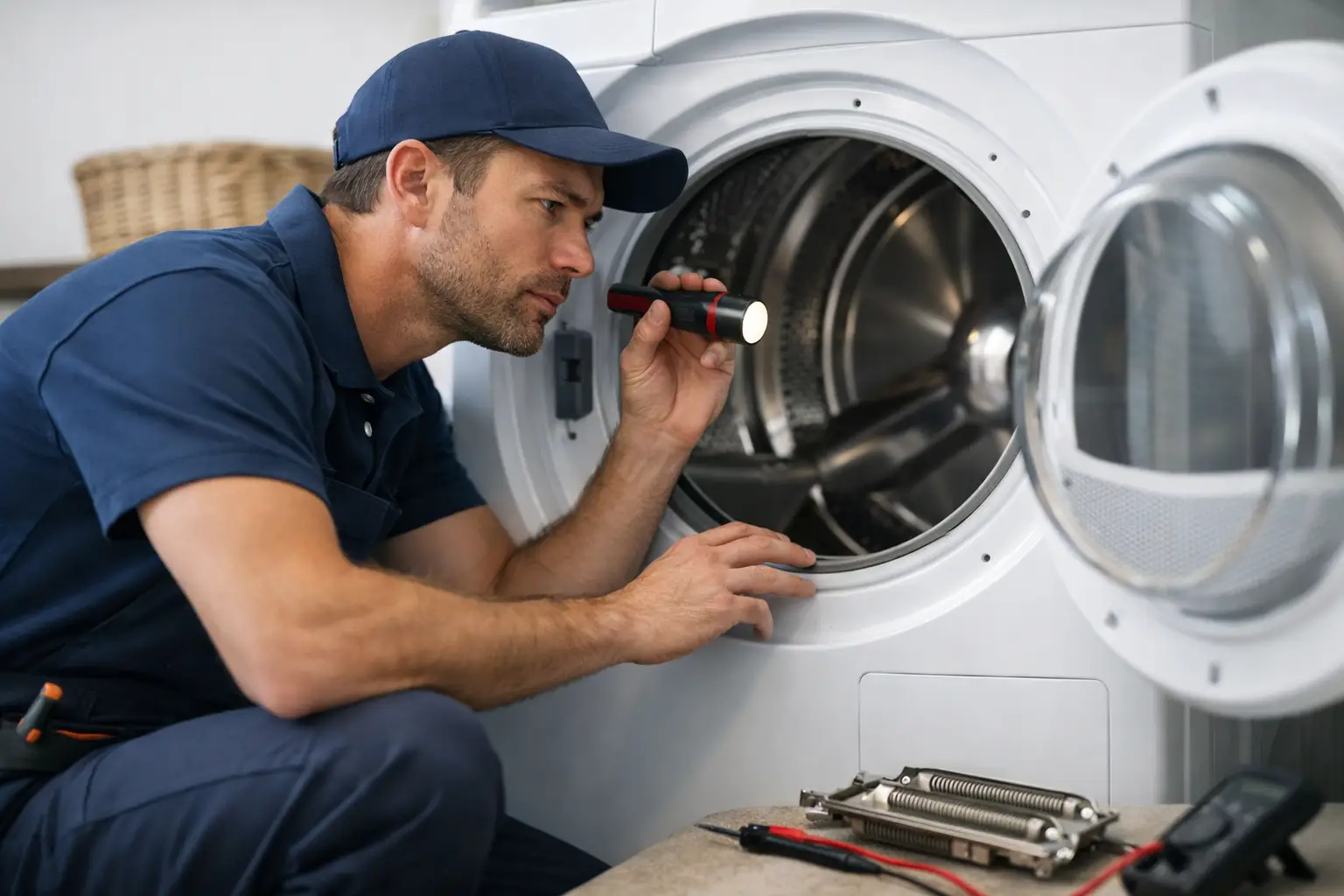
A dryer that runs but leaves clothes cold and damp usually does not fail without warning. If you are dealing with the problem of when dryer stops heating, the real issue is often deeper than a simple inconvenience. It can point to restricted airflow, a failed heating component, an electrical problem, or wear that has been building for months.
For most households, this is not a wait-and-see appliance problem. Wet laundry turns into multiple extra cycles, higher utility use, and a machine that is working harder without getting the job done. In some cases, continuing to run a dryer that is not heating correctly can also add stress to other parts of the system.
When dryer stops heating, what is usually wrong?
The short answer is that it depends on whether the dryer is gas or electric, how old the unit is, and whether airflow has been restricted. Several different failures can create the same symptom: the drum turns, the controls respond, but there is no heat or not enough heat.
On electric dryers, one of the most common issues is a failed heating element. The dryer may still tumble normally because the motor circuit is separate, but without the element producing heat, the appliance cannot dry clothes. Electric models can also lose heat because of a blown thermal fuse, a bad high-limit thermostat, a cycling thermostat problem, or a power supply issue where the dryer is only receiving partial voltage.
Gas dryers have a different set of likely causes. A faulty igniter, weak flame sensor, failing gas valve coils, or thermostat issue can all stop the burner from lighting or staying lit. To the homeowner, the symptom looks similar to an electric dryer heating failure, but the internal repair path is very different.
Then there is airflow. A clogged vent line, crushed duct, lint buildup inside the cabinet, or blocked exterior vent hood can cause a dryer to overheat internally and trigger safety components. In that case, the heating failure is sometimes the result of another problem, not the original problem itself.
The signs matter more than most people think
Not every no-heat complaint is exactly the same. A dryer that never heats at all often points to a failed component or power issue. A dryer that heats for a few minutes and then goes cold may suggest overheating, poor venting, or a thermostat-related problem. A dryer that takes two or three cycles to dry can indicate reduced heat rather than no heat.
That difference matters because replacing the wrong part wastes time and money. It is one reason professional diagnosis is usually the better move, especially on higher-end or newer machines with electronic controls. The symptom may feel simple, but the testing process usually is not.
Electric dryer problems can be misleading
Many homeowners assume that if the dryer turns on, the power supply must be fine. That is not always true. Electric dryers typically need 240 volts for the heating circuit, but the motor can still run on partial power. So the machine may look functional while producing no heat at all.
This is one of the more common situations where the problem appears internal but starts with the breaker, outlet, power cord, or terminal block. It is also a good example of why a dryer should not be treated as fully operational just because the drum spins.
Gas dryers can fail intermittently
Gas models often create more confusing symptoms. The igniter may glow, but the flame never starts. The dryer may heat for the first few minutes and then stop heating for the rest of the cycle. In many cases, failing gas valve coils are the reason. They may work when cold and fail once the dryer warms up.
Intermittent heat tends to be frustrating because the appliance seems to work sometimes. That can delay service and lead to repeat loads, which only adds wear and wasted energy.
When airflow is the real problem
One of the most overlooked causes of heating trouble is restricted venting. Dryers are designed to move heat, moisture, and lint out efficiently. When that path is blocked, internal temperatures can rise too high. Safety devices may shut down the heat to protect the appliance.
Even if the dryer still produces some warmth, poor airflow can make it act like the heater is failing. Clothes stay damp, the cabinet feels unusually hot, and cycle times get longer. Sometimes there is also a burning smell from lint buildup or overheated components.
This is where trade-offs come in. Replacing a blown fuse without correcting the blocked vent may get the dryer running again briefly, but the same failure can return. A proper repair means identifying both the failed part and the condition that caused it.
Why this is not a good problem to ignore
A dryer without heat is already disrupting the household. But the larger concern is that continued use can push the appliance further out of balance. Repeated attempts to dry the same load increase stress on the motor, belt, rollers, and electronic controls. If overheating is involved, other parts may be affected too.
There is also a safety angle. Excess lint, restricted exhaust flow, and overheating components should never be dismissed as minor. The issue may still be repairable and straightforward, but it should be diagnosed promptly.
What a technician looks for first
A professional dryer diagnosis is less about guessing and more about narrowing down the cause quickly. The first step is usually confirming whether the dryer is producing any heat at all, checking airflow, and testing the incoming power or gas ignition sequence. From there, individual components are tested based on the machine type and symptom pattern.
On an electric dryer, that may include the heating element, thermal fuse, thermostats, cutoff devices, and terminal connections. On a gas dryer, the technician may test the igniter, flame sensor, coils, and burner operation. If airflow is weak, the vent path and lint accumulation also need attention.
This approach matters because dryers can have multiple issues at once. A homeowner may notice no heat, but the technician may also find a vent restriction and worn support parts. Not every worn part needs immediate replacement, but understanding the full condition of the machine helps avoid repeat service calls.
When dryer stops heating after years of use
Age changes the repair decision. If a dryer has been reliable for many years and the failure is limited to a heating component, repair is often worthwhile. Dryers are generally simpler than many kitchen appliances, and many heating-related problems can be resolved without replacing the entire unit.
But it depends on the overall condition. If the machine has major cabinet wear, repeated electrical issues, a noisy drum, or multiple failing parts, the economics can shift. The right call is based on the repair cost, parts availability, and expected remaining life of the appliance.
That is why honest diagnosis matters. Some dryers are good repair candidates. Others are better handled with a clear explanation of the risks and likely future costs.
A quick word about DIY attempts
Homeowners often search for this issue hoping for a simple reset or one easy part swap. Sometimes there is a straightforward cause, but dryers involve live electrical circuits, gas components, heat-related safety devices, and hidden airflow problems. Replacing a visible part without testing the system can miss the actual cause.
There is also a practical issue. If the wrong part is installed, the dryer still does not heat, and now the original problem remains unresolved while time and money are already spent. For busy households, that usually turns one repair into two.
The value of fast local service
Dryer problems are rarely just about the dryer. They affect work clothes, kids’ laundry, towels, bedding, and the normal pace of the home. That is why responsive service matters. A trained technician who can diagnose the issue correctly and has access to the right parts can often reduce both downtime and repeat visits.
For homeowners in Irvine and throughout Orange County, that matters even more when schedules are full and waiting several days for a vague answer is not realistic. Quick diagnosis, experienced repair work, and warranty-backed service are what actually solve the problem.
If your dryer is running without heat, getting the right diagnosis early is the best next step. Prostar Appliance Service provides professional dryer repair for homeowners who want dependable service without guesswork. You can learn more about local service and customer experience through our Google Business Profile.