


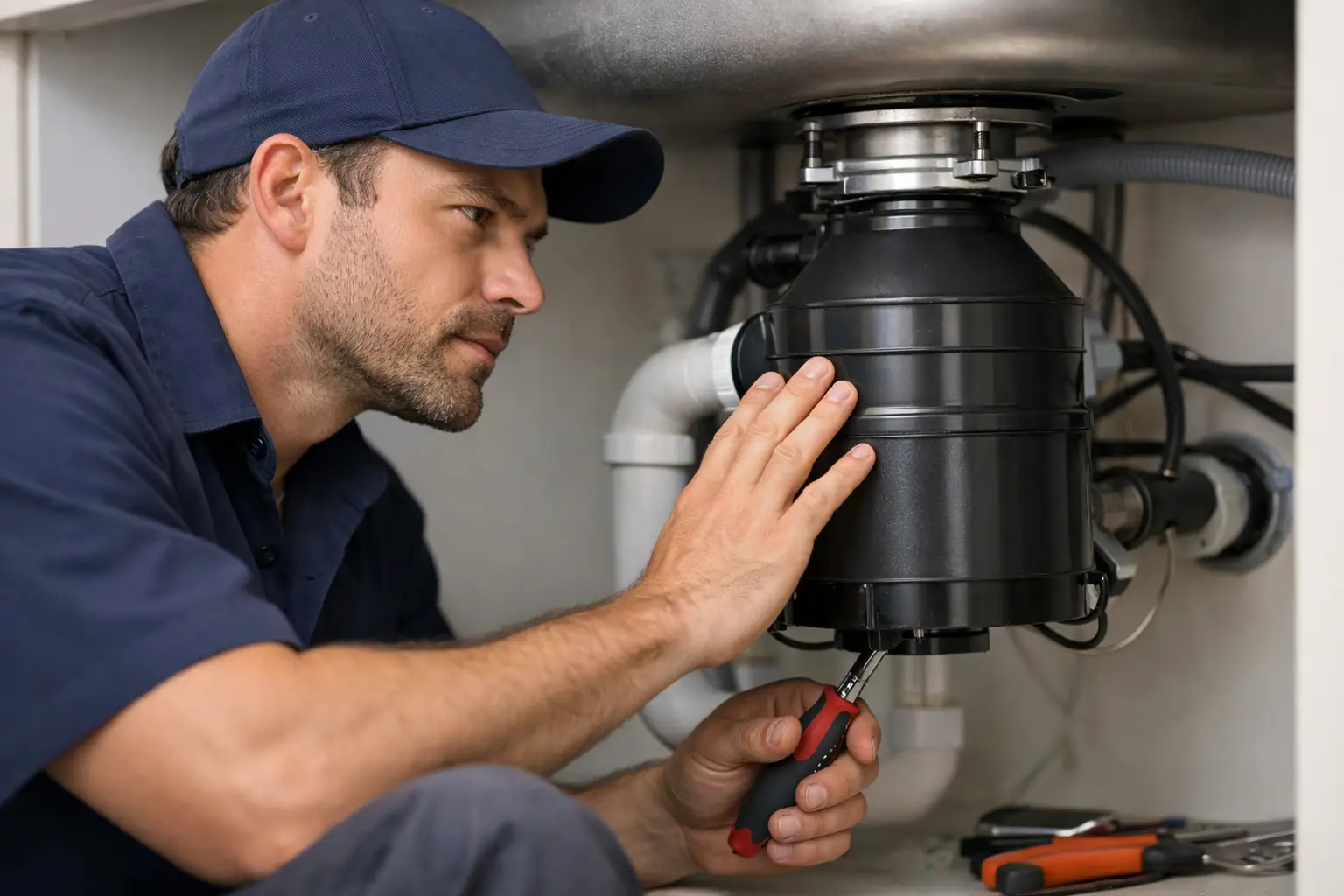
You flip the switch, hear a low hum, and nothing happens. If you are asking why is garbage disposal humming, the short answer is usually this: the motor is getting power, but the grinding components are not turning. That can point to a jam, a seized flywheel, an electrical issue, or a failing motor. The sound matters because a humming disposal is often one step away from overheating or burning out.
For most homeowners, this is not a problem to ignore and hope it clears itself. Garbage disposals are simple in concept, but when they stop spinning, the cause can range from a minor obstruction to internal damage. The right next step depends on what the disposal is doing besides humming, how long it has been happening, and whether the unit resets or trips power.
Why is garbage disposal humming but not spinning?
In many cases, the disposal hums because the motor is trying to run while the impeller plate is stuck. Food waste, fibrous scraps, bones, fruit pits, utensils, or even a small piece of broken glass can jam the mechanism. The motor still receives electricity, so you hear the hum, but the internal parts cannot rotate.
Another common cause is a seized turntable or flywheel. This can happen after a disposal sits unused for a while, or after grease and debris build up around moving parts. In older units, wear inside the motor can create the same symptom. At that point, the disposal may hum, get hot, and then shut off as a safety measure.
There is also an it depends factor here. If the unit hums briefly and then trips the reset, the issue may be mechanical resistance. If it hums with no movement and no reset response, the motor itself may be failing. If there is no sound at all, that points in a different direction entirely, such as loss of power, a bad switch, or wiring trouble.
The most likely causes behind a humming disposal
A jam is still the most frequent reason homeowners hear a humming noise. Disposals are built to handle food scraps, not every kind of kitchen waste. Celery strings, corn husks, coffee grounds, eggshell buildup, bones, and starchy foods can all create trouble under the right conditions. Even a spoon or bottle cap dropped into the chamber can lock things up immediately.
Grease is another issue that gets underestimated. While grease may go down as a liquid, it cools and thickens around internal parts and in the drain line. Sometimes the disposal itself is not fully jammed, but grease buildup creates enough resistance that the motor cannot turn freely.
Then there is age. A disposal that has been used heavily for years may hum because internal components are worn out. Bearings can fail, the motor can weaken, and corrosion can affect performance. In that case, freeing the mechanism may not solve the problem for long.
A less obvious cause is an electrical problem that allows partial operation. The disposal may receive enough power to hum but not enough to start correctly under load. That is less common than a physical jam, but it does happen, especially if there are issues with the switch, wiring, capacitor, or outlet.
What you should do first
The first priority is simple: turn the disposal off. Do not keep flipping the switch to see if it will catch and start. Prolonged humming can overheat the motor and turn a repairable issue into a replacement.
Next, cut power to the unit before checking anything. That means switching it off and, ideally, unplugging it or shutting off the breaker. Never put your hand into the disposal, even when it appears off. If something is lodged inside, use tongs or pliers to remove visible objects safely.
Many disposals have a manual turning point underneath the unit for an Allen wrench. If the mechanism is jammed, manually rotating it can sometimes free the impeller plate. After that, the reset button on the bottom of the disposal may restore operation. If the disposal runs normally after that, the issue may have been a temporary jam.
But there is a limit to how far that should go. If the unit is still humming, feels hot, smells like it is overheating, or repeatedly trips the reset button, stop there. Those signs usually mean the problem goes beyond a simple obstruction.
What not to do when a disposal hums
This is where small mistakes become expensive. Continuing to run a humming disposal is the fastest way to damage the motor. The same goes for forcing the system with repeated resets. The reset button is a protection feature, not a fix by itself.
You also do not want to pour chemical drain cleaners into a disposal that is not spinning. Those products can sit in the unit or splash during repair, creating a safety issue and sometimes damaging components. If the drain is slow along with the humming, the blockage may be tied to the disposal or downstream plumbing, and the right fix depends on where the restriction actually is.
Trying random tools from the top opening is another risk. Damaging the splash guard, impellers, or mounting components can turn a straightforward repair into a larger one. If the disposal is making metallic noises, leaking, or showing signs of electrical trouble, it is time to stop troubleshooting and get it checked professionally.
When a humming garbage disposal needs professional repair
A disposal that hums once because of a lodged object is one thing. A disposal that keeps humming after a reset, manual turn, or basic clearing attempt is different. That usually points to a deeper mechanical or electrical fault.
Professional service makes the most sense when the unit is older, the motor smells hot, the breaker trips, or the disposal hums without any sign of movement. It also makes sense when there is leaking under the sink. Once water and electricity are both in the picture, guessing is not worth the risk.
For busy households, the bigger issue is downtime. A broken disposal can affect sink use, kitchen cleanup, and sometimes dishwasher drainage depending on how the plumbing is configured. Getting an accurate diagnosis quickly helps avoid repeat problems and prevents unnecessary replacement if the unit can still be repaired.
Repair or replace?
Not every humming disposal should be repaired. If the problem is a jam or a stuck flywheel, repair is often worthwhile. If the motor has failed internally or the unit is already near the end of its service life, replacement may be the better value.
This is where age and condition matter more than the sound alone. A relatively newer disposal with a single obstruction is very different from an older unit that has started humming, leaking, and tripping its reset. In some cases, repair solves the issue cleanly. In others, replacement avoids another service call in the near future.
A proper diagnosis matters because the symptoms can overlap. What sounds like a jam can actually be a failing motor. What seems like a motor issue can be a capacitor or power problem. Replacing the wrong part or the whole unit too soon is not cost-effective.
How to reduce the chances of it happening again
Most disposal jams come from either the wrong materials or too much material at once. Running cold water during use, feeding waste gradually, and avoiding grease, fibrous scraps, and hard objects helps reduce strain on the unit.
Regular use can also help. Disposals that sit for long periods are more likely to develop stuck components. That does not mean forcing them to work harder than necessary, but occasional normal use with proper food waste can keep parts moving.
Even with good habits, disposals wear out. If yours has started making unusual noise, slowing down, or needing frequent resets, those are early warnings. Addressing the issue before the motor fully fails is usually the smarter move.
If your garbage disposal is humming and not clearing up with a safe reset or inspection, professional service can save time and prevent further damage. Prostar Appliance Service helps homeowners in Irvine and across Orange County with quick, reliable appliance repair backed by experienced technicians and warranty-covered work. For local service details and business information, visit our Google Business Profile.