


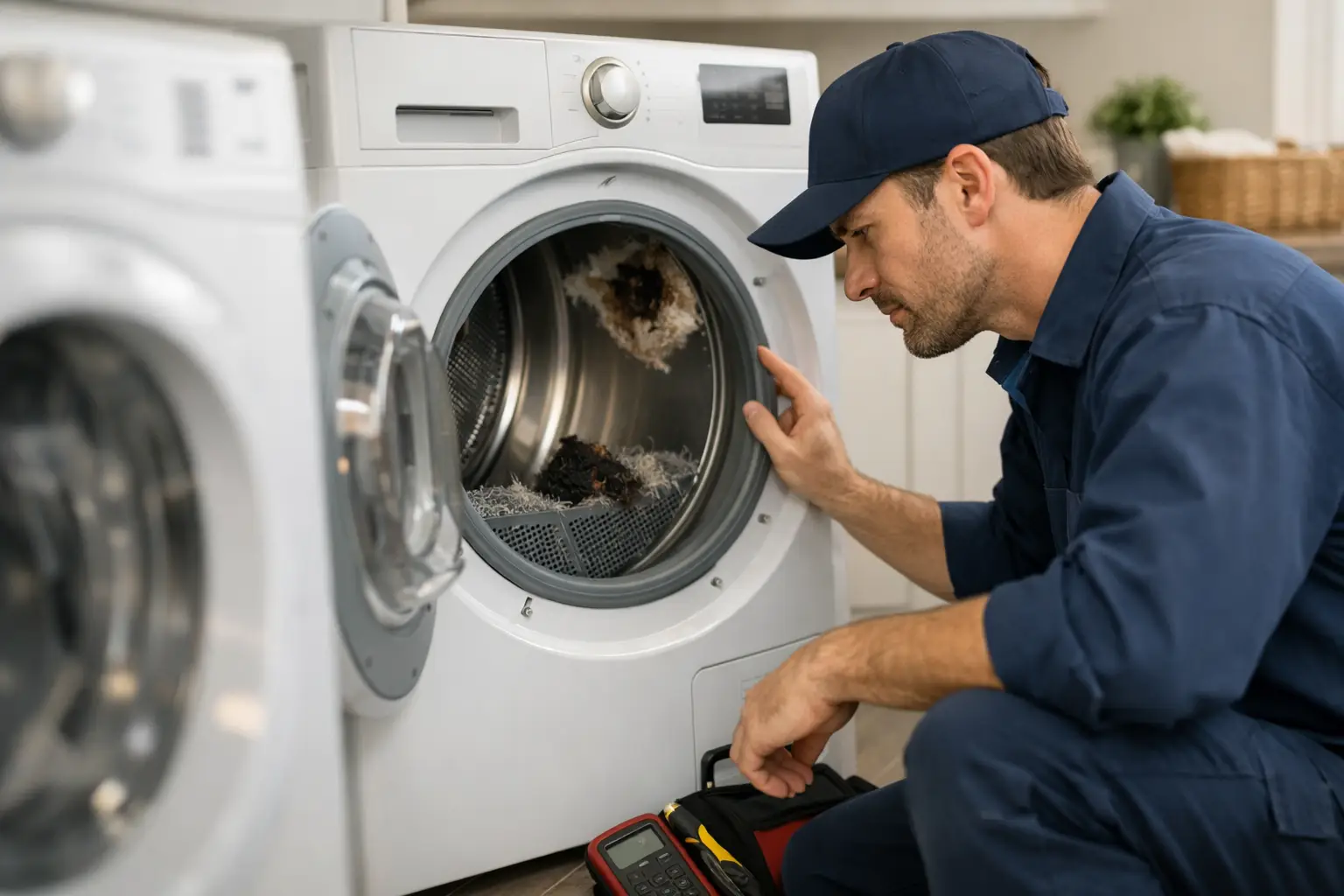
A dryer rarely stops working without warning. Most failures begin with a change you can see, hear, or smell during an ordinary laundry load. Knowing the best signs your dryer needs repair can help you avoid piles of damp clothes, higher utility bills, and a problem that becomes more expensive or unsafe over time.
Best Signs Your Dryer Needs Repair Before It Fails
Clothes take more than one cycle to dry
A properly operating dryer should dry a normal load within its usual cycle. If towels, jeans, or everyday clothes are still damp after one full cycle, something is limiting heat or airflow. A clogged vent can cause this issue, but so can a failing heating element, thermostat, blower wheel, moisture sensor, or control component.
Running repeated cycles is not a practical fix. It increases energy use and places extra strain on the dryer. If cleaning the lint screen does not restore normal drying time, schedule a professional diagnosis.
The dryer runs but produces no heat
A drum that tumbles without heating is one of the clearest repair signals. Electric dryers may have a damaged heating element, blown thermal fuse, failed thermostat, or power supply problem. Gas dryers can develop issues with the igniter, gas valve coils, flame sensor, or burner assembly.
Because the cause depends on the dryer type and model, this is not a situation for guesswork. A trained technician can test the correct components and identify whether a repair makes financial sense.
The dryer stops before the cycle is finished
A dryer that shuts off early may be overheating, misreading moisture levels, or experiencing a problem with its motor or control board. Some units stop as a safety response when airflow is restricted and internal temperatures rise too high.
Pay attention to when it happens. If the dryer stops only with large loads, the issue may involve airflow or a motor under strain. If it stops even with a few lightweight items, the failure may be more serious. Either way, avoid repeatedly restarting the appliance until the source is identified.
You smell burning, smoke, or gas
A burning odor requires immediate attention. Lint buildup near the heater, a slipping belt, an overloaded motor, damaged wiring, or an electrical component can create a hot or burning smell. Turn the dryer off, disconnect power if it is safe to do so, and do not use it again until it has been inspected.
For a gas dryer, any gas smell should be treated as urgent. Do not operate switches, flames, or other electrical devices near the appliance. Leave the area and contact the appropriate gas utility or emergency service before arranging appliance repair.
The dryer makes new or loud noises
Dryers are not silent, but a new sound is worth noticing. Thumping may point to worn drum rollers or an object caught in the drum. Squealing can indicate a worn belt, idler pulley, or roller bearing. Scraping or metal-on-metal sounds may mean the drum supports are failing.
Noise often begins as a minor inconvenience and becomes a complete breakdown when a moving part finally gives out. Prompt service can prevent damage to the drum, motor, or other components that may raise the repair cost.
The drum will not turn
If the dryer heats but the drum does not rotate, a broken belt is a common possibility. A failed drive motor, idler pulley, door switch, or control issue can also prevent tumbling. Clothes cannot dry effectively without proper drum movement, and continuing to run the unit can put additional stress on its heating system.
Do not force the drum or keep cycling the dryer in hopes that it will catch again. The appliance needs a proper inspection to determine which mechanical or electrical part has failed.
The dryer gets excessively hot
A hot cabinet, scorching laundry, or a laundry room that feels unusually warm can signal restricted venting or overheating inside the machine. While the exterior of a dryer may feel warm during use, it should not become painfully hot to touch or leave clothes excessively hot at the end of a cycle.
Overheating is especially concerning because lint is highly flammable. Clean the lint screen after every load, but remember that a clean screen does not rule out a clogged duct, crushed vent line, or internal airflow problem. Professional service can check both dryer operation and the conditions contributing to excess heat.
The control panel, buttons, or display act unpredictably
A cycle selector that will not respond, buttons that work only sometimes, flashing error codes, or a display that resets can indicate a failing control board, user interface, wiring connection, or sensor. Modern dryers rely on several electronic components to manage heat, timing, and automatic cycles.
Occasionally, unplugging the dryer for a few minutes may clear a temporary electronic glitch. If the same behavior returns, it is time for diagnosis. Replacing parts based only on an error code can be costly if the underlying problem is a wiring or sensor issue.
The dryer trips the breaker or blows a fuse
A breaker that trips once may be related to a household electrical event, but repeated tripping while the dryer runs should not be ignored. The dryer could have a shorted heating element, damaged wiring, a motor issue, or an electrical supply problem.
Avoid resetting the breaker again and again to keep laundry moving. Repeated trips are a safety warning, not a normal inconvenience. An appliance technician can evaluate the dryer, while a qualified electrician may be needed if the problem is in the home circuit or outlet.
You find moisture, lint, or debris around the dryer
Water near the dryer can come from a nearby washer, plumbing connection, condensation issue, or a dryer vent problem. Excess lint behind or beneath the unit may mean the vent connection has loosened, the duct is blocked, or air is escaping where it should not.
A dryer that vents poorly will take longer to dry, run hotter, and wear out faster. This is one of the best signs your dryer needs repair because it can affect both appliance performance and household safety.
When Repair Is Usually the Better Choice
Repair is often worthwhile when the dryer is relatively new, the cabinet and drum are in good condition, and the problem involves a serviceable part such as a belt, roller, thermostat, igniter, or heating element. It can also be the better option when replacement would require changes to gas, electrical, or vent connections.
Replacement may be more practical when an older dryer has multiple major failures, requires an expensive control board, or has a history of recurring problems. The right decision depends on the model, age, condition, and cost of the recommended repair. A clear diagnosis gives you the information needed to decide without guessing.
Do Not Wait on Safety-Related Dryer Problems
Long dry times, overheating, burning odors, unusual electrical behavior, and gas smells should always move to the top of the priority list. Waiting can turn a repairable component failure into damage to the dryer, vent system, or surrounding area.
For homeowners in Irvine and across Orange County, Prostar Appliance Service provides professional dryer diagnostics and repair for major brands. If your dryer is showing any of these warning signs, prompt service can help restore your laundry routine and address the problem before it becomes more disruptive.