


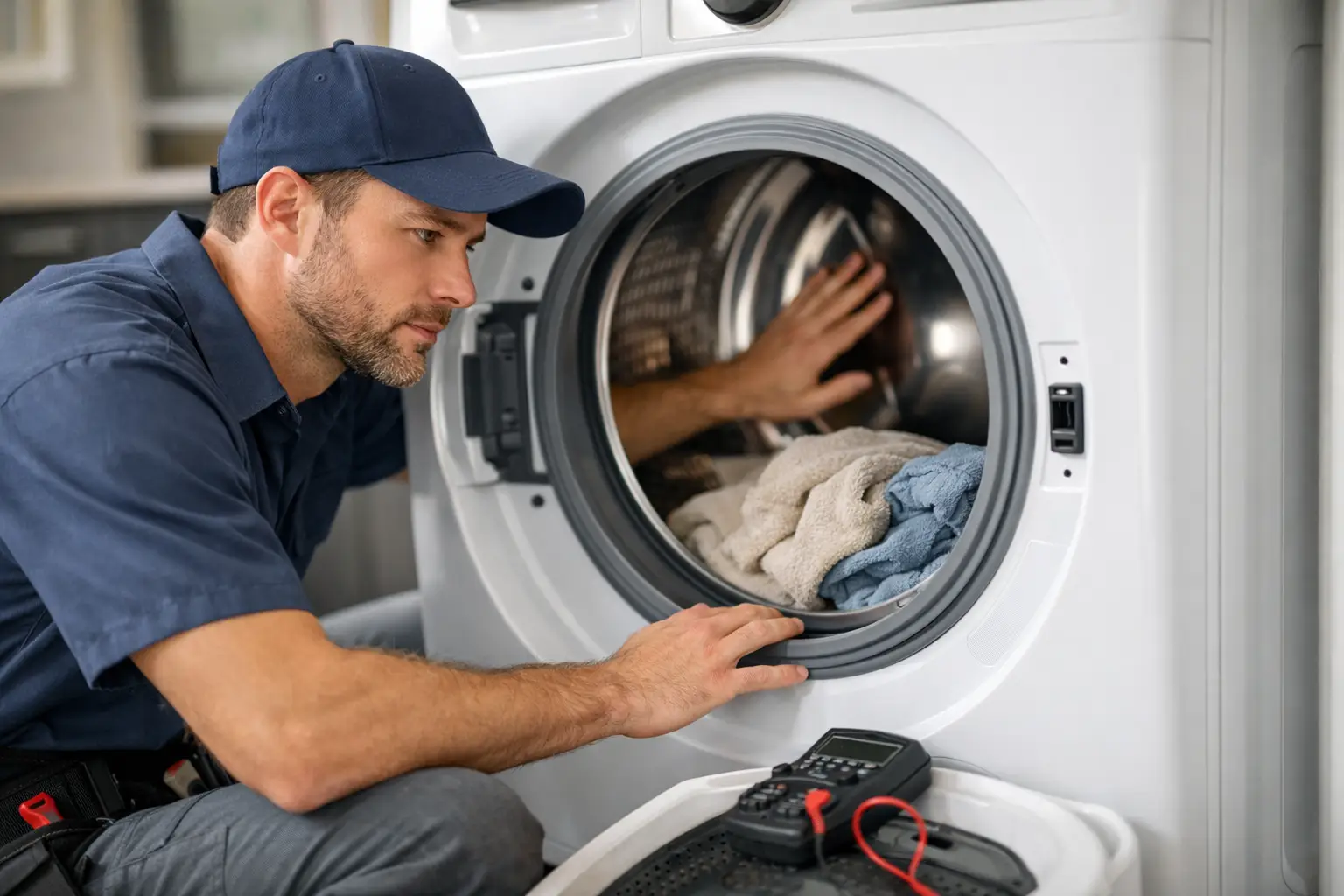
When a dryer not heating problem shows up, it usually turns a normal laundry day into a backlog of damp clothes, extra cycles, and wasted time. In many homes, this is not a small inconvenience. It affects work clothes, school uniforms, towels, and the daily routine, especially when the machine still runs but produces no heat.
That specific symptom matters. A dryer that tumbles but does not heat points to a different set of issues than a dryer that will not start at all. The cause might be electrical, mechanical, airflow-related, or tied to a failed internal safety component. The challenge is that several different failures can look almost identical from the outside.
Why a dryer not heating issue should not be ignored
A dryer is designed to balance heat, airflow, and drum movement. If one part of that system breaks down, the machine may keep spinning while failing to dry clothes. That can lead to rising utility use, unnecessary wear on fabrics, and in some cases, a larger repair if the unit keeps running under strain.
There is also a safety side to this. Poor airflow, overheating, and repeated cycling failures can affect more than drying performance. A machine that is not heating properly may have a clogged vent, a damaged thermostat, or a blown thermal fuse caused by restricted air movement. The original problem may be a bad part, but the condition that caused it can still be present.
The most common reasons a dryer stops heating
One of the most common causes is restricted airflow. Lint buildup in the vent line, wall duct, or exterior vent hood can trap heat inside the system and cause safety components to shut the heater down. In some cases, the dryer still looks like it is operating normally. The drum turns, the timer advances, and the cycle finishes. The clothes just stay damp.
A failed heating element is another likely issue in electric dryers. The element is what generates the heat. If it burns out, the dryer may continue tumbling with no warm air at all. This is a very common repair, but it is not something to guess at. A proper diagnosis matters because similar symptoms can also come from a failed thermal cutoff, thermostat, or wiring problem.
Gas dryers add another layer. If the igniter, flame sensor, or gas valve coils fail, the unit may run without producing heat. Sometimes the dryer starts out warm for a few minutes and then stops heating mid-cycle. That pattern often points to a gas ignition component rather than a simple airflow issue.
Power supply problems are also more common than many homeowners expect. Electric dryers use a higher-voltage connection to produce heat. If one leg of the power supply is lost, the dryer may still tumble but the heater will not work. That can happen because of a tripped breaker, a damaged cord, or an outlet problem. From the user’s perspective, it can look like a heating element failure when the real issue is electrical.
What the symptom can tell you
Not every dryer not heating complaint means the same repair. If the dryer runs but never gets warm, the cause may be different than if it gets slightly warm and takes three cycles to dry a load. Weak heat often suggests airflow restriction or a thermostat problem. No heat at all may point more directly to a failed heating element, blown fuse, or power issue.
A burning smell, unusually hot cabinet, or very long drying times are warning signs that should be taken seriously. Those symptoms often mean heat is not moving through the system correctly. Even if the clothes eventually dry, the machine is not operating the way it should.
The age and brand of the unit can matter too. Some models are more prone to certain failures, while others may have control board issues that interrupt the heating circuit. That is why a real diagnosis is worth more than swapping parts based on internet advice. Replacing the wrong component wastes time and money, and it can leave the actual problem untouched.
Why professional diagnosis usually saves time
Dryers are simpler than some kitchen appliances, but heating problems are not always simple. Accessing internal components can involve removing panels, handling live electrical connections, and testing continuity across multiple parts. That is before factoring in venting issues, gas system checks, or model-specific wiring layouts.
There is also the question of cause versus result. A thermal fuse may be blown, but that does not automatically mean the fuse itself was the only failure. In many cases, something else caused the overheating condition in the first place. If that root issue is missed, the same failure can happen again.
Professional service is less about guesswork and more about narrowing the problem down correctly the first time. An experienced technician can check airflow, verify power, test heating components, inspect safety controls, and identify whether repair makes practical sense based on the machine’s condition. For a busy household, that is usually the fastest route back to normal laundry use.
When repair makes sense and when it depends
In many cases, a dryer that is not heating is worth repairing. Common parts such as heating elements, thermostats, thermal fuses, igniters, and gas coils are often serviceable problems. If the drum motor is good, the cabinet is in solid shape, and the machine has not had repeated major failures, repair is often the more cost-effective option.
It depends, though, on the age of the appliance and the full condition of the unit. If the dryer is older and has multiple issues at once, the heating problem may be only part of the story. A technician may find worn rollers, a failing motor, damaged wiring, or control problems that change the value of the repair. That does not always mean replacement is the better answer, but it is a factor worth considering.
The brand and parts availability matter too. When genuine replacement parts are available and the repair is straightforward, turnaround is usually better. When parts are delayed or the model has deeper electrical issues, the timeline can be different. For most homeowners, clear guidance on cost, repair scope, and expected reliability matters more than a generic recommendation to fix or replace.
Signs it is time to schedule service now
If your dryer is running with no heat, taking far too long to dry, shutting off early, or producing a hot smell, it is a good time to stop pushing it through extra cycles. Repeated use can add wear to the machine and drive up utility costs without solving the problem. It can also make diagnosis harder if heat-related damage gets worse over time.
This is especially true for households that rely on daily laundry use. A malfunctioning dryer tends to become an urgent issue quickly, and waiting rarely improves the situation. The best next step is a service visit that identifies the failed part, checks the venting and safety system, and confirms whether the repair can be completed efficiently.
For homeowners in Irvine and across Orange County, fast appliance service matters when laundry routines cannot wait. Prostar Appliance Service provides professional dryer diagnostics and repair with trained technicians, stocked genuine parts, and warranty-backed workmanship. If your dryer is not heating and you need reliable local help, you can learn more through our Google Business Profile.