


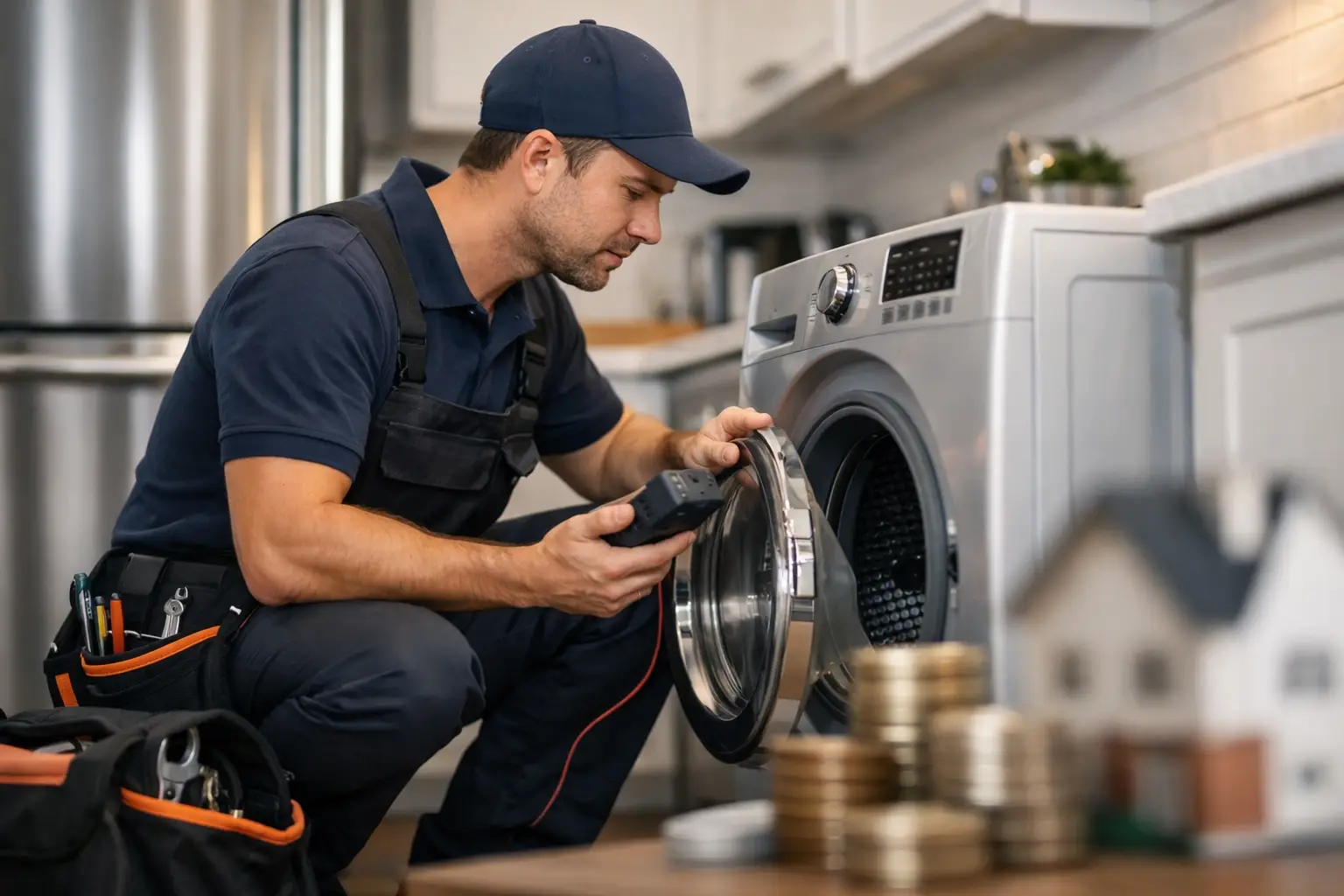
When a refrigerator stops cooling or a washer refuses to drain, most homeowners ask the same question first: how much appliance repair costs, and is it worth fixing at all? The honest answer is that pricing varies by appliance, part, and labor involved, but there are clear patterns that help you know what to expect before you schedule service.
For most residential repairs, the total bill usually comes down to three things: the service call or diagnostic fee, the labor required to complete the repair, and the cost of replacement parts. A simple fix can stay relatively modest. A more involved repair on a major kitchen appliance can cost significantly more, especially if the part is specialized or the unit is difficult to access.
How much appliance repair costs by appliance type
Different appliances fail in different ways, and that affects both the time on site and the parts needed. In general, smaller repairs with common parts tend to cost less, while sealed-system refrigeration issues, control board failures, and motor-related repairs tend to be more expensive.
Refrigerator repair costs
Refrigerator repair often lands on the higher end because the appliance runs constantly and includes multiple critical systems. Common repairs include replacing a thermostat, fan motor, defrost component, water inlet valve, or ice maker part. If the issue involves the compressor, evaporator, or sealed system, the cost rises quickly.
Many refrigerator repairs fall in the moderate range, but major cooling-system work can push the bill high enough that replacement becomes part of the conversation. Age matters here. If the refrigerator is older and already showing multiple issues, a large repair may not be the best long-term value.
Washer and dryer repair costs
Washers and dryers cover a wide range of pricing because some failures are straightforward and some require significant disassembly. A clogged drain pump, broken lid switch, worn belt, or faulty heating element is often more affordable than a transmission, control board, or motor issue.
Dryer repairs are commonly worth doing because the appliance itself is usually less expensive to service than to replace, and many failures involve accessible parts. Washer repairs depend more on the machine type and age. Front-load units can involve more labor, especially when the issue affects bearings, suspension, or leak-related components.
Dishwasher repair costs
Dishwashers often have repairable issues such as a failed circulation pump, drain pump, latch, float switch, or water inlet valve. These repairs are often more manageable than major refrigerator work, but labor still depends on the unit’s installation and access.
If the dishwasher is not cleaning well, not draining, or leaking, a professional diagnosis matters. What seems minor can come from several different causes, and guessing wrong can cost more than the actual repair.
Oven, range, and cooktop repair costs
Electric and gas cooking appliances vary based on the failed component. Igniters, bake elements, sensors, switches, and spark modules are common repair items. Many of these are worth repairing if the unit is otherwise in good condition.
Built-in wall ovens and higher-end ranges can cost more to service because parts are more expensive and access can take longer. Gas appliances also require careful diagnosis and safe handling, which is one reason professional service is the better route.
Microwave, freezer, ice maker, and garbage disposal costs
Countertop microwaves are often replaced rather than repaired, but built-in microwaves can justify repair depending on the issue. Freezers and standalone ice makers can be very repairable when the problem involves controls, valves, fans, or defrost components. Garbage disposals are a little different – sometimes a jam or reset solves the problem, but if the motor is burned out or the housing is leaking, replacement is often more practical than repair.
What affects how much appliance repair costs
The appliance itself is only part of the story. Two identical-looking service calls can end with very different totals depending on what the technician finds.
The type of part needed
A door latch and a control board are not priced the same. Genuine manufacturer parts usually cost more than generic alternatives, but they are often the better choice for fit, durability, and warranty protection. If a company stocks common genuine parts, that can also reduce delays and avoid extra trips.
Labor time and difficulty
Some repairs take under an hour. Others require pulling out a built-in unit, opening multiple panels, testing electrical components, and reassembling everything carefully. Labor charges reflect the time, technical skill, and complexity involved.
Brand and model
Premium brands and specialty models can raise both part costs and repair time. In some cases, parts are harder to source or the appliance is designed in a way that makes access more difficult. Newer smart appliances can also require more advanced diagnostics.
Age and overall condition
If one part failed but the rest of the appliance is in good condition, repair usually makes sense. If the machine is older, heavily worn, or already has a history of repeated issues, the value of another repair becomes less clear. A good technician should be direct about that.
Urgency and availability
Homeowners often need fast service when a refrigerator, oven, or washer fails. Faster appointments, stocked parts, and the ability to complete the repair in fewer visits add real value, especially when daily routines are already disrupted.
Typical pricing structure homeowners should expect
Most professional appliance repair visits start with a diagnostic fee. That covers the technician’s time to inspect the appliance, identify the failure, and provide a repair recommendation. If you approve the work, some companies apply that fee toward the total repair cost.
From there, labor and parts are added based on the actual problem. This is why phone estimates can only go so far. A refrigerator not cooling could mean a relay, fan motor, control issue, defrost failure, or sealed-system problem. The symptom sounds simple, but the repair path is not always simple.
That is also why extremely low advertised pricing should be viewed carefully. A proper diagnosis, qualified technician, insured service, and warranty-backed repair all matter. The lowest initial number is not always the lowest final cost if the problem is misdiagnosed or the repair fails shortly after.
When repair is worth the cost
If the appliance is relatively new, the repair is moderate, and the rest of the unit is in solid shape, repair is usually the smart move. This is especially true for built-in kitchen appliances, higher-end laundry units, and models that would be expensive to replace with a comparable product.
Repair also tends to make sense when the issue is isolated. A failed igniter, drain pump, thermostat, heating element, or valve can often be fixed without turning the appliance into an ongoing money pit.
When replacement may be the better decision
The answer to how much appliance repair costs becomes more important when the estimate approaches the value of the appliance itself. If the machine is older, parts are expensive, and another major component may fail soon, replacement can be the more practical option.
That does not mean every older appliance should be replaced. Some older units are built well and remain worth repairing. The key is whether the current repair solves the problem in a meaningful way or only delays the next breakdown.
A trustworthy technician should explain that trade-off clearly. The goal is not to push a repair at any cost. It is to help you make a sound decision based on condition, safety, reliability, and total value.
How to keep repair costs from climbing
The biggest cost mistake homeowners make is waiting too long after the first signs of trouble. A dryer taking too long to heat, a dishwasher leaving standing water, or a refrigerator making unusual noises can all point to issues that are cheaper to address early.
It also helps to use a professional service company that works on major brands regularly, carries common parts, and backs the repair with a labor and parts warranty. That reduces repeat visits and lowers the chances of paying twice for the same issue.
For busy households, convenience matters too. A fast, accurate diagnosis and efficient repair often saves more than money alone – it can prevent food loss, laundry backup, and disruption to your schedule.
If you need appliance repair in Irvine or elsewhere in Orange County, Prostar Appliance Service provides professional diagnostics and repair for major household appliances with experienced technicians, genuine parts, and warranty-backed work. For local service details and customer information, visit our Google Business Profile.