


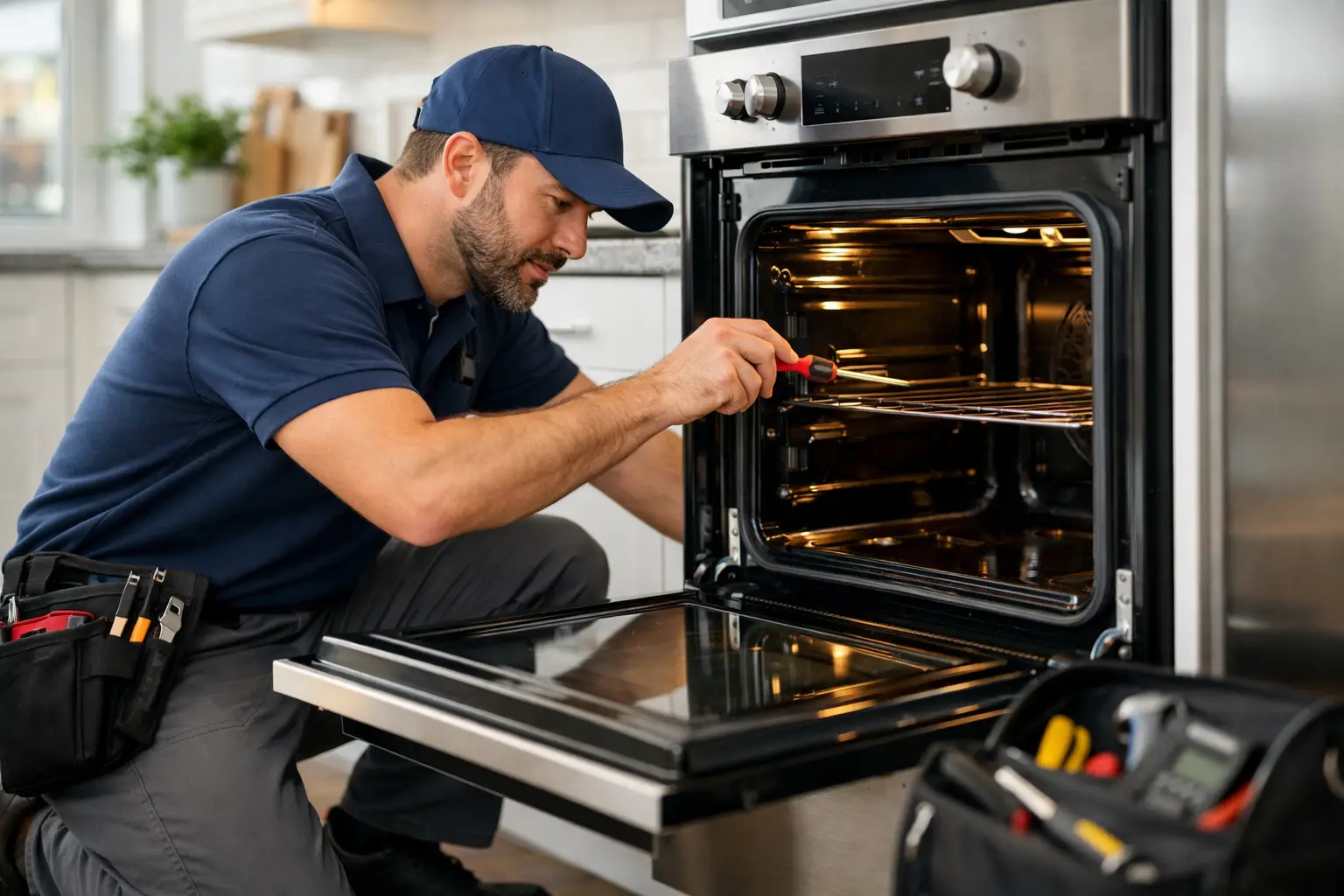
A cold oven can derail dinner plans. An oven that overheats, sparks, smells like burning wires, or will not shut off can be a bigger concern. When you need oven repair Orange County homeowners can depend on, the goal is not a temporary workaround. You need a clear diagnosis, the right replacement part, and a repair that restores safe, consistent cooking.
For busy households, an oven problem often appears at the worst possible time: before guests arrive, during a packed workweek, or when a range is used every day. Knowing which symptoms call for prompt professional service can help you avoid food waste, further appliance damage, and unnecessary disruption.
Signs You Need Oven Repair in Orange County
Ovens rarely fail without warning. A longer preheat time, uneven baking, or a temperature that seems slightly off may be the first sign that a heating, sensor, control, or airflow problem is developing. Ignoring those changes can turn a manageable repair into a complete loss of cooking function.
If an electric oven will not heat, the issue may involve a failed bake element, broil element, temperature sensor, thermal fuse, wiring connection, or electronic control board. When the oven heats but does not reach the selected temperature, the sensor or calibration may be at fault. Professional testing matters because several different parts can create nearly identical symptoms.
Gas oven issues require additional care. A failed igniter, weak gas valve, burner issue, or control problem can keep the oven from lighting or cause delayed ignition. If you smell gas, hear an unusual clicking sound, or notice an ignition delay, stop using the appliance and arrange service promptly. Do not attempt to disassemble gas components or test for a leak on your own.
Other signs that deserve attention include a door that will not close or lock correctly, a self-clean cycle that will not start, a display showing an error code, a tripping circuit breaker, or visible sparks. These problems can affect more than convenience. They may point to electrical, heat-containment, or safety-control failures that should be diagnosed by a trained technician.
Why Accurate Oven Diagnosis Saves Time and Money
A cooking appliance has multiple systems working together: heating elements or gas ignition, temperature regulation, safety controls, wiring, cooling fans, door seals, and electronic controls. Replacing a part based only on one symptom can be expensive and may not solve the actual problem.
For example, an oven that cooks too hot may have a damaged sensor, but it could also have a relay stuck on the control board. A unit that will not heat may have a burned-out element, but a loose wire or failed fuse can create the same result. A qualified technician tests the appliance, identifies the failed component, and checks whether related parts have been affected.
That diagnosis also helps homeowners make a sensible repair decision. Many oven issues are repairable, particularly when the appliance is otherwise in good condition and the needed part is available. Replacing an igniter, heating element, sensor, gasket, switch, or fan motor is often more practical than replacing the entire range or wall oven.
It depends on the appliance’s age, condition, repair history, and the cost of a major control board or specialty part. If multiple expensive components have failed or the unit has ongoing electrical problems, replacement may be the better long-term choice. A straightforward diagnosis gives you the information needed to decide without guessing.
Common Oven Problems That Need Professional Service
The Oven Will Not Heat
When an oven remains cold, the cause is often a failed heating element in an electric model or a faulty igniter in a gas model. However, power supply problems, damaged wiring, failed relays, and thermal safety components can also prevent heating. A technician can isolate the cause rather than replacing parts unnecessarily.
Food Cooks Unevenly
Uneven browning, hot spots, and recipes that take much longer than expected may indicate poor temperature control. A worn door gasket can let heat escape, while a failing convection fan can prevent proper air circulation. In some cases, the oven is heating but is no longer maintaining the temperature shown on the display.
The Oven Overheats or Will Not Shut Off
This is one of the situations where you should stop using the appliance. An oven that continues heating after being turned off can have a failed control board, relay, or thermostat-related issue. Excessive heat can damage cabinets, cookware, and nearby components, so prompt service is the right call.
The Door Will Not Close, Lock, or Unlock
A bent hinge, worn gasket, damaged latch, or failed lock motor can prevent a door from operating correctly. This is especially frustrating after a self-clean cycle, when some models may remain locked because of a control or latch failure. Forcing the door can cause additional damage.
Error Codes and Dead Displays
Modern ovens use electronic controls to manage temperature, timers, sensors, and safety functions. An error code is useful information, but it is not always a final diagnosis. The code may identify the affected circuit without confirming whether the failure is in the sensor, wiring, or control itself.
What to Do Before Your Service Appointment
You do not need to troubleshoot the appliance yourself. Still, a few details can help make the visit more efficient. Note the oven brand and model number, the exact symptoms, when the issue began, and whether an error code appears. If the oven heats inconsistently, describe whether it runs too hot, too cool, or only works on one setting.
Avoid using the self-clean function on an oven that is already malfunctioning. High self-clean temperatures can place added stress on control boards, locks, fuses, and sensors. If the appliance has electrical symptoms, such as sparking, smoke, or repeated breaker trips, turn it off at the circuit breaker if it is safe to do so and wait for professional service.
Keep the area around the oven accessible. Technicians may need to inspect the power connection, pull the range forward carefully, or access components behind the control panel. For wall ovens, access to the surrounding area helps the technician work efficiently while protecting cabinetry and flooring.
What a Professional Oven Repair Visit Should Include
A dependable repair visit begins with listening to the problem and inspecting the appliance’s condition. The technician should test the relevant functions, identify the likely failed component, and explain the recommended repair in clear terms. You should understand what is being repaired, why it failed, and whether additional concerns were found.
For many common problems, having genuine replacement parts available can reduce delays and avoid repeated trips. The exact timing depends on the appliance brand, model, and part availability. Older or specialty built-in ovens may require an ordered component, while common elements, igniters, sensors, and switches can often be addressed sooner.
Quality workmanship also matters after the part is installed. The appliance should be tested for proper heating, temperature response, ignition, door operation, and safety functions as appropriate. A warranty on parts and labor provides added reassurance that the repair is backed by the service provider.
Repairing Major Oven and Range Brands
Brand experience is not just a convenience. Different manufacturers use different diagnostic systems, control layouts, part designs, and error codes. A technician familiar with major oven, range, and wall-oven brands can work more efficiently and help prevent the wrong part from being ordered.
Whether you have a freestanding electric range, gas range, double wall oven, convection oven, or combination cooking unit, the repair approach should match the appliance. Built-in units can require careful removal and reinstallation. Gas units need proper attention to ignition and fuel-related components. Electronic models require accurate testing before replacing costly control parts.
When to Schedule Service Right Away
Some problems can wait a day or two if the oven is still operating safely. Others should not. Schedule prompt service if you notice a gas smell, sparks, smoke, burning odors, breaker trips, overheating, a door that will not unlock after cleaning, or an oven that stays on after you turn it off.
If the oven simply bakes unevenly or takes too long to preheat, it is still worth scheduling service before the issue gets worse. A small temperature-control problem can lead to ruined meals, higher energy use, and stress on other parts. Early repair is often the more cost-conscious option.
For homeowners in Irvine and nearby Orange County communities, Prostar Appliance Service provides trained, licensed, and insured technicians for oven and range problems, backed by a 90-day warranty on parts and labor. If your oven is disrupting meals or showing a safety concern, request local help through our Google Business Profile.