


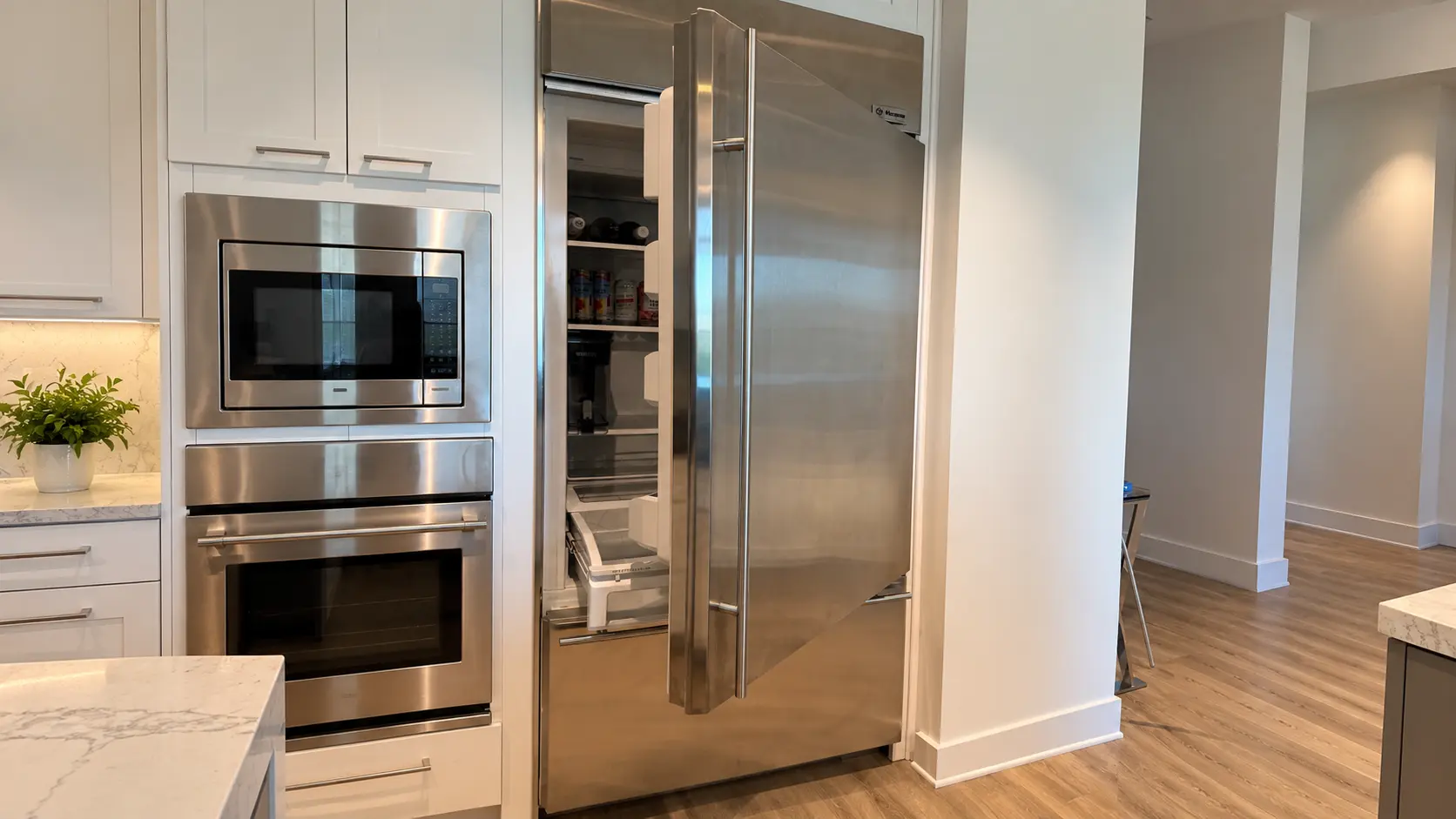
Leaving a refrigerator door open may seem like a small mistake, especially when groceries are being unloaded or someone is searching for an item. In hot weather, however, even a partially open door can introduce a large amount of warm, humid air into the cabinet. That moisture can condense and freeze around the evaporator, air supply passages, or return-air ducts. Once ice restricts circulation, the freezer may still feel cold while the fresh food section climbs toward room temperature.
This problem is especially relevant in Irvine and throughout Orange County during warm periods. The refrigerator must remove both the heat that entered through the open door and the moisture carried by the outside air. If airflow becomes blocked, simply lowering the temperature setting does not solve the underlying restriction. The appliance may run longer, use more energy, and still fail to cool food evenly.
Why hot weather makes an open refrigerator door more serious
A refrigerator is designed to operate as a mostly closed system. When the doors seal correctly, the appliance only needs to remove normal heat from food, lights, brief door openings, and heat entering through the cabinet. Leaving a door open changes that balance. Warm kitchen air keeps moving inside, and warmer air can carry much more moisture than cold air.
As that humid air reaches cold surfaces inside the refrigerator, the water vapor condenses. Near the evaporator and the coldest air passages, the moisture can freeze. A small amount of frost is normal and is managed by the automatic defrost system. A large, sudden moisture load can create frost or ice faster than the system can remove it. The result may be a frozen air channel even when the compressor, fan, and controls are still operating.
Hot weather can also increase the load on the condenser. The refrigerator is already working against a warmer room, and repeated door openings make recovery harder. This does not mean every open door causes a failure, but a door left ajar for a long time creates the right conditions for poor cooling and abnormal frost.
How refrigerator airflow normally works
Many household refrigerators create most of their cold air around an evaporator located in or near the freezer section. An evaporator fan moves that air through supply ducts into the fresh food compartment. After the air absorbs heat from food and the cabinet, it returns through separate passages so it can be cooled again.
That return path is essential. If the supply vent is open but the air-return passage is blocked by ice, circulation slows dramatically. Cold air cannot complete its normal loop. Some areas may remain cold, while shelves, door bins, and produce drawers become warm. A built-in refrigerator can make the symptoms more confusing because its large cabinet may take time to show a clear temperature change.
Different brands and models route air differently, so the location of the restriction cannot be assumed. A technician may need to inspect the evaporator cover, fan operation, dampers, thermistors, door switches, seals, and air passages before confirming the cause.
What happens after the refrigerator door is left open
The sequence often begins quietly. Warm air enters, moisture collects, and frost starts forming on cold surfaces. The refrigerator may run almost continuously while trying to reach its target temperature. As ice builds, less air reaches the fresh food section. The owner may notice that drinks are not as cold, milk spoils early, or the display temperature does not match the actual temperature inside.
Eventually, the fresh food compartment may approach room temperature even though the freezer still contains frozen items. You may hear the fan running, but little air comes from the refrigerator vents. In other cases, ice can interfere with the fan itself, creating a scraping, buzzing, or unusually loud sound. Water may appear after some of the frost melts.
These symptoms can resemble a failed fan, damper, sensor, control board, or defrost component. That is why the history matters. Tell the technician if a door was left open, if a large amount of warm food was recently loaded, or if the problem began after a very hot day.
Common signs of a frozen air-return system
- The freezer is cold, but the fresh food section is warm.
- Airflow from the refrigerator vents feels weak or stops completely.
- The refrigerator runs for long periods without reaching temperature.
- Frost or ice appears near interior vents or behind an evaporator cover.
- Food near one vent freezes while food in other areas becomes too warm.
- The problem started after a door was left open or did not seal correctly.
None of these signs proves that an air duct is frozen. A failed evaporator fan, stuck damper, heavy frost caused by a defrost-system fault, or a sealed-system problem can create similar symptoms. Temperature measurements and component testing help separate a temporary moisture event from a mechanical or electrical failure.
A real GE Monogram refrigerator service call in Irvine
During a recent Irvine service visit, a customer reported that the fresh food section of a GE Monogram built-in refrigerator had reached approximately room temperature. The refrigerator was still operating, but the compartment was not receiving the circulation it needed.
Diagnosis found that a frozen air duct was restricting airflow. The passage was carefully defrosted and cleared, allowing air to circulate through the cabinet again. After the work was completed, normal airflow and cooling were verified. This repair is a good example of why a warm refrigerator does not automatically mean that the compressor has failed or that the entire appliance must be replaced.
You can see this documented repair on our Monogram appliance repair page and in the real service-call section of our refrigerator repair page.
What you can check safely
If you discover that the door was left open, close it fully and avoid repeated openings. Check whether a food container, drawer, or shelf is preventing the door from sealing. Look at the gasket for a folded section, debris, or an obvious gap. Confirm that interior packages are not blocking the visible vents.
Use a refrigerator thermometer if one is available. The display setting tells you the requested temperature, not necessarily the actual food temperature. If perishable food has been held too warm, follow current food-safety guidance rather than assuming it is safe because the refrigerator later becomes cold again.
A brief recovery period can be normal after loading groceries or after a short door opening. However, a fresh food section that remains warm, has little airflow, or continues getting warmer needs attention. Repeatedly changing the control setting usually does not restore a blocked air passage.
What not to do when you see ice
Do not chip at internal ice with a knife, screwdriver, or other sharp tool. Refrigerant tubing, wiring, drain components, and plastic air channels may be hidden behind the frost. A puncture or cracked liner can turn a manageable airflow problem into major damage.
A heat gun is also unsafe for this job. Concentrated heat can deform plastic, damage insulation, overheat wiring, and affect nearby components. Even a household hair dryer can create electrical and water hazards when used inside an appliance. A proper defrosting procedure depends on the refrigerator design and on whether the source of the frost has been correctly identified.
Why a complete diagnosis still matters
Sometimes the open door is the entire cause: extra moisture freezes, the airflow path is cleared, and the refrigerator returns to normal operation. In other cases, the door was left open because the gasket, hinge, closer, or alignment was already faulty. A defrost heater, sensor, fan, damper, or control problem may also allow the ice to return.
A professional diagnosis should confirm more than the presence of frost. The technician may check actual compartment temperatures, fan operation, door sealing, frost pattern, drain condition, sensor response, and the defrost system. After the restriction is removed, airflow and temperature recovery should be verified before the repair is considered complete.
How to help prevent the problem
- Make sure both doors close completely after every use.
- Do not overload door bins or place packages where they interfere with closing.
- Clean sticky residue from the gasket with a mild solution recommended for the appliance.
- Check that the refrigerator is level enough for the doors to close as designed.
- Keep food away from supply and return vents.
- After loading groceries, verify that no bag or container is holding the door open.
- If a door-open alarm sounds repeatedly, find the cause instead of disabling the warning.
For built-in and premium refrigerators, door alignment and cabinet installation can affect sealing. Heavy custom panels, worn hinges, or trim interference may prevent a door from closing normally. Mention these details when requesting service so the technician can prepare for the installation.
When to schedule refrigerator repair
Schedule service when the fresh food section remains warm, airflow is weak, ice returns after defrosting, the fan makes abnormal noise, or the refrigerator cannot maintain a safe temperature. Prompt diagnosis is especially important during hot weather because food warms faster and the refrigerator operates under a heavier load.
If you live in Irvine or elsewhere in Orange County, ProStar Appliance Service can diagnose and repair refrigerator airflow and cooling problems, including frozen air passages, fan failures, defrost faults, door-seal concerns, sensors, controls, and other related issues. We service many standard and premium models, including built-in refrigeration.
Call 949-382-0942 or visit our service request page and tell us the refrigerator brand, model number, current temperatures, how long the problem has been happening, and whether a door may have been left open. ProStar provides in-home appliance repair in Irvine and throughout Orange County, with clear diagnostics, an estimate before approved work begins, and a 90-day warranty on completed repairs.