


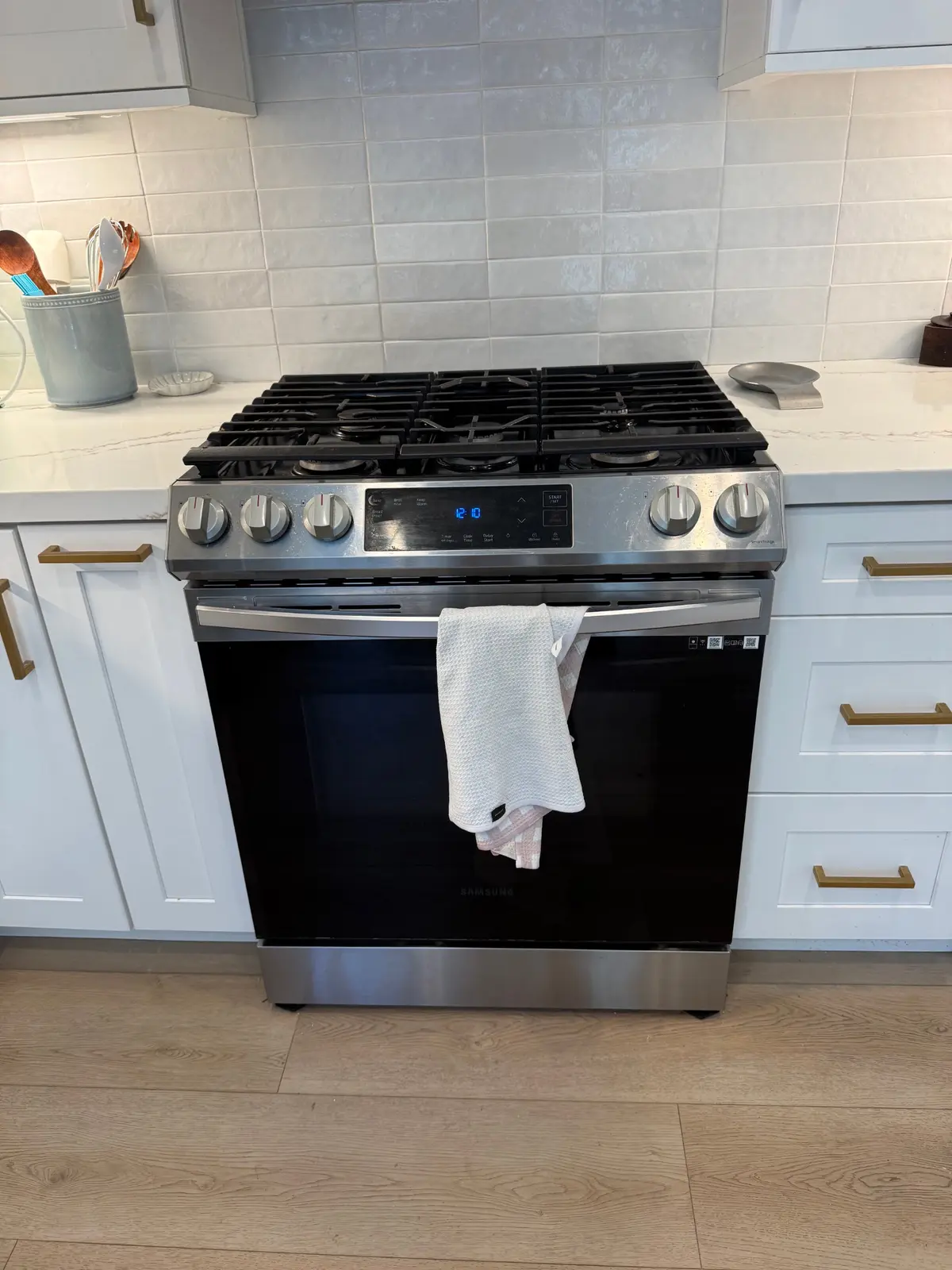
A Samsung gas range that takes much longer than usual to preheat may have a weak bake or broil igniter. This is one of the more common heating problems we diagnose on gas ranges. The oven may still warm up, but dinner takes longer, the temperature recovers slowly after the door is opened, or the oven stops heating consistently.
An igniter does not always fail all at once. After years of regular use, it can grow weaker while still glowing. How quickly that happens depends on the model, cooking frequency, oven-cleaning habits, and operating conditions. Because several components can produce similar symptoms, the exact cause should be confirmed before any part is replaced.
How a Weak Samsung Range Igniter Causes Slow Heating
On many Samsung gas ranges, the oven igniter must become hot enough and draw the correct electrical current before the safety gas valve opens. A worn igniter may glow but take too long to reach the required operating condition. The burner then lights late, cycles poorly, or may not light at all.
This is why seeing an orange glow does not prove that the igniter is working correctly. A technician evaluates the complete ignition sequence and checks the correct model information before deciding whether the bake igniter, broil igniter, wiring, gas valve, temperature sensor, control, or another component is responsible.
Common Warning Signs
- The oven takes much longer to preheat than it did before.
- The igniter glows, but the burner does not light promptly.
- Food cooks slowly or unevenly even after the display reaches the selected temperature.
- The oven temperature drops and recovers very slowly after the door is opened.
- Bake or broil works intermittently, or one mode works while the other does not.
- The oven clicks or attempts to heat without maintaining a steady flame.
Important gas-safety note: if you smell gas, do not continue testing or using the range. Avoid switches, flames, or anything that could create a spark; leave the area and contact your gas utility or emergency services from a safe location.
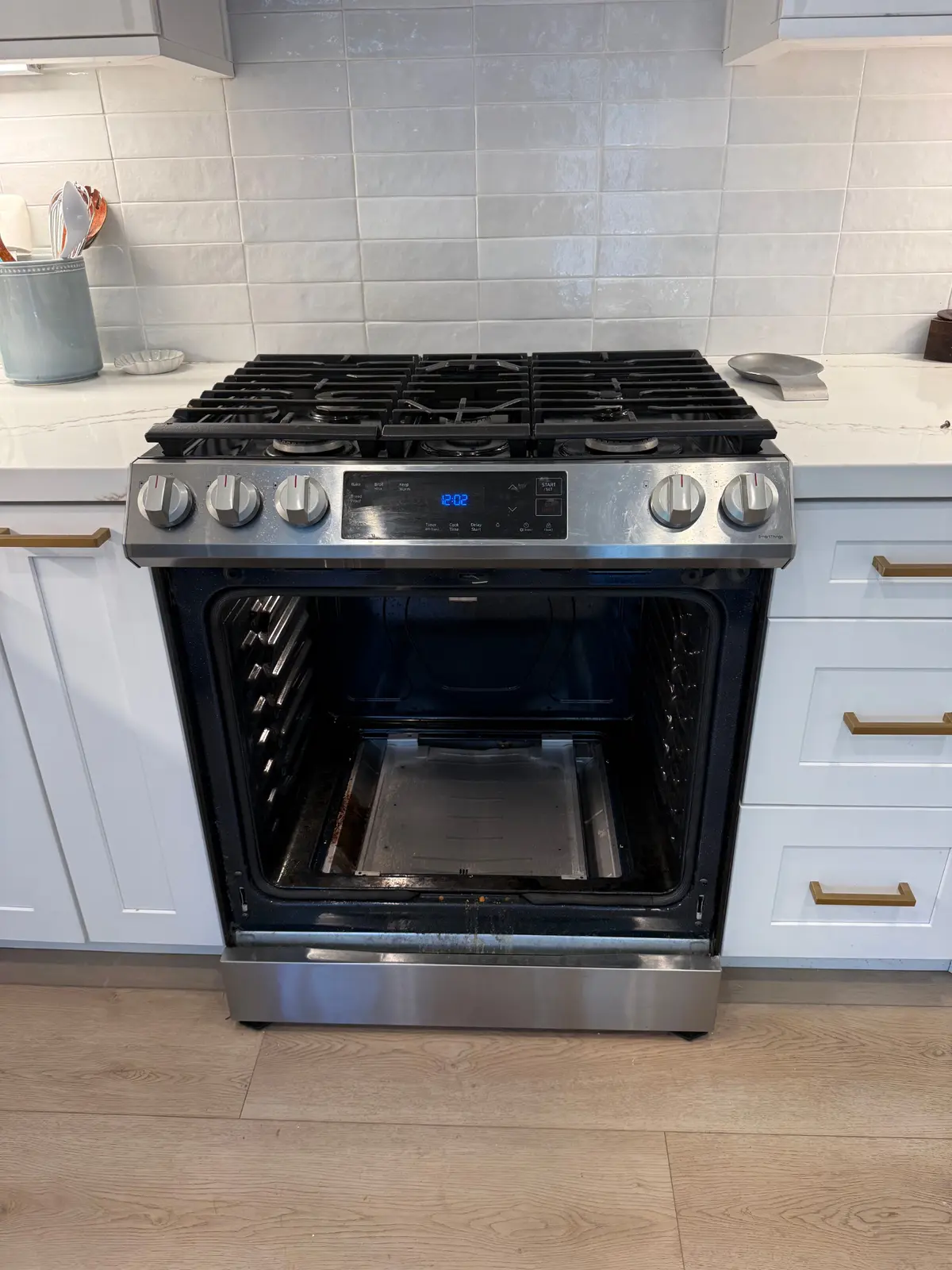
Bake Igniter vs. Broil Igniter
Many gas ranges use separate ignition components for baking and broiling. The bake igniter is associated with the lower burner, while the broil igniter serves the upper burner. A problem in one circuit does not automatically mean the other igniter should be replaced.
The symptoms help guide the diagnosis. If Bake is slow but Broil starts normally, the lower ignition system deserves closer attention. If neither mode heats correctly, the cause may be elsewhere. Confirming the model number and testing the circuit prevents unnecessary parts from being installed.
Why the Range Sometimes Must Be Pulled Out
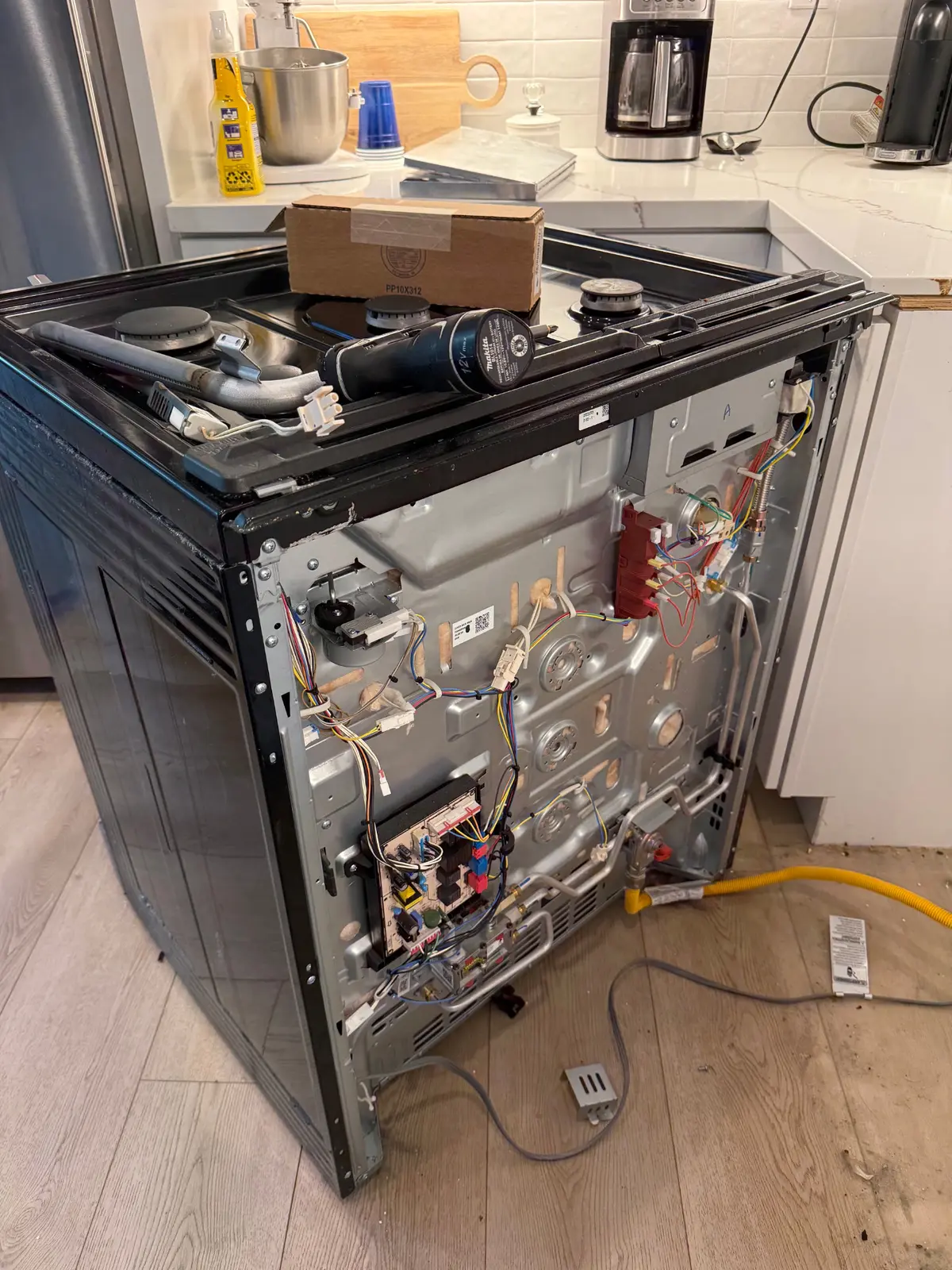
Some Samsung range models provide access to part of the ignition system from inside the oven. On others, the electrical connections and related components are reached from the rear. The range may have to be moved away from the wall and a rear panel removed to complete the repair correctly.
This is not a good place for guesswork. A gas range is heavy, can be secured by an anti-tip bracket, and has both gas and electrical connections. The correct power and gas-safety procedures must be followed, and the appliance must be returned to its proper installation position after service.
Igniters Are Fragile
Hot-surface igniters contain a brittle ceramic element that can be damaged by impact or improper handling. During cleaning, avoid spraying cleaner directly into burner openings or soaking the ignition area. Do not use sharp tools around the igniter, and follow the cleaning instructions in the owner’s manual for your exact model.
If a spill reaches the lower oven area, allow the range to cool and clean only as directed by the manufacturer. Repeated moisture, chemical residue, or physical contact can contaminate or damage sensitive ignition components. Never disassemble a gas appliance unless you are trained to work with its gas and electrical systems.
A Real Samsung Range Repair
The photographs in this article are from an actual ProStar Appliance Service job. They show the finished Samsung range, the oven opened for burner-area access, and the rear of the unit during service. Repairs like this illustrate why an accurate diagnosis and model-specific part matter: access can vary considerably even among similar-looking ranges.
After an igniter replacement, the oven should be reassembled and the ignition sequence, burner operation, preheat performance, and temperature response checked. If a gas connection has been disturbed, it must also be inspected using the appropriate leak-testing procedure before the appliance is returned to service.
Professional Samsung Range Repair in Irvine
ProStar Appliance Service provides in-home range repair and oven repair for slow preheating, no-heat conditions, ignition problems, temperature issues, and other cooking-appliance symptoms. Visit our Samsung appliance repair page to learn more about the brand and the appliances we service.
If you are located in Irvine, see our Irvine appliance repair page for local service information. The $95 service call is applied toward a completed repair, and completed repairs include a 90-day warranty on installed parts and labor.
To see our business information and customer feedback, visit the ProStar Appliance Service Google Business Profile.
Frequently Asked Questions
Can a Samsung oven igniter glow and still be bad?
Yes. An igniter may glow but remain too weak to operate the safety gas valve promptly. Proper diagnosis checks the complete ignition sequence instead of relying only on visible glow.
How much does Samsung range igniter replacement cost?
A typical total range is about $240–$320. The exact amount depends on the model, the bake or broil circuit involved, part cost, access, and the results of diagnosis.
Are the bake and broil igniters the same part?
Not necessarily. Many ranges have separate bake and broil igniters, and part numbers can vary by model. The full model number should be checked before ordering a replacement.
Is it safe to keep using a slow-heating gas oven?
A slow or delayed ignition problem should be diagnosed rather than ignored. If you smell gas, stop using the range, leave the area, and contact the gas utility or emergency services from a safe location.
Why does the range need to be pulled out for this repair?
On some models, igniter wiring or related connections are reached from the rear. Access varies, so a technician may need to move the range and remove a back panel to complete the repair and testing.