


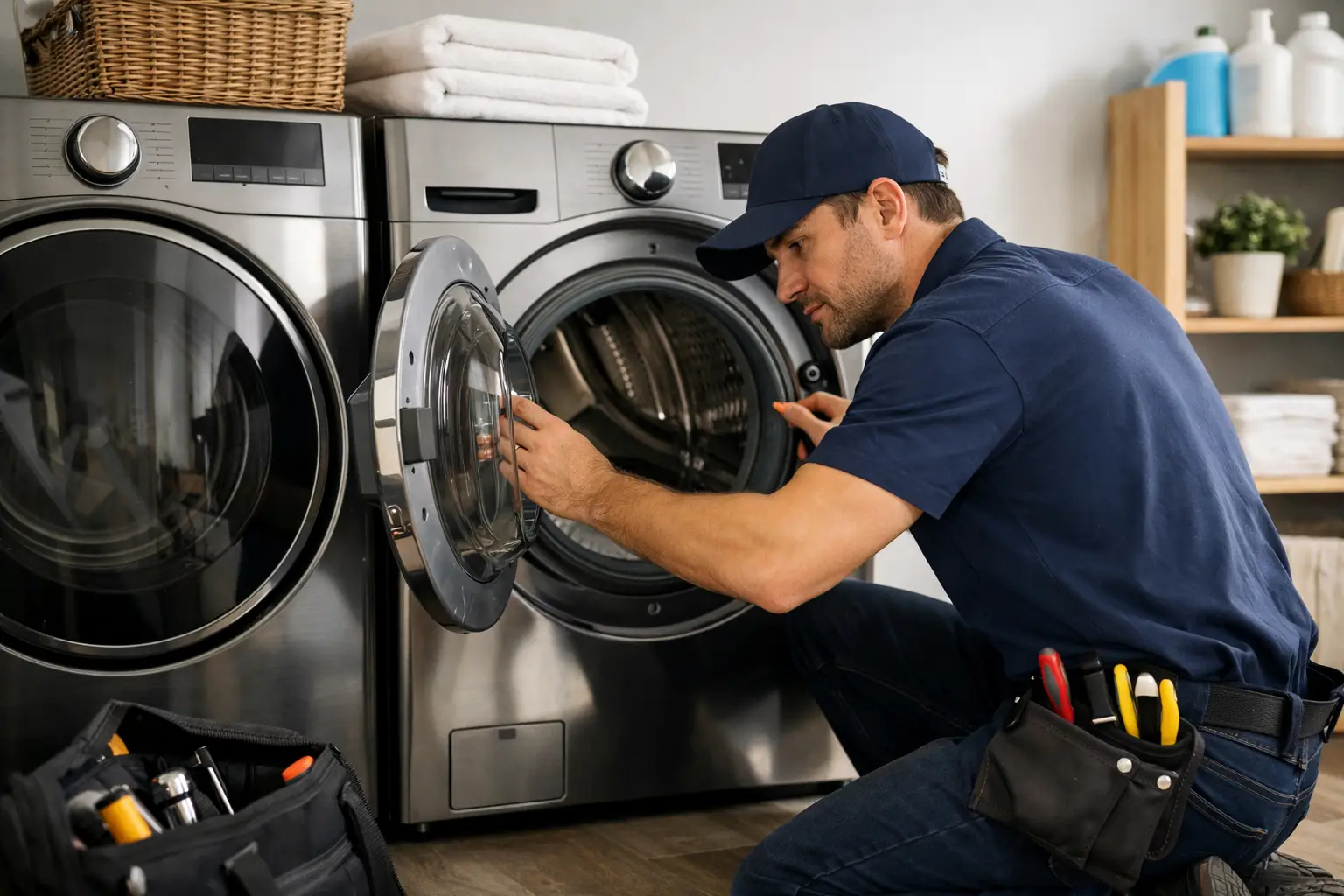
A washer that starts smelling musty or a dryer that takes two cycles to finish a load can disrupt an entire week. These problems often build gradually, then become urgent when laundry piles up. This washer dryer maintenance guide focuses on the simple habits that help busy households prevent avoidable wear, protect clothes, and recognize when a professional repair is the safer choice.
Washer Dryer Maintenance Guide: Start With the Basics
Your washer and dryer work hardest when the household is busiest. Overloading either appliance, using too much detergent, or postponing a small issue can place extra strain on motors, hoses, belts, sensors, and drainage components. Regular maintenance does not guarantee that a part will never fail, but it can reduce the buildup and misuse that commonly lead to service calls.
For most homes, a quick check after laundry day and a more thorough inspection once a month is enough. Households with children, pets, frequent bedding loads, or high laundry volume may need to clean key areas more often.
Keep detergent and softener under control
More detergent does not mean cleaner clothes. Excess detergent can leave residue inside the washer drum, dispenser, door seal, and drain system. In high-efficiency machines, use detergent labeled for HE washers and follow the amount recommended for your load size and water conditions.
Liquid fabric softener can also leave a film over time. If you notice residue in the dispenser, remove and rinse the drawer according to the appliance manual. A washer-cleaning cycle or manufacturer-approved cleaning product can help remove odor-causing buildup from the drum. Do not use harsh cleaners or combine products, especially bleach and ammonia-based solutions.
Wipe the door seal and leave room to dry
Front-load washers are especially prone to moisture collecting in the rubber door gasket. After washing, inspect the folds of the seal for hair, coins, small clothing items, or residue. Wipe the gasket with a clean cloth, then leave the door slightly open so the interior can dry.
Top-load washers also benefit from an open lid after a load. The goal is simple: reduce trapped moisture before it becomes mildew. If an odor returns soon after cleaning, or the washer has standing water, poor drainage or a mechanical issue may be involved.
Protect Your Washer From Leaks and Drain Problems
A leak is not always dramatic. Slow drips behind the washer can damage flooring, baseboards, and nearby walls before anyone sees them. Every month, look behind the machine for dampness, corrosion around hose connections, or water on the floor.
Check the hot and cold water hoses for cracks, bulges, stiffness, or rusted fittings. Rubber hoses should be replaced based on their condition and manufacturer guidance. Braided stainless-steel hoses are often more durable, but they still need inspection. Make sure the washer is not pushed tightly against the wall, which can kink hoses or strain the drain line.
The drain hose should remain securely positioned in the standpipe without being sealed airtight. A tightly sealed connection can interfere with proper draining. If your washer is leaving clothes unusually wet, displaying a drain-related error, making a loud humming sound, or stopping mid-cycle, avoid repeated resets. A clogged drain path, failing pump, or control issue needs proper diagnosis.
Level the machine before vibration becomes damage
A washer that shakes across the floor is more than an annoyance. Repeated vibration can loosen connections, wear suspension components, and damage nearby surfaces. First, avoid overloading the drum and balance heavy items such as towels or blankets around the load.
If the washer still bangs or walks during spin, check that all four feet are firmly on the floor. A machine can appear level until it reaches high spin speed. Flooring also matters. An upstairs laundry room, uneven tile, or flexible floor can amplify normal vibration, so the right correction depends on the installation and appliance type.
Persistent violent shaking, grinding, or a burning smell is not a maintenance task. Stop using the washer and arrange service before a small component failure creates a larger repair.
Dryer Maintenance That Reduces Fire Risk
Lint is expected in every dryer load. Lint collecting where it should not is the concern. Restricted airflow forces the dryer to run longer, overheats components, wastes energy, and creates a serious fire risk.
Clean the lint screen before every load. Remove lint by hand, and periodically wash the screen with warm water and a soft brush. Dryer sheets and fabric softener can leave an invisible coating that limits airflow even when the screen looks clean. Let it dry completely before reinstalling it.
Also check the lint screen housing for buildup. Do not reach deep into the cavity with sharp tools or disassemble internal dryer panels. Lint can collect around heating elements, wiring, and moving parts, where a trained technician should handle cleanup safely.
Pay attention to longer drying times
When a dryer suddenly needs two or three cycles, many homeowners assume the appliance is failing. Sometimes the dryer is working correctly but cannot exhaust moisture because of a restricted vent. Common warning signs include clothes that remain damp, a hot laundry room, a burning odor, unusually hot clothing, or weak airflow outside at the vent outlet.
The vent path from the dryer to the exterior should be cleaned regularly, particularly in homes with long duct runs or several bends. Use rigid or semi-rigid metal venting where appropriate, not thin plastic or foil-style ducts that can sag and trap lint. The exterior damper should open freely when the dryer runs and close when it is off.
If the vent is difficult to access, runs through walls or ceilings, or appears damaged, it is worth having it inspected. A clean lint screen does not prove the entire vent system is clear.
Use Better Laundry Habits to Reduce Wear
Small loading habits affect appliance life. Check pockets for coins, screws, pens, tissues, and keys before washing. These items can damage the drum, clog the drain pump, tear the door gasket, or create loud noises during a cycle.
Avoid packing the washer or dryer to the top. Clothes need room to move for proper washing, rinsing, and airflow. Oversized items such as comforters, pet beds, and heavy rugs can exceed the capacity of a residential machine even if they physically fit inside. In those cases, a commercial-size machine may be the better option.
Use the right cycle and temperature for the load rather than defaulting to the longest or hottest setting. High heat can be necessary for certain fabrics and sanitation needs, but frequent unnecessary high-heat drying can shrink garments and add stress to dryer components. Cleaning the moisture sensors inside the dryer drum with a soft cloth can also help automatic cycles end more accurately.
Know When Maintenance Is No Longer Enough
Routine care can address residue, lint, and minor loading issues. It cannot reliably repair worn belts, broken door locks, failing pumps, damaged heating elements, faulty thermostats, or electronic control problems. Continuing to run an appliance that is making unusual noises or showing error codes can make the repair more expensive.
Schedule professional service if your washer leaks, will not drain, fails to spin, smells like burning, or makes repeated grinding or banging sounds. For dryers, service is recommended when there is no heat, overheating, repeated shutdowns, sparking, burning smells, or continued long dry times after the lint screen and accessible vent outlet have been checked.
If your washer or dryer needs dependable attention in Irvine or throughout Orange County, Prostar Appliance Service provides trained, licensed, and insured technicians for major-brand repairs. For local service details and customer information, visit our Google Business Profile.