


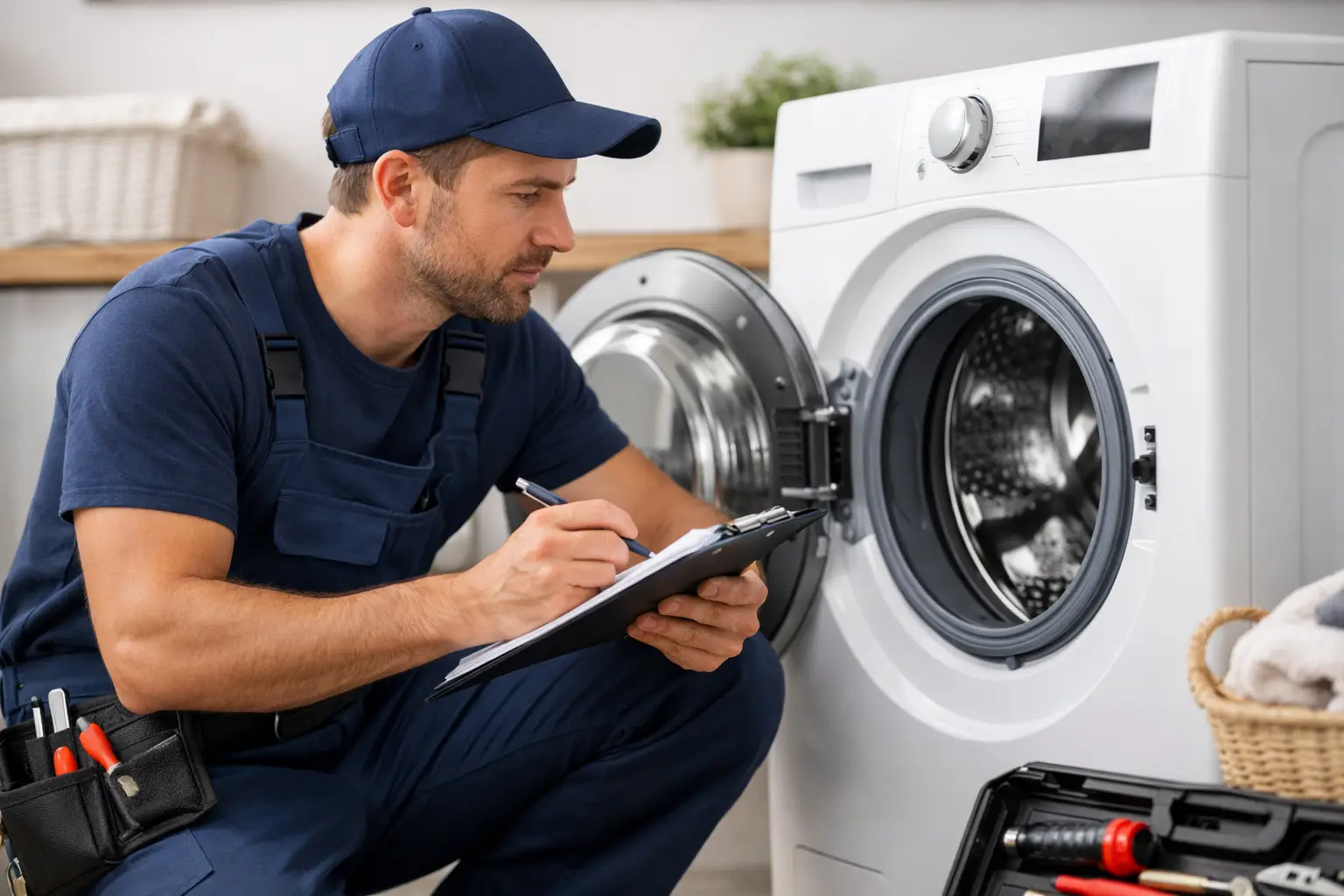
A washer that stops mid-cycle can turn a normal laundry day into a scheduling problem fast. This washer repair service checklist helps homeowners recognize the signs that need professional attention, protect the laundry area from further damage, and give a technician the details needed to diagnose the problem efficiently.
Washer Repair Service Checklist: Start With the Symptoms
Before scheduling service, take a moment to identify exactly what the washer is doing – or not doing. A clear description of the problem can save time during diagnosis, especially when the issue happens only at certain points in the cycle.
Pay attention to whether the washer will not start, will not fill with water, fails to agitate, will not spin, or stops before draining. These symptoms can point to very different components, from a failed lid switch or door lock to a drain pump, water inlet valve, belt, motor, control board, or sensor. A machine that completes part of a cycle but leaves clothes soaking wet is not the same issue as one that will not power on at all.
Also note whether the problem is constant or intermittent. If the washer works sometimes but stops at other times, write down what changes. The size of the load, cycle selection, water temperature, unusual noise, or a displayed error code can all help narrow the diagnosis.
Check for Water Where It Should Not Be
Water on the floor is one of the clearest reasons to stop using the washer until it has been inspected. Even a small leak can damage flooring, baseboards, nearby cabinetry, and drywall over time. It can also create a slip hazard in a busy laundry room.
Look at the area around the machine and identify where the water appears to be coming from. It may be near the front door, under the washer, behind the unit, or at the drain connection. Do not pull a heavy washer away from the wall without help, and do not assume a visible hose is the only source of the problem. Internal hoses, pumps, door boots, dispensers, and tub seals can also leak.
If water is actively flowing, turn off the washer and close the water supply valves behind it if they are accessible. For a substantial leak, avoid running another test cycle. The cost of a prompt repair is usually far less than the cost of water damage restoration.
Listen for Changes in Sound and Movement
Washers make ordinary operating sounds, but loud banging, grinding, scraping, squealing, or repeated clicking should not be ignored. A sharp banging sound may be caused by an unbalanced load, particularly with blankets, towels, or a single heavy item. Redistributing the load can sometimes correct that immediate issue.
If the washer continues to shake violently with balanced, normal-size loads, service is needed. The cause may involve worn suspension parts, damaged shock absorbers, an out-of-level installation, a loose counterweight, or a developing tub or bearing problem. Continuing to run a washer that walks across the floor can damage the machine and nearby connections.
Grinding or rumbling during spin is more concerning. These noises may indicate a failing bearing, drive component, or object caught where it should not be. Avoid repeatedly testing the washer to see whether the sound goes away. Mechanical damage often becomes more extensive when the machine is operated under load.
What to Record Before You Schedule Washer Repair
A professional technician can inspect the washer directly, but the details you provide before and during the appointment matter. Start with the brand, model number, and approximate age of the appliance. The model tag is often located around the door opening on front-load machines, beneath the lid on top-load models, or on the back panel.
Record any error code exactly as it appears. Do not rely on memory if you can take a clear photo of the display. Error codes are useful clues, although they are not always a final diagnosis. The same code can sometimes be triggered by a blockage, wiring issue, sensor failure, or a component that is not operating correctly.
It also helps to know when the failure occurs. Mention whether the washer stops during fill, wash, drain, spin, or at the end of the cycle. Tell the technician if the machine has recently been moved, if there was a power outage, or if the problem began after washing a large or unusually heavy load. These facts can reveal whether the issue is related to installation, drainage, electrical supply, or the washer itself.
If possible, have photos or a brief video of a leak, error code, or unusual sound available. Do not try to remove panels or reach into moving areas to capture evidence. A safe, simple observation is enough.
Basic Checks That Are Safe for Homeowners
Not every washer problem requires a major repair, but basic checks should stay limited to items that do not involve disassembly or electrical work. Confirm that the washer is plugged in, the circuit breaker has not tripped, and the water supply valves are fully open. If the machine has a door or lid that will not lock, check for clothing caught in the opening and make sure the load is not packed too tightly.
For drain-related problems, inspect the visible drain hose for obvious kinks or crushing. A restricted hose can prevent proper drainage, but so can an internal pump obstruction or pump failure. If the washer has a customer-accessible drain filter, follow the manufacturer instructions carefully and expect water to come out when it is opened. If you are not sure whether your model has one, it is better to leave it to a technician.
Avoid resetting breakers repeatedly, forcing a locked door open, using excessive detergent, or continuing to run cycles when the washer smells hot or produces smoke. A burning odor, visible sparking, or repeated electrical shutdown calls for immediate discontinuation of use. Unplug the machine if it can be done safely and arrange professional service.
Know When Repair Is the Better Choice
A repair decision depends on the type of failure, the washer’s age, availability of replacement parts, and the condition of the rest of the appliance. A relatively new washer with a failed pump, inlet valve, lid lock, belt, or drain-related component is often a strong repair candidate. Replacing a targeted part can restore normal operation without the expense and disruption of buying a new machine.
The decision is less straightforward when an older washer has major bearing damage, a failed control board, extensive corrosion, or multiple recurring problems. In those cases, a technician can explain the repair scope and help you compare it with replacement. The lowest immediate price is not always the best value if another aging component is likely to fail soon.
For households with frequent laundry needs, timing matters too. A dependable repair with genuine replacement parts can be more practical than waiting for delivery, installation, and disposal arrangements for a new washer. On the other hand, replacement may make sense when repair costs are high relative to the machine’s remaining useful life.
Prepare the Laundry Area for the Technician
A little preparation can make the appointment more efficient. Remove clothing, detergent bottles, baskets, and stored items from around the washer. Leave a clear path to the laundry area and make sure the technician can access the front, sides, and connections behind the appliance if needed.
If your washer is stacked with a dryer or installed in a tight closet, mention that when scheduling. Access conditions can affect how the unit is inspected and whether additional assistance is needed to move it safely. Keep pets away from the work area, and have the model information, error code, and symptom notes ready when the technician arrives.
Do not disconnect water lines or attempt to pull out a stacked unit on your own. Washers are heavy, and improper movement can damage hoses, flooring, or the appliance cabinet. A trained technician can assess the unit safely, identify the actual cause of the failure, and recommend the appropriate repair.
For homeowners in Irvine and across Orange County, a washer problem deserves a clear diagnosis and reliable workmanship, not guesswork between loads. When you need prompt professional help, contact Prostar Appliance Service through our Google Business Profile to arrange service for your washer.