


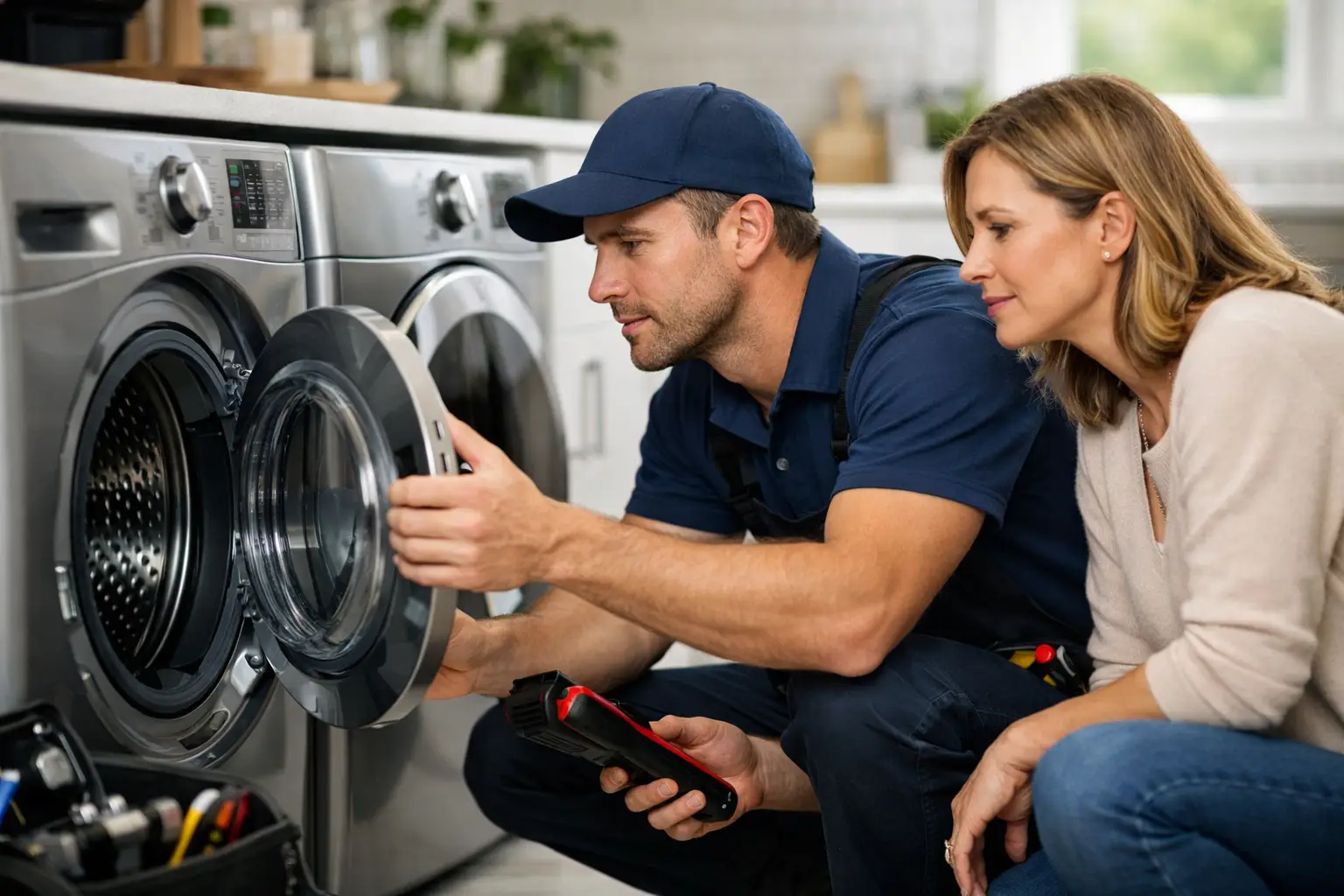
A refrigerator that stops cooling at 8 p.m. rarely gives you much time to think. The same goes for a washer full of water, an oven that will not heat before dinner, or a dryer that suddenly starts thumping. In those moments, an in home diagnostic service is not a convenience upgrade. It is the fastest way to figure out what failed, what it will take to fix it, and whether the repair makes practical sense.
For most homeowners, the real problem is not just the broken appliance. It is the disruption that follows. Food is at risk, laundry piles up, schedules get thrown off, and a small issue can turn into a bigger one if the machine keeps running in a bad state. That is why professional diagnosis matters. It gives you a clear answer before you spend money on the wrong part, wait around for guesswork, or replace an appliance that may still be worth repairing.
What an in home diagnostic service actually does
A proper in home diagnostic service is more than a quick look and a rough estimate. A trained technician comes to the house, evaluates the appliance in its actual operating environment, checks the most likely failure points, and isolates the cause of the issue. That distinction matters because many appliance symptoms overlap.
A refrigerator that is not cooling could have a failed compressor relay, a bad evaporator fan motor, a defrost system problem, dirty condenser coils, a sealed system issue, or an electronic control fault. From the outside, those failures can look almost identical. The same is true for dishwashers that stop mid-cycle, dryers that do not heat, or ovens with uneven temperature. Good diagnostics narrow the problem down before any repair decision is made.
This is one reason in-home service tends to be more effective than trying to explain the issue over the phone. The technician can hear the sounds, test components, inspect wiring, measure performance, and see how the appliance is installed. That often leads to faster, more accurate repair planning.
Why in-home diagnosis is usually the better option
Most major household appliances are large, installed, and connected to water, gas, electrical, or venting systems. Moving them to a shop is not realistic in most cases. An in home diagnostic service avoids that problem entirely. It brings the expertise to the appliance instead of adding another layer of inconvenience for the homeowner.
There is also a practical cost advantage. A misdiagnosed appliance can lead to unnecessary parts, repeat service calls, or replacement of a unit that still had useful life left. When the issue is diagnosed on site, the technician can account for wear patterns, installation conditions, and visible signs of related damage. That makes the repair recommendation more reliable.
Speed is another factor. Many repairs start with one urgent question: can this be fixed quickly? On-site diagnosis gives you that answer sooner. If the part is common and the technician carries it, the repair may be completed without another appointment. If a part needs to be ordered, you at least know what failed and what the next step looks like.
When to schedule an in home diagnostic service
Homeowners often wait too long because the appliance still sort of works. That can be a mistake. Appliances often show warning signs before they fully fail, and early diagnosis can prevent bigger damage.
If your refrigerator is running constantly, your freezer is frosting over, your dishwasher is leaking, your oven is heating unevenly, or your dryer is taking multiple cycles to dry clothes, it is time to schedule service. Those are not minor annoyances. They are common signs that a component is wearing out or that the machine is operating inefficiently.
You should also book service if the appliance trips breakers, gives off a burning smell, makes new grinding or squealing noises, displays error codes, or stops mid-cycle. Those symptoms point to electrical, mechanical, or control issues that should be checked before the appliance is used again.
In some cases, timing matters even more than the symptom. A refrigerator problem, for example, becomes expensive quickly because of food loss. A washer leak can affect flooring or nearby cabinetry. An in-home visit helps contain the issue before it causes secondary damage.
What to expect during the appointment
A reliable service visit should feel clear and organized. The technician should ask about the problem, when it started, whether it happens every cycle or only sometimes, and whether there were any recent changes such as a power outage, unusual noise, or performance drop.
From there, diagnosis typically includes inspection, testing, and confirmation. Depending on the appliance, that may involve checking power supply, controls, sensors, motors, heating elements, drain systems, door seals, thermostats, igniters, valves, boards, or compressors. The goal is not to swap parts until something works. The goal is to identify the failed part or system and explain the recommended repair.
You should also expect a straightforward discussion of the repair outlook. Sometimes the fix is simple and cost-effective. Sometimes the diagnosis reveals a larger issue that changes the recommendation. A good technician will explain the trade-off.
For example, replacing a worn drain pump on a dishwasher is a very different decision from repairing a refrigerator with a major sealed system problem on an older unit. Both are repair issues, but they do not carry the same cost, time, or long-term value.
The repair-or-replace question depends on more than age
Homeowners often assume an older appliance should automatically be replaced. That is not always true. Age matters, but condition, brand, part availability, and the type of failure matter too.
An in home diagnostic service helps answer the real question: is this appliance still worth investing in? If the problem is a common service part and the unit has otherwise been dependable, repair is often the smarter move. If the issue affects a major sealed or structural component, or if repeated failures are adding up, replacement may make more sense.
This is especially relevant for built-in or premium appliances. Replacement costs can be much higher than expected once installation, compatibility, and finish matching are considered. In those cases, a professional diagnosis can save money simply by keeping a repairable appliance in service.
Why appliance diagnosis should not be guesswork
Online symptom lists can be useful for understanding what might be wrong, but they are not a substitute for testing. The same symptom can come from multiple failures, and some appliances have layered issues that only show up under inspection.
A dryer that does not heat might have a failed element, a blown thermal fuse, a bad thermostat, restricted airflow, or a power supply problem. Replacing one part without confirming the actual cause can waste time and money. In some cases, it can even lead to repeat failure because the root issue was never addressed.
That is where experience makes a difference. A technician who works on major brands every day can often recognize patterns quickly, spot common failure points, and diagnose the problem without unnecessary delays. That practical knowledge matters when the appliance is essential to your daily routine.
Choosing the right in home diagnostic service
Not all service calls are equal. If you need help with a major appliance, look for a company that focuses on professional repair rather than broad handyman work. Appliance systems are specific, and proper diagnosis requires training, tools, and familiarity with different brands and models.
It also helps to choose a provider that carries genuine parts, offers warranty-backed work, and aims to complete repairs in as few visits as possible. Those details affect the total experience. A correct diagnosis is important, but so is the ability to follow through efficiently.
For busy households, responsiveness matters just as much. When the refrigerator is warm or the washer is out of service, you do not want vague scheduling or a long chain of delays. You want a technician who arrives prepared, communicates clearly, and gives you a realistic path forward.
If you are dealing with a refrigerator, dishwasher, oven, range, washer, dryer, microwave, freezer, ice maker, or garbage disposal problem in Irvine or across Orange County, Prostar Appliance Service provides professional in-home diagnostics and repair backed by experience, stocked parts, and dependable service. You can learn more or check recent customer feedback on our Google Business Profile.