


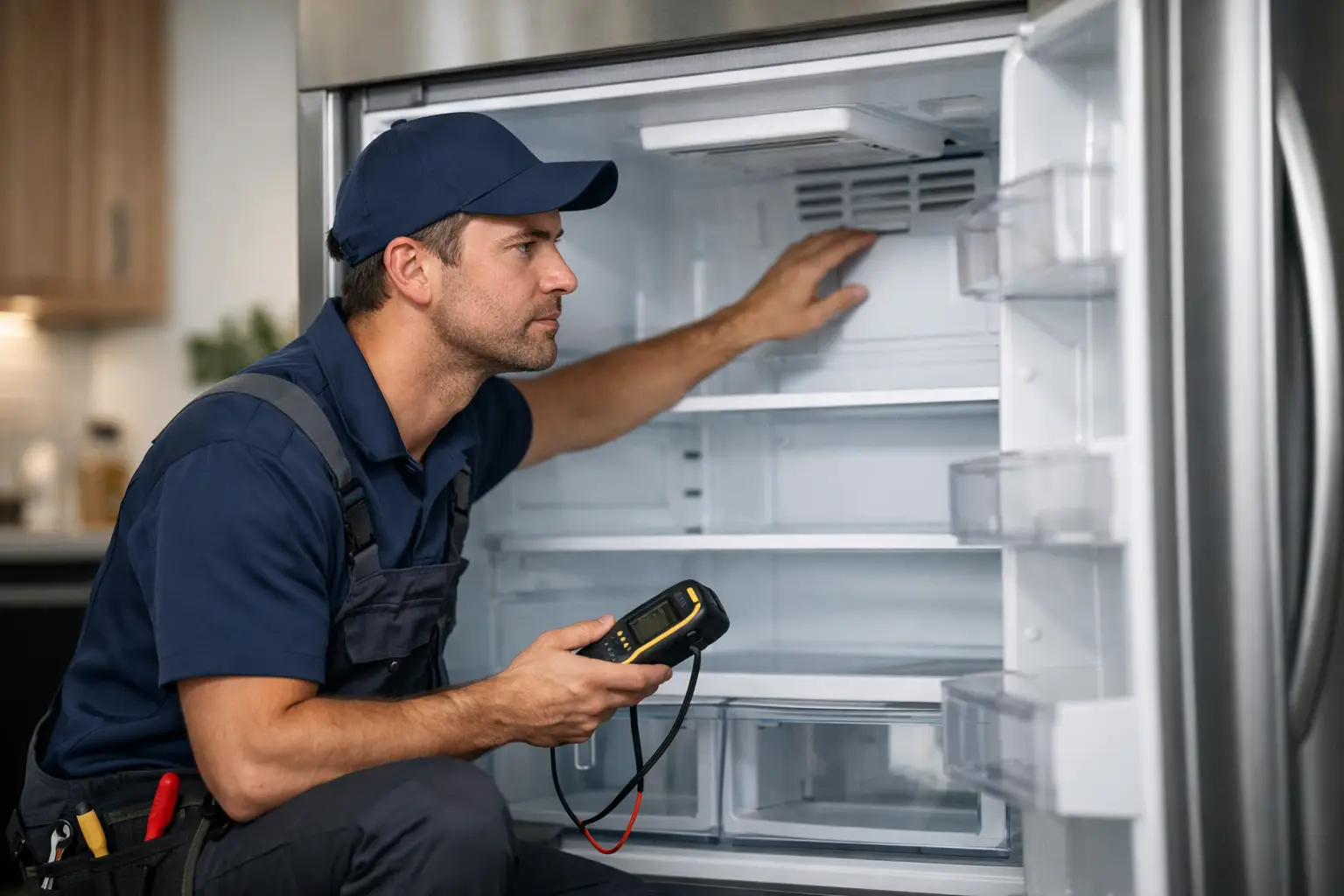
When a whirlpool refrigerator not cooling issue shows up, it usually starts with something small that turns into a bigger problem fast – milk is warm, the freezer feels soft, and you start wondering if the food is still safe. For most homeowners, this is not a situation to watch for a few more days. It is a time-sensitive repair issue, and the right next step depends on what the refrigerator is doing right now.
Why a Whirlpool refrigerator is not cooling
A refrigerator that runs but does not stay cold can fail in a few different ways. Sometimes the fresh food section warms up while the freezer still seems normal. In other cases, both compartments lose temperature at the same time. That difference matters because it helps narrow down whether the problem is airflow, frost buildup, a failed fan, a control issue, or a sealed system problem.
Whirlpool units are generally dependable, but like any major appliance, they rely on several parts working together. If one part stops doing its job, the entire cooling cycle can be affected. That is why a refrigerator may still have lights, still make noise, and still not preserve food safely.
The most common reasons for a Whirlpool refrigerator not cooling
Dirty condenser coils
Condenser coils release heat from the refrigerator. When they are covered in dust, pet hair, or grease, the system has to work harder to cool properly. In some homes, especially where the refrigerator sees heavy kitchen use, coil buildup can cause poor cooling performance or long run times before the homeowner realizes what is happening.
This is one of the simpler causes, but not every no-cooling call ends here. If the coils are dirty, cleaning may help. If the refrigerator is still warm afterward, there is likely another problem affecting temperature.
Evaporator fan motor failure
The evaporator fan moves cold air through the refrigerator compartments. If that fan stops, the unit may produce cold air in one area but fail to distribute it where it is needed. A common sign is a freezer that feels colder than the refrigerator section, even though neither side is operating quite right.
Fan issues can also create unusual noises before complete failure. If the sound changes suddenly and cooling drops off soon after, that is a strong sign the fan or an ice blockage around it needs attention.
Frost buildup on the evaporator
A Whirlpool refrigerator can also stop cooling because frost builds up where it should not. That usually points to a defrost system problem. The defrost heater, thermostat, or control board may not be cycling correctly, which allows ice to accumulate around the evaporator coils.
Once that happens, airflow becomes restricted. The refrigerator is technically trying to cool, but cold air cannot move properly. Homeowners often notice the fresh food section warming first, while the freezer still seems partly functional.
Damaged door gaskets or frequent warm air entry
If the door seal is torn, loose, or not closing tightly, warm kitchen air keeps entering the cabinet. That creates excess moisture, temperature swings, and frost issues over time. This is especially common in busy households where refrigerator doors are opened often or blocked from closing all the way.
A gasket problem may sound minor, but it can lead to heavier strain on the compressor and fans. If caught early, it is manageable. If ignored, it can contribute to larger failures.
Start device or compressor trouble
If the compressor is not starting correctly, the refrigerator cannot maintain cooling. Sometimes you may hear clicking, short cycling, or a low hum followed by silence. In other cases, the unit seems powered on but never reaches proper temperature.
This is where the repair becomes more technical. A bad start relay can sometimes be replaced without major system work. A failing compressor is more serious and needs a trained technician to diagnose whether repair is worthwhile.
Thermistor or control board problems
Modern Whirlpool refrigerators use sensors and electronic controls to regulate temperature. If the thermistor sends the wrong reading or the main control board fails to respond properly, the refrigerator may cool inconsistently or not cool enough at all.
These problems can be frustrating because they do not always show clear symptoms. The unit may cool for part of the day, then drift warm. It may also seem like the settings are correct even when internal temperatures say otherwise.
Signs the problem is more serious than a simple adjustment
Sometimes homeowners hope the refrigerator was left on the wrong setting or overloaded with groceries. That does happen, but there are warning signs that point to an actual component failure.
If food is spoiling quickly, the freezer is softening, the refrigerator is running constantly, or there is heavy frost inside the back panel, the issue is probably not a simple setting change. The same applies if you hear repeated clicking, notice water leaking inside, or find that temperatures keep rising even after the doors stay closed.
A refrigerator that is completely silent can be just as concerning as one that runs nonstop. Both conditions need proper diagnosis rather than guesswork.
What you can check before scheduling service
There are a few practical things worth checking first. Make sure the temperature settings have not been changed accidentally. Confirm the doors are fully closing and that food containers are not blocking airflow vents. If the condenser coils are accessible and visibly dirty, cleaning them may improve performance.
Beyond that, there is a limit to what is realistic for most homeowners. Refrigerators involve electrical components, sealed cooling systems, control boards, fans, and defrost circuits. Replacing parts without confirming the actual cause often wastes time and money.
That is especially true when the refrigerator is cooling unevenly. One bad symptom can point to several different failures, and the correct repair depends on testing the system rather than assuming the most obvious part is the problem.
When to call for professional refrigerator repair
Food temperatures are already unsafe
If milk, meat, leftovers, or frozen foods are warming up, time matters. A delayed repair can turn into a full food loss situation. In high-use family kitchens, that cost adds up quickly.
The unit is running but not getting cold
This usually means the refrigerator is still drawing power but cannot complete the cooling cycle correctly. That is a strong sign of a failed component rather than a simple reset issue.
The problem keeps returning
If the refrigerator cools for a day and then warms up again, the issue is likely deeper than airflow or loading habits. Intermittent cooling often points to a fan motor, sensor, defrost part, or electronic control failure.
You hear clicking, buzzing, or unusual fan noise
Those sounds matter. They can point to compressor starting trouble, obstructed fan blades, or electrical part failure. Catching the issue early may prevent a larger repair.
Why diagnosis matters with Whirlpool cooling problems
The phrase whirlpool refrigerator not cooling sounds straightforward, but the repair path is not always simple. Two refrigerators with the same symptom can need completely different solutions. One may need a fan motor or defrost repair. Another may have a sealed system issue that changes the repair decision entirely.
That is why experienced service matters. A proper diagnosis should look at temperature behavior, frost pattern, fan operation, compressor function, control response, and part condition as a whole. Replacing one part at a time without testing often leads to repeat service calls and longer downtime.
For homeowners, the real priority is getting the refrigerator back to safe, stable operation as quickly as possible. That means identifying the fault accurately, using the right replacement parts, and avoiding unnecessary delays.
The cost question homeowners usually ask first
Most people want to know if the refrigerator is worth fixing. The answer depends on the age of the unit, the failed part, and whether the issue involves the sealed system. A fan, thermostat, door gasket, or defrost component repair is usually very different from a compressor-related repair.
It also depends on how long the refrigerator has been struggling. A unit that has been running hot for weeks may have extra wear on other components. A fast repair early in the problem often gives you better options than waiting until the refrigerator stops cooling completely.
If your Whirlpool refrigerator is not keeping food cold, professional diagnosis is usually the fastest way to avoid more waste, more downtime, and more uncertainty. For homeowners in Irvine and across Orange County, Prostar Appliance Service provides responsive refrigerator repair backed by experienced technicians, stocked genuine parts, and a 90-day warranty on parts and labor. You can learn more or check local service details through our Google Business Profile.