


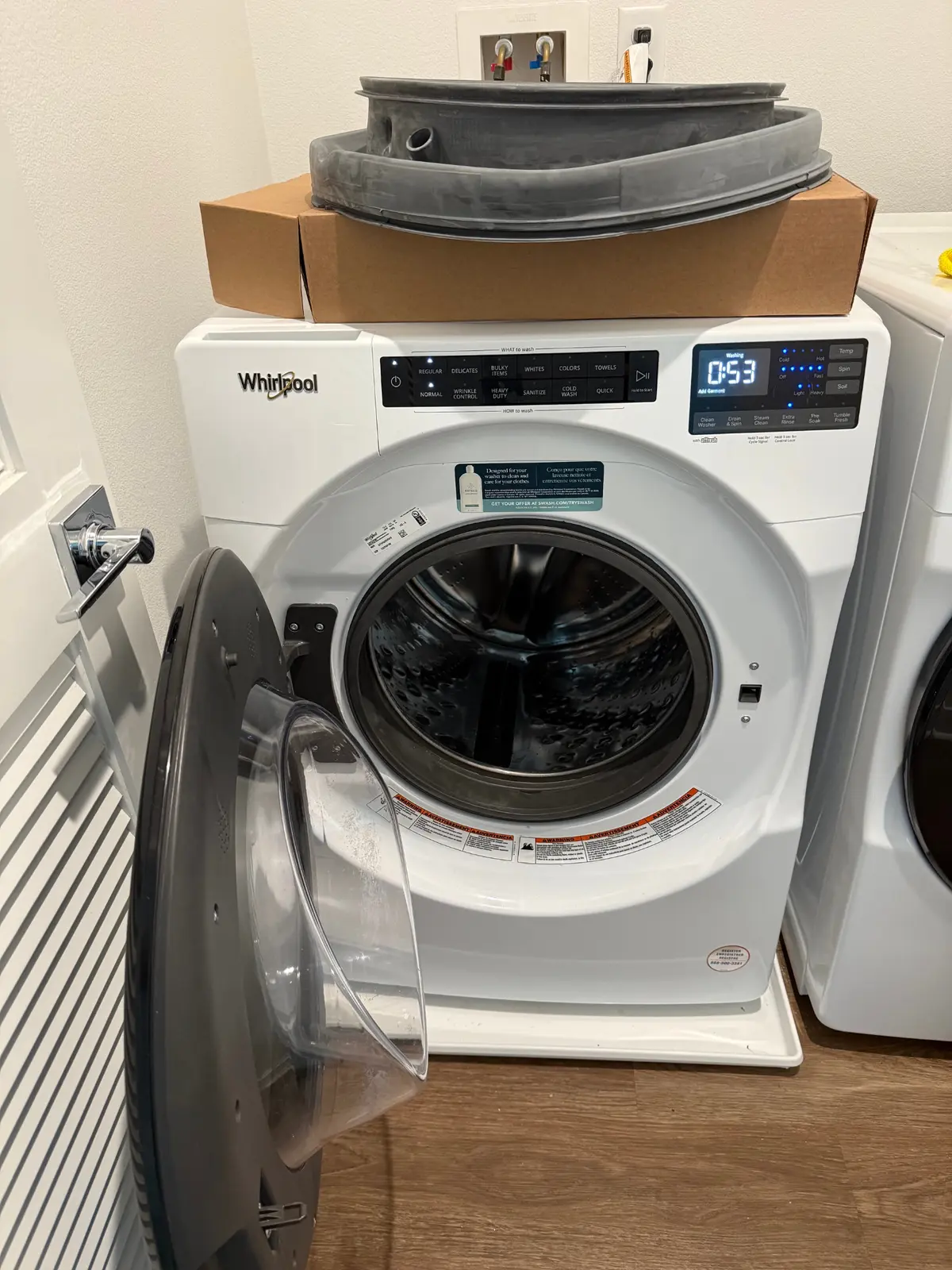
Mold around the rubber door boot is one of the most common problems we see on front-load washers, including Whirlpool models. It usually develops slowly after years of moisture, detergent residue, and a tightly closed washer door. Eventually, the gasket may look dirty, develop black stains, and produce a musty odor that transfers to the laundry area.
The rubber seal—also called a door gasket or bellows—keeps water inside the washer while allowing the door to close securely. Light surface buildup can sometimes be cleaned. When stains and odor become deeply embedded in the rubber, however, replacing the complete door boot is often the most practical and dependable solution.
Why Front-Load Washer Door Boots Become Moldy
The deep folds in a front-load washer gasket can hold small amounts of water after every cycle. Detergent, fabric softener, lint, hair, and other residue can collect there as well. If the door is closed before the boot dries, air circulation is limited and the damp residue creates a favorable environment for odor, mildew, and mold.
Using too much high-efficiency detergent can make the problem worse because excess suds may leave a film on the gasket and inside the tub. In coastal areas of Orange County, higher humidity may also slow the drying process. Humidity is not the only cause—the washer’s care routine matters most—but a consistently damp laundry area can contribute to retained moisture.
Can a Moldy Rubber Gasket Be Cleaned?
If the buildup is recent and limited to the surface, careful cleaning may improve the condition. Follow the cleaning instructions in the owner’s manual for your exact model, wear gloves, ventilate the area, and use only products approved for the appliance. Never mix chlorine bleach with vinegar, ammonia, or another cleaner because the combination can create dangerous fumes.
Gently inspect the lower folds and remove lint or trapped objects without using sharp tools. Wipe the accessible surfaces and dry the gasket thoroughly. A cleaning cycle can help remove residue inside the machine, but it cannot restore rubber that is cracked, stretched, deteriorated, or permanently contaminated below the surface.
When Replacement Is the Better Option
Replacement should be considered when deep black staining remains after proper cleaning, the musty smell returns quickly, or the rubber has cracks, tears, hardened areas, or a distorted sealing lip. Once contamination has penetrated the rubber, repeated cleaning may improve the appearance temporarily without eliminating the odor.
Water at the front of the washer is another warning sign, although a leak is not automatically caused by the door boot. The dispenser, inlet system, drain components, hoses, and internal connections should also be checked before a part is ordered. The full model number is important because Whirlpool front-load washers use different boot designs, clamps, drain openings, and installation procedures.
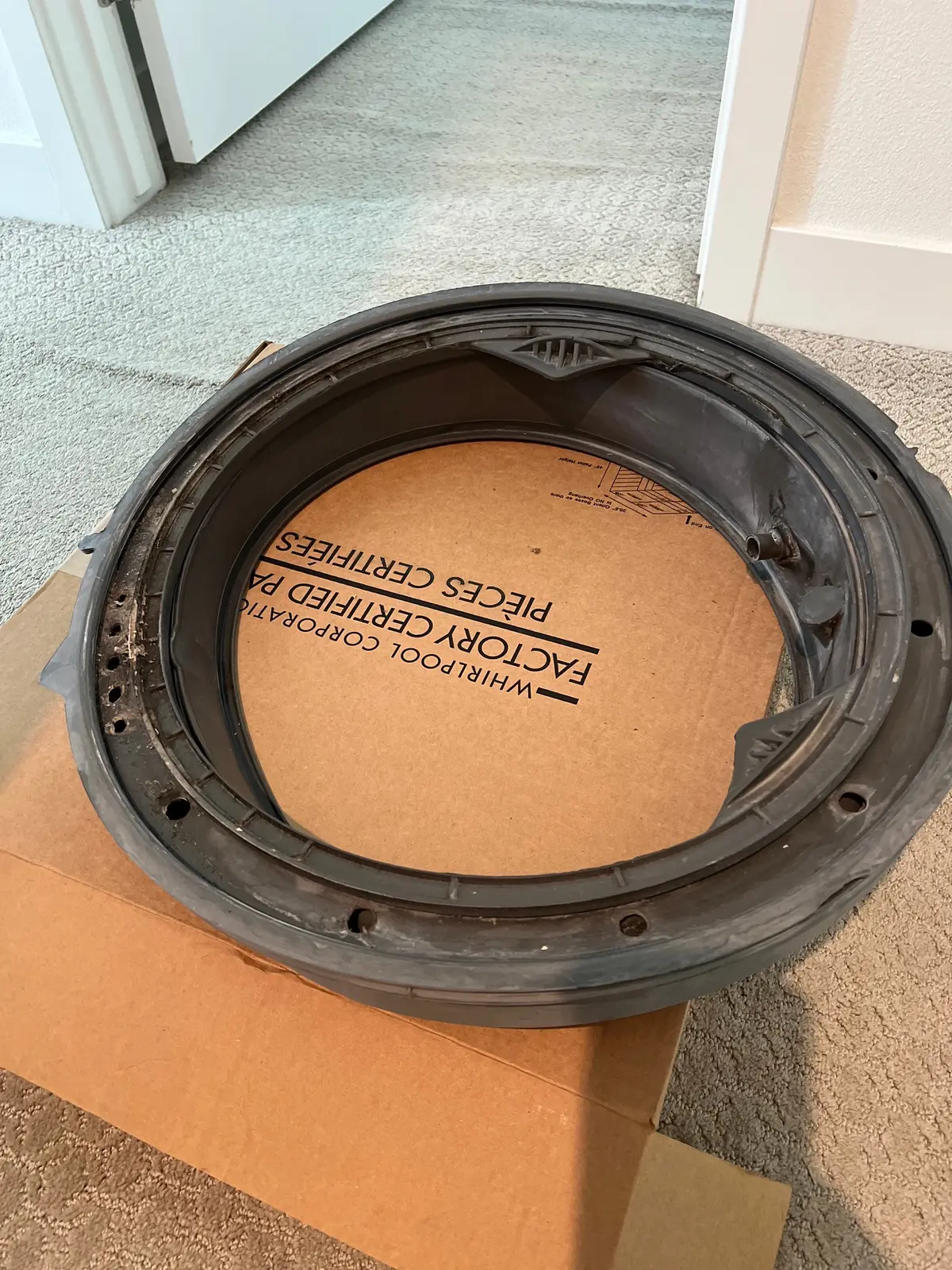
Why Door Boot Replacement Is Labor-Intensive
Replacing a front-load washer boot involves much more than pulling off the old rubber and fitting a new piece. On many models, the door assembly and much of the front of the washer must be disassembled so the inner and outer retaining clamps can be removed safely. The sealing surfaces must be inspected and cleaned before the new boot is positioned.
The replacement must sit evenly around the tub and front panel. If it is twisted, pinched, or not fully seated under the clamps, the washer can leak during filling, tumbling, or high-speed spin. After reassembly, we run a complete test and check the door area for leaks.
A Real Whirlpool Door Boot Replacement
The photograph above is from an actual ProStar service call. It shows a Whirlpool front-load washer with the new model-specific rubber door boot ready for installation. For this type of repair, we use the correct OEM replacement boot for the model, install it carefully, reassemble the machine, and complete an operational and leak test.
OEM fit is especially important on a door seal. The drain openings, molded channels, retaining surfaces, and door opening must line up correctly for the washer to seal and drain as designed.
How to Help Prevent Mold From Returning
- After the final load, wipe moisture from the gasket folds and door glass.
- Leave the washer door slightly open when the machine is not in use, if it is safe for your household.
- Remove washed clothing promptly instead of leaving it in the closed drum.
- Use high-efficiency detergent in the amount recommended for the load, water conditions, and product.
- Clean the detergent dispenser regularly so old product does not continue feeding residue into the machine.
- Check the lower folds of the boot for coins, hair, lint, or other trapped debris.
- Use a washer-cleaner tablet and run the machine’s Clean Washer or Tub Clean cycle about once a month, following the owner’s manual.
Many owners do not realize their washer has a dedicated cleaning cycle. Using it regularly from the beginning can reduce residue and help avoid an expensive repair later. Once odor and staining are deeply embedded in the boot, however, a maintenance cycle cannot reverse physical deterioration. If water escapes from the front of the machine, stop using it until the source is identified to reduce the risk of flooring or cabinet damage.
Professional Whirlpool Washer Service in Irvine
ProStar Appliance Service provides in-home washer repair for door gasket problems, leaks, drain failures, door-lock faults, control issues, and other washer symptoms. We also service many Whirlpool appliances; visit our Whirlpool appliance repair page for additional information.
If you are located in Irvine, see our Irvine appliance repair page for neighborhoods, ZIP codes, appointment information, and local customer feedback. The $95 service call is applied toward a completed repair, and completed repairs include a 90-day warranty on installed parts and labor.
To see our business information and customer feedback, visit the ProStar Appliance Service Google Business Profile.
Frequently Asked Questions
Can mold on a washer door boot be cleaned?
Recent surface buildup may improve with model-approved cleaning and thorough drying. Deep staining, recurring odor, deteriorated rubber, or a leaking seal often makes replacement the better option.
How much does a washer door boot replacement cost?
A typical total range is about $295–$485, depending on the brand, exact model, replacement-part cost, access, and labor. The washer should be identified and inspected before the final price is confirmed.
How often should I run the Clean Washer or Tub Clean cycle?
For many households, once a month is a practical routine. Follow the instructions for your exact model and use only an approved washer-cleaning product.
Does ProStar use an OEM replacement boot?
For this type of repair, ProStar uses the correct model-specific OEM door boot so the molded channels, drain openings, clamps, and sealing surfaces align properly.
How long will the repair take?
Timing depends on the washer model, installation access, the condition of the retaining hardware, and part availability. We explain the expected next step after diagnosis rather than promising the same time for every model.