


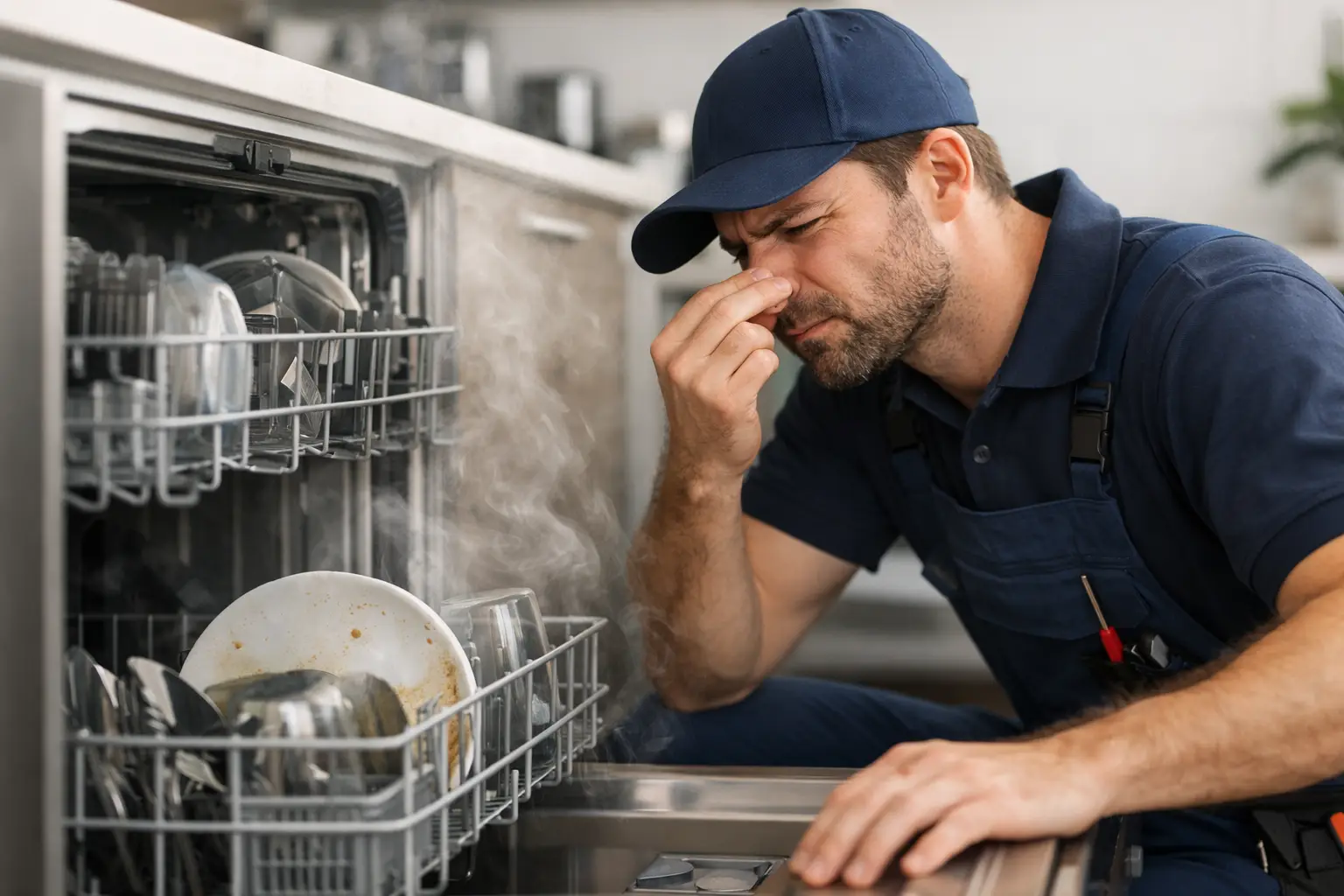
You open the dishwasher expecting clean dishes and get hit with a sour, swampy smell instead. If you are wondering why dishwasher smells bad, the short answer is that something inside the machine is holding onto food, dirty water, grease, or bacteria. Sometimes that is a simple cleaning issue. Sometimes it points to a drainage or mechanical problem that will keep coming back until it is repaired.
A dishwasher is designed to wash away residue, but it still depends on filters, spray arms, drain lines, pumps, and seals doing their jobs correctly. When one part falls behind, odor is often the first sign. That matters because a bad smell is not just unpleasant. It can also mean your dishwasher is not cleaning as well as it should, and in some cases it can signal standing water or a failing component.
Why dishwasher smells bad in the first place
Most dishwasher odors start with buildup. Tiny food scraps, grease, soap film, and hard water residue collect in places most homeowners never see. The filter is a common source, but it is not the only one. Gunk can also collect around the door gasket, under the lower spray arm, inside the drain area, and along the interior seams.
Once that material sits in a damp, warm environment, bacteria grow quickly. That is what creates the rotten, sour, or musty smell many people notice after a cycle finishes. If the dishwasher is used heavily, especially in a busy household, buildup can happen faster than expected.
There is also a difference between a dishwasher that smells a little stale once in a while and one that smells bad all the time. A mild odor after several days without use may be normal. A strong smell after every wash usually means something is not draining, rinsing, or filtering correctly.
The most common causes of dishwasher odor
A clogged or dirty filter is at the top of the list. Many newer dishwashers have removable filters that trap food particles before they reach the drain pump. If that filter is coated with old debris, every wash cycle pushes warm water through the mess again. The result is a smell that lingers on both the dishes and inside the tub.
Drainage problems are another major cause. If dirty water cannot fully leave the machine, it sits at the bottom or in the drain system between cycles. Even a small amount of trapped water can start to smell quickly. This can happen because of a partially blocked drain hose, a problem with the drain pump, or an issue where the dishwasher is not installed with the proper drain loop.
Garbage disposal connections can also play a role. In many kitchens, the dishwasher drains through the disposal. If the disposal is backed up or coated with food waste, odors can move back into the dishwasher. Homeowners sometimes assume the dishwasher itself is the problem when the real source is next to it under the sink.
Door seals and interior edges are often overlooked. Grease and residue can build along the rubber gasket and lower lip of the door. Because those areas stay damp, they can develop mildew or a sour smell even when the rest of the tub looks clean.
Then there are harder water and detergent issues. Too much detergent, the wrong detergent, or mineral-heavy water can leave behind film. That film traps residue and makes it easier for odor to stick around. It may not cause an immediate repair need, but it does create conditions where smells keep returning.
What the smell may be telling you
Not every dishwasher smell means the same thing. A rotten egg or sewage-like odor often suggests dirty standing water, a drain issue, or a connection problem at the sink plumbing. A moldy or musty smell points more toward moisture trapped in seals, insulation, or leftover residue inside the tub.
A burnt smell is different and should not be ignored. That can mean a failing motor, electrical component, or wiring issue. If the odor smells hot, plastic-like, or electrical, stop using the dishwasher until it is inspected. That type of smell is less common, but it is far more urgent than routine food buildup.
If dishes themselves smell bad after washing, the problem may be poor drainage or incomplete rinsing. In that case, the dishwasher may be circulating dirty water or not heating properly during the cycle. When the water does not get hot enough, grease and food particles are more likely to stay behind.
When it is just buildup and when it is a repair issue
There is a practical difference between maintenance and malfunction. If the smell improves after cleaning the filter, wiping the seals, and running a proper cleaning cycle, the dishwasher may simply have needed attention. Many homeowners do not realize how quickly residue builds up in a machine that runs daily.
If the smell returns within a few days, especially along with slow draining, water at the bottom, dirty dishes, or unusual noises, there is a good chance the issue goes beyond cleaning. That is when a technician should check the drain pump, hose, air gap if present, float switch, and circulation system.
Age matters too. An older dishwasher with repeat odor problems may have buildup in internal areas that are not easy to reach without partial disassembly. At that point, surface cleaning only addresses part of the problem. A professional diagnosis can determine whether the issue is a blocked path, a worn part, or a larger performance failure.
Signs the dishwasher needs professional service
A persistent bad smell on its own gets attention, but it is more concerning when it shows up with other symptoms. Water pooling under the filter, dishes coming out gritty, longer cycle times, humming without draining, or visible leaks around the base all point to a mechanical or drainage problem.
Another sign is when odor spreads beyond the appliance. If the smell is strongest under the sink or seems tied to the sink drain, there may be a shared drainage issue. In some cases, the dishwasher is working normally but is being affected by a clogged disposal or plumbing backup. In other cases, the dishwasher drain line itself is the restriction.
Busy households should not wait too long on this. A dishwasher that smells bad often gets used anyway, which can push debris deeper into the drain system and make the repair more involved. Catching the problem early usually means a faster and less disruptive service call.
What a technician will typically check
A proper dishwasher odor diagnosis is not just a quick wipe-down. A technician will usually inspect the filter and sump area, test the drain pump, check the drain hose for restrictions or improper routing, and look at how the unit connects to the sink drain or garbage disposal. Spray arms may also be checked for clogs, since poor water movement leaves debris behind.
If the dishwasher is not heating correctly, that can also contribute to odor and poor cleaning. In that case, the heating element, thermostat, or related controls may need testing. Some brands are more prone than others to drain issues or circulation faults, which is why brand-specific experience matters.
For homeowners, the value of service is not just getting rid of the smell. It is finding out whether the dishwasher is safe to keep using, whether the issue will keep repeating, and whether a repair makes more sense than waiting for a larger failure.
Why fast action matters
Dishwasher odor tends to get worse, not better. A small restriction can turn into a complete drainage failure. Standing water can lead to heavier residue, more bacteria, and sometimes leaks if water backs up where it should not. That can affect cabinets, flooring, and the sink area around the appliance.
There is also the quality-of-life factor. When a kitchen appliance smells bad, most households notice it right away. For families and working homeowners, that usually means one more daily problem that needs to be handled quickly. If cleaning has not solved it, continuing to guess at the cause often wastes time.
For homeowners in Irvine and across Orange County, professional dishwasher service can save a lot of frustration when the odor is tied to drainage, pump, or internal component issues. If your dishwasher still smells bad after basic cleaning, Prostar Appliance Service can inspect the cause and repair the problem efficiently. You can learn more about local service and customer experience on our Google Business Profile.