


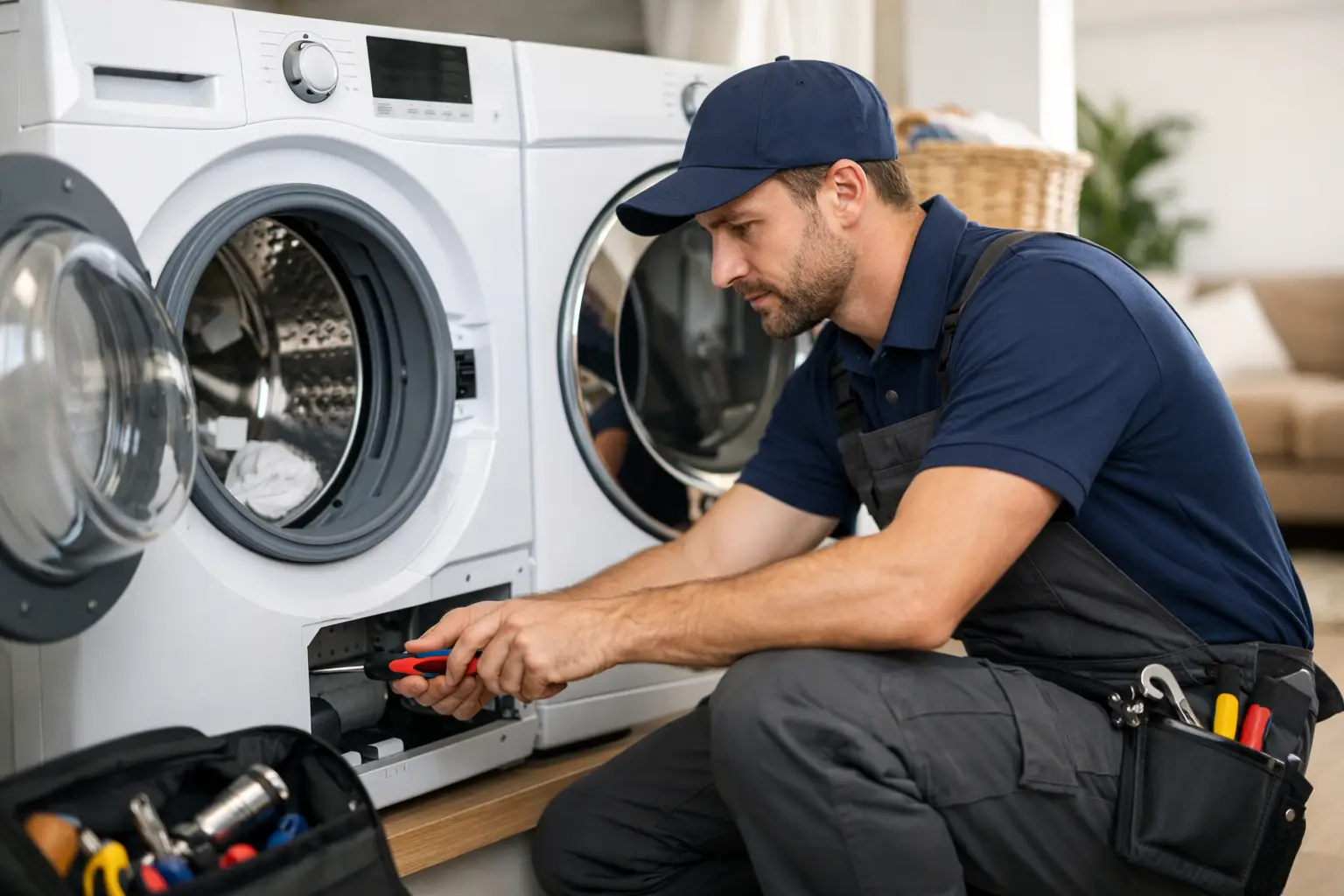
A washer that stops mid-cycle or a dryer that leaves clothes damp can disrupt an entire household fast. The best washer dryer repair tips start with recognizing what is safe to check, what should be handled by a professional, and when continued use could turn a repairable problem into water damage, a burned component, or a complete appliance failure.
For most Orange County homeowners, the goal is not to take apart a major appliance. It is to protect the home, avoid wasted laundry loads, and get an accurate repair before the problem gets more expensive.
Start With the Safe, Simple Checks
Before scheduling service, confirm that the issue is not related to power, settings, or a blocked connection. These basic checks can save time, but they should never involve opening electrical panels, removing internal components, or bypassing a safety switch.
For a washer, make sure the machine is plugged in, the circuit breaker has not tripped, and both water supply valves are fully open. If the washer will not start, check that the door or lid closes firmly. Modern washers use a lid lock or door lock as a safety feature, and the cycle may not begin if the latch is not engaging.
For a dryer, verify that the appliance has power and that the selected cycle includes heat. A dryer can tumble normally while producing no heat, especially if one side of a 240-volt circuit has tripped. Resetting the breaker once may restore operation. If it trips again, stop using the dryer and arrange professional diagnosis.
Also check for an overloaded drum. Heavy comforters, towels, and tightly packed loads can prevent a washer from balancing or make a dryer run longer than expected. Reducing the load is reasonable. Repeated error codes, grinding sounds, burning odors, or leaks are not issues to test repeatedly.
Best Washer Dryer Repair Tips for Common Warning Signs
Appliances usually provide warning signs before they stop working completely. Paying attention early can limit damage to the unit and the surrounding laundry area.
Washer will not drain or spin
Standing water at the end of a wash cycle often points to a drainage problem. A kinked drain hose, clogged filter on certain models, failing drain pump, or obstruction in the plumbing connection can all cause this symptom. If accessible, inspect the external drain hose for obvious kinks or crushing behind the machine.
Do not keep restarting a washer full of water. Repeated cycles can strain the pump, and forcing the door open may release a large amount of water onto the floor. If water is leaking, turn off the water valves behind the washer if it is safe to reach them, unplug the appliance, and avoid using it until it is inspected.
A washer that drains but will not spin may have an unbalanced load, worn suspension components, a faulty lid lock, or a motor-related issue. One isolated imbalance can happen with bulky items. A machine that bangs, walks across the floor, or refuses to spin repeatedly needs service.
Washer has a leak
A small puddle should not be ignored. Check whether the water appears at the front, back, or underneath the washer. Water at the back may come from supply hoses or connections. Water at the front can be related to a damaged door boot on a front-load machine, excess detergent suds, or a door that is not sealing correctly.
Use only high-efficiency detergent in a high-efficiency washer and follow the product dosage. Too much detergent creates excess foam that can lead to leaks, poor rinsing, and odor buildup. That said, detergent is not the answer to every leak. A cracked hose, worn seal, or failed pump requires the right replacement part and proper installation.
Dryer runs but does not heat
A dryer that tumbles without heat is one of the most common service calls. The cause may be a tripped breaker, failed heating element, defective thermal fuse, thermostat issue, gas ignition problem, or wiring fault. The correct repair depends on the dryer type and the results of a proper electrical and component test.
Avoid opening the dryer cabinet or replacing heating parts based only on an online symptom match. Several parts can produce the same no-heat condition. Installing the wrong component wastes money and may leave an underlying venting or electrical issue unresolved.
Dryer takes too long to dry
Long dry times are often related to restricted airflow. Clean the lint screen before every load and inspect the exterior vent outlet while the dryer is operating. The flap should open freely and exhaust air should move outside.
If the lint screen is clean but clothes still require multiple cycles, the vent line may be blocked, crushed, disconnected, or excessively long. Stop using the dryer if you notice a burning smell, unusually hot clothing, or a hot laundry room. Restricted airflow increases wear on heating components and can create a serious fire risk.
Do Not Ignore Sounds, Smells, or Error Codes
A washer or dryer should not need to be loud to be working hard. Squealing, metal-on-metal scraping, rhythmic thumping, grinding, or a sharp electrical smell all deserve attention. A dryer squeal may indicate worn rollers, a belt, or an idler pulley. A washer grinding sound can involve the drive system, drain pump, bearings, or a foreign object caught where it should not be.
Error codes are useful, but they are not complete diagnoses. The same code can sometimes reflect a sensor issue, communication problem, wiring failure, or a mechanical condition that triggered the code. Write down the exact code, the appliance brand and model number, and what happened immediately before it appeared. This information helps a trained technician begin the visit more efficiently.
If you smell gas near a gas dryer, do not attempt a repair. Leave the area if the odor is strong, avoid operating electrical switches or open flames, and follow your gas utility’s safety guidance. Gas connections, igniters, and valve assemblies should only be serviced by a qualified professional.
Protect Your Washer and Dryer Between Service Calls
Routine care will not prevent every failure, but it can reduce avoidable strain. Keep the laundry room floor clear, avoid pushing appliances tightly against hoses and venting, and do not overload either machine. A washer needs stable, level footing to spin correctly. A dryer needs a clear path for hot, moist air to leave the home.
For front-load washers, leave the door slightly open after a completed load when practical. This helps the interior dry and reduces odor-causing moisture around the door seal. Wipe the seal occasionally and check for small items such as socks, coins, or pet hair that can collect in the folds.
Clean the dryer lint screen every load, and have the venting inspected when drying performance changes. Never run a dryer without its lint screen, and never use foil or plastic vent material. These shortcuts restrict airflow and can create unsafe operating conditions.
It is also wise to replace old rubber washer supply hoses with high-quality braided hoses where appropriate. Hoses can deteriorate with age, particularly in high-use homes. If a washer will be unattended for an extended period, consider turning off its water supply valves.
Know When Repair Is the Better Choice
The decision to repair or replace depends on the appliance age, condition, repair cost, parts availability, and the severity of the problem. A newer washer or dryer with a failed pump, latch, belt, heating element, or sensor is often worth repairing. A professional diagnosis provides the information needed to make that decision without guessing.
Replacement may make more sense when the appliance has multiple major failures, extensive corrosion, a damaged tub, or a repair cost that is high compared with a comparable new model. Even then, the exact model matters. Premium and built-in laundry equipment may justify repair at an age when a basic unit would not.
Ask for a clear explanation of the failure, the recommended part, and what the repair is intended to resolve. Quality service should include proper testing after the repair, not simply replacing a part and hoping the symptom disappears. Prostar Appliance Service uses trained technicians and genuine parts when available to help homeowners avoid repeat issues and unnecessary return visits.
For fast, dependable washer and dryer repair in Irvine and surrounding Orange County communities, schedule service through our Google Business Profile. A timely diagnosis can protect your laundry routine, your appliance, and your home.