


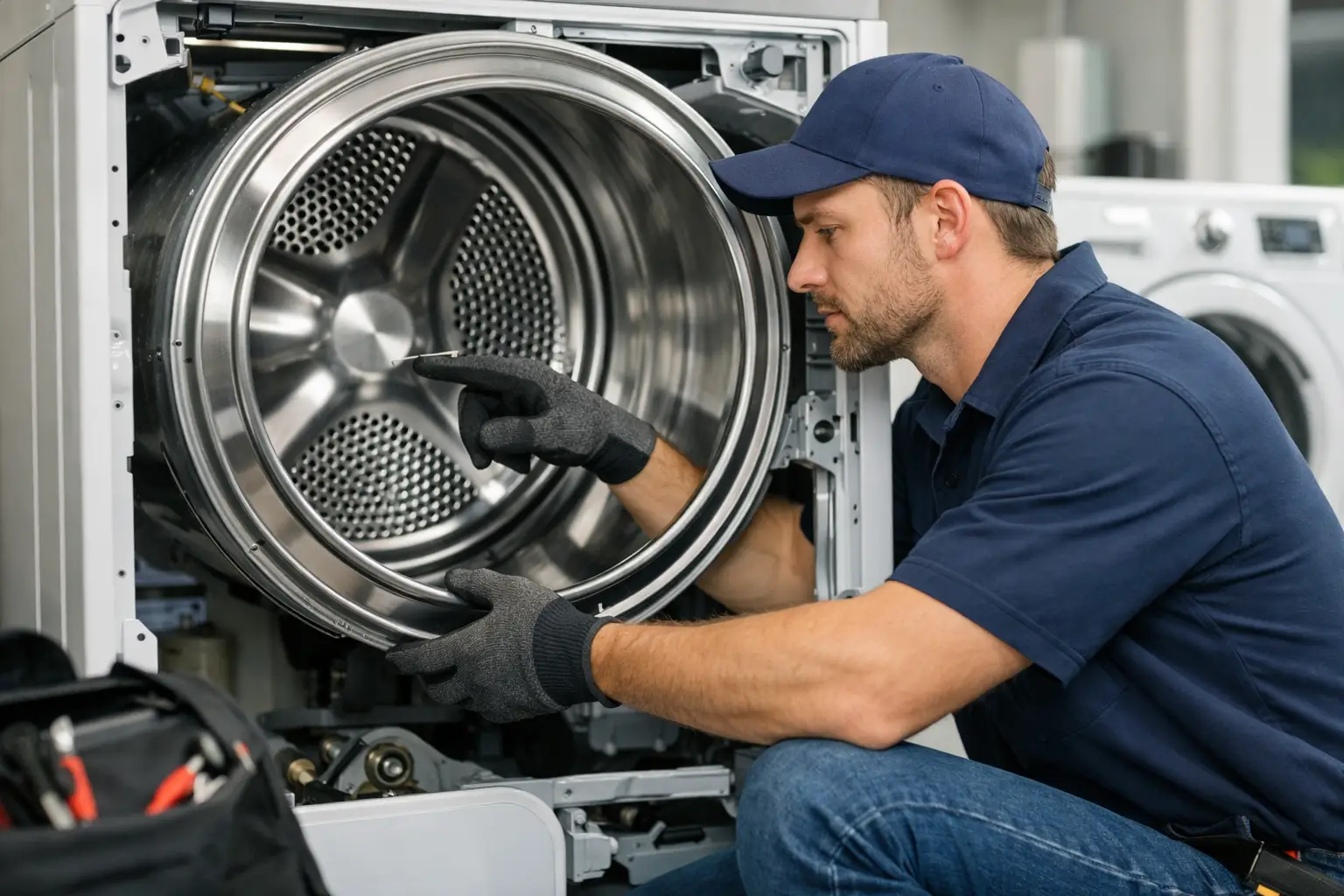
A dryer can still produce heat while the drum is failing to turn, turning a normal laundry day into a pile of damp clothes. These dryer drum repair examples show why the same symptom can point to very different parts, from a simple belt issue to worn support components that need prompt attention. The safest and most cost-effective answer comes from an accurate diagnosis, especially when the dryer is making new noises, leaving marks on clothes, or stopping mid-cycle.
Dryer Drum Repair Examples Homeowners Commonly See
The drum is the large cylinder that holds and tumbles laundry. It relies on several components to rotate smoothly, stay aligned, and avoid damaging clothing. When one part wears out, the sound and behavior of the dryer can help narrow down the issue, but a professional inspection confirms which part has actually failed.
A drum that will not turn
One of the most familiar dryer drum repair examples is a dryer that powers on and heats up, but the drum does not rotate. A broken or slipped drive belt is often responsible. The belt wraps around the drum and connects it to the motor system, so when it breaks, the motor may continue running while the drum remains still.
A failed idler pulley or belt tensioner can create a similar problem. This component keeps the belt properly tensioned as the drum turns. If it seizes, breaks, or loses tension, the belt may slip off or wear down quickly. Replacing only the belt without addressing a damaged pulley can lead to another failure soon afterward.
A loud thumping or rumbling sound
A rhythmic thump usually means the drum is no longer supported evenly. Dryer drum rollers are a frequent cause. These small wheels support the drum as it rotates, and their bearings can wear down over time. Once a roller develops a flat spot or starts binding, the dryer may thump, rumble, or vibrate more noticeably with a full load.
A foreign object can also create a thumping noise. Coins, bra wires, buttons, and small clothing items can become caught around the drum edge or in the blower area. Although the sound may seem minor at first, continued use can scratch the drum, tear clothing, or damage moving parts.
A high-pitched squeal or scraping noise
A sharp squeal during operation often points to a worn idler pulley, drum roller bearing, or motor bearing. The exact pitch matters less than the fact that the sound is new and persistent. Dryers are designed to operate with a steady mechanical sound, not a squeal that gets louder as the unit warms up.
Scraping or metal-on-metal sounds can indicate that the drum has shifted or that the front glides, rear bearing, or support components are worn. On some dryer models, glides or felt seals support the front rim of the drum. When they deteriorate, the drum can rub against the cabinet and create friction. This may also leave gray or brown marks on fabrics.
Clothing catches near the drum opening
If socks, thin garments, or straps repeatedly get caught between the drum and the front panel, worn drum glides or damaged felt seals are likely possibilities. These seals help maintain the correct gap around the drum while keeping heat and airflow moving in the intended path.
This is not a problem to ignore. Clothing caught in the gap can tear, and the exposed area may allow lint to collect where it should not. A technician can inspect the drum edge, seals, glides, and internal cabinet for related wear before replacing the affected parts.
The drum turns, but it wobbles or shakes
A wobbling drum may result from worn rollers, a damaged drum bearing, an improperly seated belt, or a bent drum. It can also be caused by an overloaded dryer, particularly when heavy items such as towels, blankets, or shoes are concentrated on one side. If the wobble disappears with a smaller, balanced load, loading habits may be part of the issue.
If the wobble continues with ordinary loads, it needs service. A drum that runs out of alignment puts extra stress on the belt, motor, rollers, and cabinet. Addressing the underlying support problem early can prevent a more extensive repair later.
The dryer stops during a cycle
A dryer that stops after running for several minutes may have an overheating issue, a failing motor, restricted ventilation, or a mechanical component creating too much resistance. Stuck rollers, a seized idler pulley, or a dragging drum bearing can make the motor work harder than intended. Some dryers will shut down when internal protection devices detect excessive heat or strain.
This symptom deserves timely professional attention. Repeated resets or attempts to keep the dryer running can worsen the failure. If the dryer is hot to the touch, smells like burning rubber, or makes a grinding sound, stop using it until it has been inspected.
What a Professional Dryer Drum Repair Includes
Dryer drum repairs are not limited to replacing the part that appears worn. A proper service call checks how all related components work together. For example, when a worn belt is found, the technician should also inspect the idler pulley, rollers, motor pulley, drum seals, and drum alignment. This helps prevent a new belt from failing because another part was already causing excess friction.
The repair process typically begins with checking the dryer’s movement, sounds, heat performance, and airflow. After the unit is safely disconnected and opened, the technician can inspect the belt path and support system, locate debris, and identify damaged components. Genuine replacement parts matter because the belt size, roller fit, and support design vary by brand and model.
For homeowners, the value is not just getting the drum moving again. It is restoring quiet operation, protecting clothing, and reducing the risk that a small mechanical issue turns into a damaged motor or drum assembly. A trained technician can also determine whether the repair makes financial sense for the dryer’s age, condition, and overall performance.
Repair or Replace: When Does a Drum Problem Make Sense to Fix?
Most drum-related problems are repairable, particularly belts, rollers, idler pulleys, felt seals, glides, and certain bearings. These components wear naturally and do not automatically mean the entire dryer has reached the end of its life. A relatively new or otherwise dependable dryer is often a strong repair candidate.
Replacement may be worth considering when the drum itself is severely damaged, the motor and support system have multiple failures, or the appliance has a history of repeated breakdowns. It also depends on the dryer’s age and whether replacement parts remain available. A clear diagnosis allows you to compare the repair cost with the expected remaining service life rather than making a decision based on noise alone.
Why Prompt Service Matters for Dryer Drum Issues
A squeal, thump, or scraping sound may seem manageable when the dryer still finishes a load. However, moving parts usually deteriorate rather than correct themselves. A failing roller can wear through a belt. A dragging drum can overwork the motor. Damaged seals can trap lint and damage clothes. Fast service limits the disruption to your household and can keep a smaller repair from becoming a larger one.
For dryer drum issues in Irvine and across Orange County, Prostar Appliance Service provides professional diagnostics and repair for major brands, with trained technicians, genuine parts, and a 90-day warranty on parts and labor. If your dryer is noisy, not turning, or damaging clothing, schedule service through our Google Business Profile to get the problem checked before the next laundry load.