


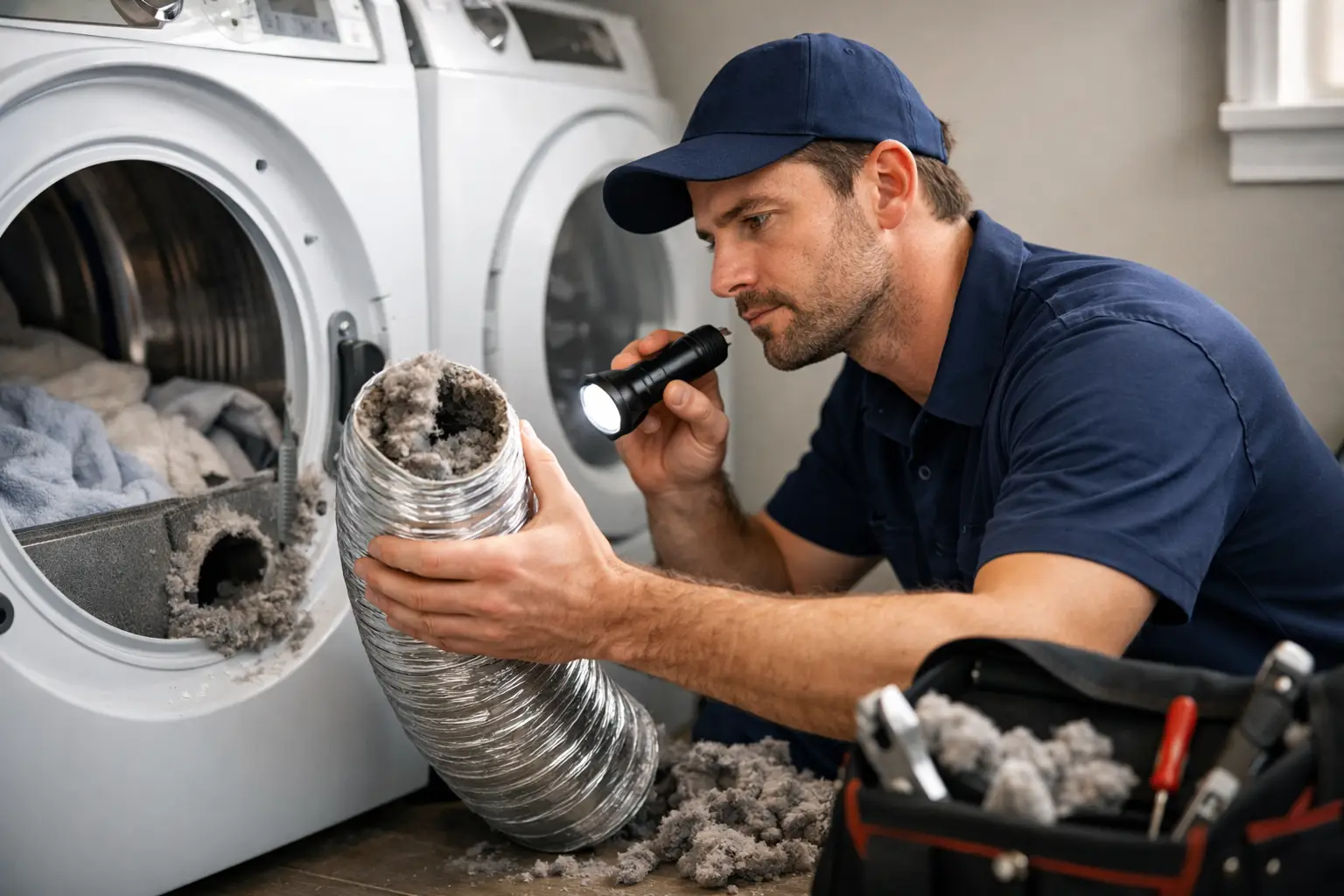
A load that once dried in 45 minutes but now needs two or three cycles is not just an inconvenience. It is often one of the clearest ways to spot dryer vent issues before restricted airflow creates excess heat, higher utility costs, and a potential fire hazard. For busy households, catching the warning signs early can prevent a laundry interruption from turning into a more serious repair visit.
Why Dryer Vent Problems Need Prompt Attention
Every dryer needs a clear path to move hot, moist air from the drum to the outside of your home. Lint can accumulate inside the vent line even when you clean the lint screen after every load. Outside vent covers can also become blocked by debris, damaged by weather, or stuck closed.
When that air cannot escape, the dryer works harder and runs hotter. The added strain can affect heating components, sensors, belts, motors, and controls. More importantly, lint is highly combustible. A restricted dryer vent does not guarantee a fire, but it creates conditions that should be addressed promptly rather than ignored.
In Orange County homes, venting layouts vary widely. A dryer located near an exterior wall may have a short, straightforward vent path. A laundry room in the center of a larger home, condo, or upstairs unit may have a longer run with more turns, where lint and moisture can collect more easily. The warning signs are similar, but the cause and proper repair can depend on the installation.
How to Spot Dryer Vent Issues During Normal Laundry
You do not need to take apart the dryer or disconnect ductwork to recognize that something is wrong. Pay attention to changes in performance, temperature, and humidity around the machine.
Clothes take much longer to dry
Long drying times are the most common sign. If towels, jeans, bedding, or regular mixed loads routinely remain damp after a normal cycle, airflow may be restricted. A drying problem can also come from a failing heating element, thermostat, moisture sensor, or control board, so it should not be assumed to be the vent every time.
Still, if the dryer heats up but clothing stays damp, a blocked or crushed vent line is a likely possibility. Using repeated cycles may get the load dry temporarily, but it also increases wear on the appliance and raises energy use.
The dryer or laundry room feels unusually hot
A dryer cabinet will naturally feel warm while running. It should not feel excessively hot to the touch, and the laundry room should not become uncomfortably hot or humid during an ordinary load. Heat that lingers in the room can mean the dryer is struggling to push air outside.
Condensation on nearby windows, walls, or surfaces is another concern. Moisture released indoors can contribute to mildew and damage over time, especially in enclosed laundry closets.
A burning smell appears during a cycle
A light smell from a brand-new appliance or a rarely used dryer can have harmless causes, but a persistent burning odor deserves immediate attention. It may be lint overheating inside the dryer cabinet, vent system, or exhaust connection. Turn the dryer off, allow it to cool, and avoid running more loads until the source has been checked.
Do not try to solve a burning smell by simply cleaning the lint screen and restarting the appliance. The screen is only one part of the airflow system, and lint can build up well beyond it.
The exterior vent flap does not open
When the dryer is operating, go outside and look at the vent hood if it is safely accessible. The flap should open as air exits the home, and you should be able to feel steady warm airflow. A flap that stays shut, opens only slightly, or releases very weak airflow may indicate blockage, a damaged hood, or a disconnected vent.
Keep in mind that some vent covers have different designs, and airflow can be harder to see during low-heat or sensor cycles. The key is a noticeable change from the dryer’s normal operation, not a single quick observation.
Lint collects around the dryer or outside vent
Lint behind the dryer, around the exhaust connection, or clinging to the outside vent cover suggests air is escaping where it should not. A loose connection, torn flex duct, or crushed hose can reduce airflow and release lint into the laundry area.
This is also a good time to notice the type of transition duct behind the appliance. Flexible foil or plastic-style materials can sag, kink, and trap lint more readily than properly installed metal ducting. Do not pull the dryer away from the wall aggressively, since that can disconnect or damage the vent line.
Warning Signs That Call for Immediate Service
Some dryer symptoms should move to the top of your repair list. Stop using the dryer and arrange professional help if you notice a burning smell, smoke, scorching near the outlet or dryer, repeated overheating, or a dryer that shuts off unexpectedly. These signs may involve restricted venting, but they can also point to an electrical or internal appliance issue.
You should also act quickly if the dryer’s lint screen is unusually hot after a cycle, if laundry comes out hotter than normal, or if a clothes dryer repeatedly trips a breaker. Continuing to operate the appliance can make diagnosis harder and increase the chance of component damage.
For gas dryers, take any gas odor seriously. Leave the area if the smell is strong, avoid switches or open flames, and follow the appropriate emergency guidance from your gas utility. A vent problem and a gas supply problem are different issues, but both require a prompt professional response.
Dryer Vent Issue or Dryer Repair Problem?
The symptoms can overlap. A blocked vent often causes slow drying, excess heat, and weak exhaust outside. A failed heating element may leave clothes cold and wet. A worn drum belt can cause the dryer to run without tumbling. A faulty moisture sensor may end a cycle too soon even when the vent is clear.
That is why a proper diagnosis matters. Replacing a dryer part when the real issue is restricted airflow can waste money. On the other hand, vent cleaning alone will not fix an appliance with a failing motor, heating component, thermostat, or electronic control.
A trained technician can inspect the dryer’s airflow, exhaust connection, heating performance, and internal components to identify the source of the problem. This approach is especially useful when the dryer is built into a tight laundry closet, stacked with a washer, or connected to a long vent run that is not easy to inspect safely.
What Homeowners Can Do Between Service Visits
Routine care helps reduce lint buildup, but it does not replace a full inspection when warning signs appear. Clean the lint screen before every load and remove any visible lint around the screen housing. Avoid overloading the dryer, since densely packed loads take longer to dry and can make normal airflow problems harder to notice.
Check the exterior vent cover periodically for leaves, dust, nesting material, or other obstruction. If the cover is visibly blocked, do not insert sharp tools deep into the vent line or use methods that could compact lint farther inside. Similarly, avoid using the dryer with the vent disconnected indoors. Hot, humid exhaust and lint should always be directed outside through a properly installed system.
If you have recently moved the dryer, had flooring installed, or completed remodeling near the laundry area, be extra alert for new performance changes. The vent hose may have been pinched behind the appliance, disconnected during the work, or covered by stored items.
Do Not Wait for a Complete Dryer Failure
A dryer often gives homeowners several warnings before it stops working altogether. Longer cycles, unusual heat, damp loads, and weak exterior airflow are practical signs that deserve attention. Addressing them early may protect the dryer from added strain and help keep the laundry area safer.
If your dryer is overheating, taking multiple cycles to dry, or showing signs of restricted airflow, Prostar Appliance Service provides prompt dryer diagnostics and repair for homeowners in Irvine and throughout Orange County. Request help through our Google Business Profile to get a dependable assessment before a small vent issue becomes a bigger household problem.