


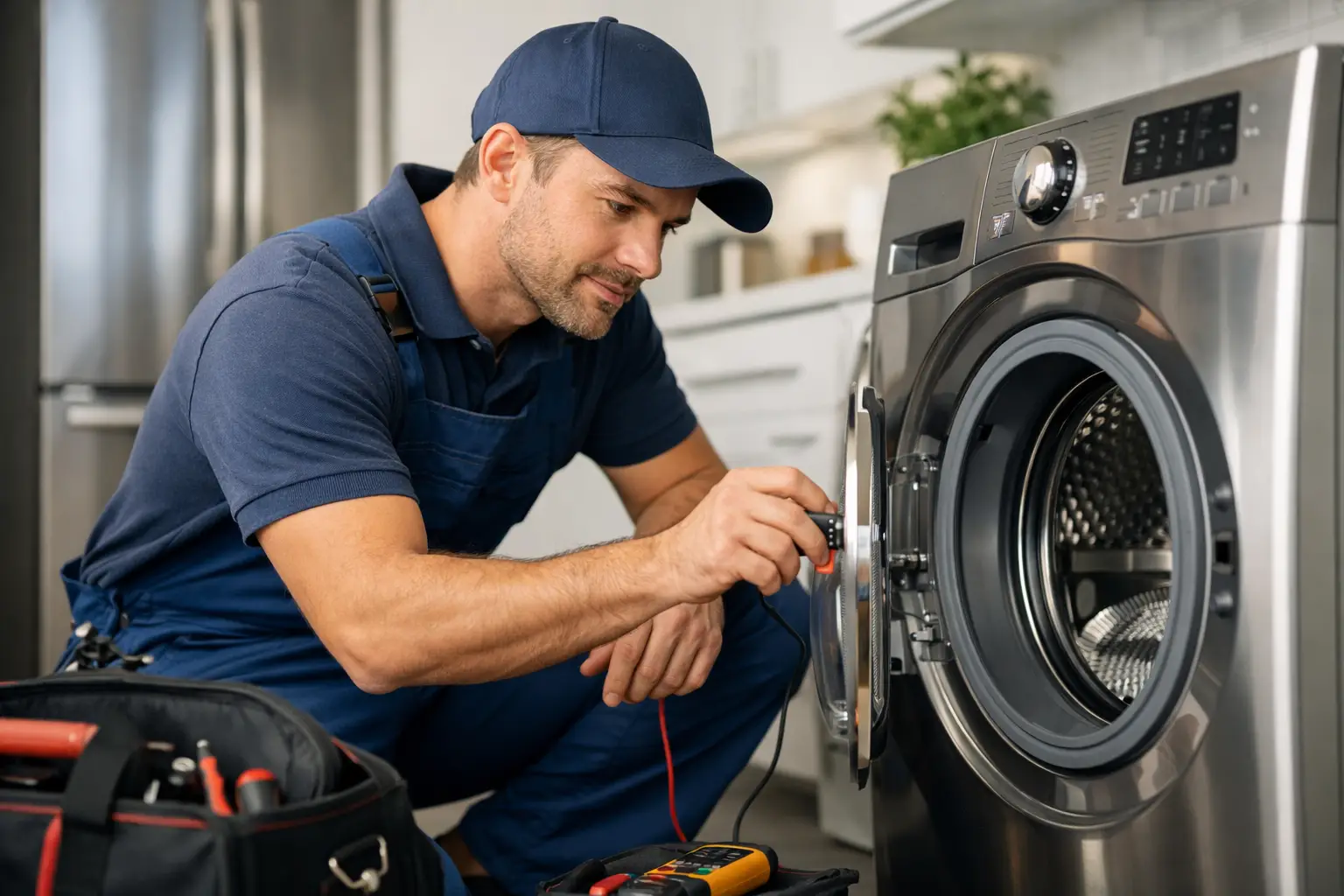
A refrigerator that stops cooling can put a week’s groceries at risk. A washer that will not drain can derail a busy household before work, school, or a weekend away. When an essential appliance fails, most homeowners need more than a quick appointment – they need licensed insured appliance technicians who can enter their home, diagnose the problem accurately, and stand behind the work.
Choosing a repair company based only on the lowest quoted price can create a more expensive problem later. Proper credentials, insurance coverage, experience, parts quality, and warranty terms all affect what happens if the repair is complicated, additional damage is found, or the original issue returns.
What licensed and insured service means for homeowners
A licensed appliance repair business has met the applicable requirements to operate professionally in its service area. Licensing requirements can vary by the scope of work, local rules, and whether a repair involves electrical connections, gas components, or other specialized systems. The key point for a homeowner is accountability: a legitimate service provider should be able to clearly explain its qualifications and operate as an established business.
Insurance is equally practical. Appliance repairs often require working around water lines, electrical wiring, gas connections, cabinetry, flooring, and expensive built-in equipment. Even with careful work, unexpected issues can occur. A properly insured company has coverage intended to protect both the business and the customer if property damage or an on-site incident occurs.
These credentials do not guarantee that every repair will be simple. Some failures have multiple causes, and a part may not reveal its full condition until testing is complete. They do provide a stronger foundation for professional service than an unverified individual offering a cash-only repair with no paperwork, no insurance information, and no stated warranty.
Why appliance repairs require more than a quick fix
Modern household appliances are not simple machines. Refrigerators use electronic control boards, sensors, fans, compressors, sealed cooling systems, and ice-maker components. Washers and dryers rely on locks, pumps, belts, motors, heating elements, control boards, and moisture or temperature sensors. A dishwasher that appears to have a drainage problem may actually have a clogged filter, a failing drain pump, a damaged hose, or an electrical issue preventing the pump from running.
An experienced technician does not start by replacing the most common part. They inspect the appliance, listen to the symptoms, test the relevant components, and identify the cause of the failure. That process helps prevent unnecessary part replacements and repeat service calls.
It also matters for safety. Gas ranges, ovens, dryers, microwaves, and appliances with high-voltage electrical components should not be treated as trial-and-error projects. A repair professional should understand the manufacturer’s specifications, use appropriate testing methods, and recognize when a repair is unsafe or not cost-effective.
The real cost of an incomplete diagnosis
A low-priced visit can sound attractive when an appliance is down. But if the technician replaces a part without confirming the failure, the household may pay for labor and a component that never solved the problem. The appliance is still unusable, and a second repair company may need to begin the diagnosis again.
A complete diagnosis takes skill and time, but it is often the fastest path to a dependable repair. For Orange County homeowners, that can mean fewer disruptions, fewer return visits, and less uncertainty about whether the appliance will fail again next week.
What to ask before booking appliance repair
You do not need to become an appliance expert before making a service call. A few direct questions can help you choose a provider with confidence. Ask whether the company is licensed and insured, whether it services your appliance brand and model type, and whether it provides a warranty on parts and labor.
It is also reasonable to ask how the company handles replacement parts. Genuine or manufacturer-approved parts are often a better fit for major appliances than unknown substitutes, particularly when the repair involves a control board, ignition component, water valve, door lock, or refrigerator part. Availability matters as well. A company that carries frequently needed parts may be able to complete many repairs sooner instead of scheduling a separate visit after a part is ordered.
Finally, ask what happens after the diagnosis. A professional service company should explain the problem in plain language, provide repair options when they exist, and let you understand the expected cost before work proceeds. The goal is not to pressure you into a repair. It is to give you enough information to make a sensible decision for your home and budget.
When repair is the better choice and when replacement makes sense
Licensed insured appliance technicians should not recommend repair automatically. The right answer depends on the appliance’s age, condition, repair cost, maintenance history, and the availability of parts. A relatively new refrigerator with a failed fan motor, water inlet valve, or control component is often worth repairing. The same can be true for a dryer with a worn belt or heating element, or a dishwasher with a failed pump.
Replacement may be more practical when an appliance has repeated major failures, extensive corrosion or water damage, obsolete parts, or a repair estimate that approaches the value of a comparable replacement. Refrigeration-system and compressor issues can require a more careful cost discussion than a straightforward component replacement.
The value of a qualified technician is not simply that they can install a part. It is that they can help distinguish a repairable problem from an appliance nearing the end of its useful life. That honest assessment can prevent spending money on a short-term fix when replacement is the more responsible choice.
Credentials should be paired with clear workmanship standards
Licensing and insurance are essential trust markers, but homeowners should also look for signs of organized, customer-focused service. A professional technician should arrive prepared, protect the work area, explain the diagnosis, and test the appliance after the repair when appropriate. They should not leave you guessing about what was repaired or what to watch for afterward.
Warranty coverage is another meaningful standard. A parts-and-labor warranty gives customers a defined path forward if the same covered issue returns after service. Read the terms, because coverage can vary based on the repair, replacement part, appliance condition, and outside factors such as power issues, clogged plumbing, or improper installation. Still, a company willing to provide a written warranty is demonstrating confidence in its work.
For a household managing work, family responsibilities, and daily routines, professionalism also means respecting time. Appointment communication, prompt arrival windows, accurate diagnostics, and well-stocked service vehicles can make a major difference when a refrigerator, range, washer, or dryer is out of service.
Red flags worth taking seriously
Not every independent repair option is unreliable, but homeowners should be cautious when basic information is missing. Be careful with providers who cannot confirm insurance, refuse to provide a business name or service documentation, insist on payment before explaining the diagnosis, or offer a vague price without seeing the appliance.
Other warning signs include a technician who recommends a costly part immediately without testing, uses unclear or unverified replacement components, or will not discuss warranty coverage. A repair estimate can change if hidden damage is discovered, but the reason for the change should be explained clearly before more work is performed.
Reviews can be helpful, yet they should not be the only deciding factor. Look at the full service picture: credentials, experience with your appliance type, diagnosis process, parts quality, communication, and warranty. When an appliance failure is urgent, those details are what protect your home and repair budget.
For homeowners in Irvine and across Orange County, Prostar Appliance Service provides professional repair for major household appliances with trained, licensed and insured technicians, genuine parts when available, and a 90-day warranty on parts and labor. If an appliance is interrupting your routine, choose a local repair team that can diagnose the issue carefully and help restore your home without unnecessary delays.