


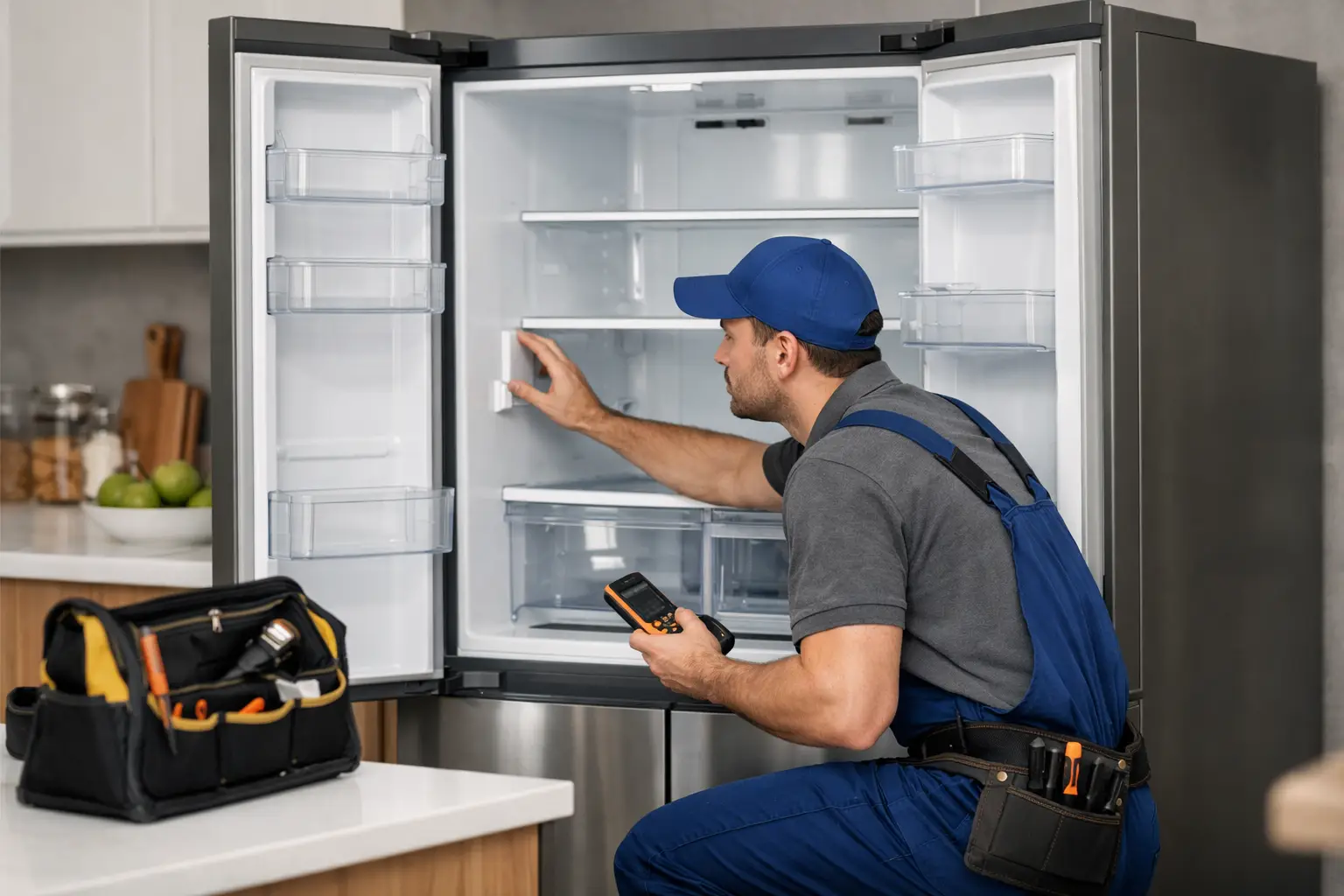
A refrigerator problem usually announces itself at the worst time – warm milk in the morning, soft frozen food at dinner, or a fresh-food section that feels more like a pantry than a fridge. If your samsung refrigerator not cooling has become an urgent problem, the main question is not just what failed. It is whether the issue is minor, airflow-related, or the kind of repair that needs a trained technician before food loss gets worse.
Samsung refrigerators can stop cooling for several different reasons, and the symptoms matter. A unit that is completely warm points to a different problem than one with a cold freezer and a warm refrigerator section. Some failures are tied to airflow and ice buildup. Others involve the fan motor, temperature sensors, control board, sealed system, or compressor. That is why the right diagnosis matters more than guessing.
Why a Samsung refrigerator is not cooling
Most homeowners first notice the temperature problem, but the cooling failure usually starts somewhere deeper in the system. Refrigerators depend on a sequence of parts working together: the compressor circulates refrigerant, condenser components release heat, evaporator components absorb heat, and fans move cold air where it needs to go. If one part falls behind, cooling performance drops.
On many Samsung models, one of the most common scenarios is restricted airflow. If the evaporator area ices over, cold air cannot move properly from the freezer side into the fresh-food section. In that case, the freezer may seem somewhat cold while the refrigerator compartment warms up. In other cases, the condenser coils run dirty, the condenser fan fails, or the evaporator fan stops pushing air through the cabinet.
There are also electrical and control-related issues. A bad thermistor can send the wrong temperature reading. A faulty defrost system can allow frost to build until airflow is blocked. A damaged main control board can interrupt normal cooling cycles. Less commonly, the problem is more serious, such as low refrigerant, a sealed system restriction, or compressor failure.
What the symptoms usually tell you
The pattern of the failure often points the technician in the right direction. If both the freezer and refrigerator are warm, the issue may involve the compressor, start components, condenser fan, or power to the cooling system. If the freezer still works but the fresh-food section is warm, airflow problems become more likely.
A loud or unusual noise can also narrow things down. Clicking from the back of the unit may suggest compressor start trouble. A grinding or buzzing sound can come from a failing fan motor. If you hear the refrigerator running but temperatures keep rising, the unit may be working harder without actually moving enough cold air.
Frost buildup is another important clue. Heavy frost behind the rear freezer panel often points to a defrost problem. Water under drawers or pooling near vents can happen when ice buildup starts melting unevenly or when drainage is obstructed. These are not cosmetic issues. They often signal a cooling failure that gets worse over time.
Common causes of a Samsung refrigerator not cooling
A dirty condenser system is one of the simpler causes, but not always the whole story. When coils are coated with dust and debris, the refrigerator cannot release heat efficiently. That raises cabinet temperatures and forces longer run times. In a busy household, especially one with pets, this can happen faster than expected.
Fan motor problems are also common. The evaporator fan moves cold air through the refrigerator, and the condenser fan helps the system shed heat. If either fan slows down or stops, cooling suffers. Sometimes the fan is blocked by ice. Other times the motor itself has failed.
Defrost failures are especially important on Samsung units because frost buildup can mimic other issues. A failed heater, defrost sensor, or control component can allow ice to accumulate on the evaporator coil. Once that happens, airflow is choked off and the refrigerator side usually warms first.
Temperature sensors and control boards can create inconsistent symptoms. You may see sections that are too warm one day and too cold the next. The display may appear normal while the actual cabinet temperature tells a different story. These problems are difficult to confirm without proper testing.
Then there are sealed system and compressor issues. These tend to be more serious and more technical. If the compressor is not starting correctly, is overheating, or the sealed system is not circulating refrigerant properly, cooling may drop off sharply. Repairs in this category should be handled by a licensed and insured appliance professional.
What you can check before scheduling service
There are a few practical checks worth making before assuming the worst. Start with the basics. Make sure the temperature settings were not changed accidentally, especially if the control panel is easy to bump. Confirm the refrigerator has power and that the outlet is working properly.
Next, look at airflow. If the refrigerator is packed tightly, cold air may not circulate well between compartments. Blocking vents with large containers can create uneven cooling and make the problem look worse than it is. Also check whether the doors are sealing fully. A torn gasket or door left slightly open can introduce warm air and moisture, leading to frost and poor performance.
Listen for the fans and compressor. You do not need to diagnose the sound precisely, but noticing whether the unit is silent, clicking, or running constantly can help. If you see heavy frost on the back freezer panel, that is useful information too. It often points to a defrost-related problem rather than a simple temperature adjustment issue.
What usually does not help is repeated unplugging and restarting. A reset may temporarily change the symptoms, but it does not correct a bad fan motor, failed sensor, defrost fault, or sealed system problem. If food temperatures are already unsafe, waiting too long can turn a repair call into a full food replacement problem.
When a Samsung refrigerator not cooling needs professional repair
Once the problem moves beyond settings, loading, or a door left open, professional diagnosis becomes the efficient path. Modern Samsung refrigerators use multiple sensors, electronic controls, and model-specific components. Replacing parts based on guesswork can get expensive quickly, especially if the real issue is hidden behind frost buildup or intermittent control failure.
A professional technician can test the fan motors, thermistors, defrost circuit, compressor operation, and sealed system performance instead of treating every warm refrigerator the same way. That matters because similar symptoms can come from very different failures. A warm refrigerator compartment could be a blocked air channel, a bad evaporator fan, or a deeper system problem. The repair approach is different in each case.
This is also where parts availability matters. When a company stocks genuine parts and services major brands regularly, repairs are often completed with fewer delays and fewer return visits. For homeowners juggling work, kids, groceries, and a refrigerator full of food, that speed makes a real difference.
Why fast service matters
Refrigerator problems are not the kind most families can put off for a week. Temperatures can move into the unsafe range quickly, and partial cooling is sometimes more misleading than a complete shutdown. People assume the unit is still protecting food because it feels a little cool, but actual storage temperatures may already be too high.
Quick service also helps prevent secondary issues. A struggling compressor can be stressed further if the refrigerator keeps running with dirty coils or blocked airflow. Frost buildup can spread. Water leaks can develop. What starts as one failed component can lead to more extensive repairs if the problem is ignored.
For homeowners in Orange County, the best repair experience is usually simple: clear diagnosis, professional workmanship, and a technician who arrives ready to solve the problem rather than schedule a second visit for basic parts. That is the difference between service that restores your routine and service that stretches the disruption out.
If your refrigerator is warming up, freezing inconsistently, or showing signs of airflow or defrost trouble, local help is available. Prostar Appliance Service provides professional refrigerator repair for homeowners in Irvine and surrounding Orange County communities, with trained technicians, genuine parts, and warranty-backed work. You can learn more or check recent local information on our Google Business Profile.