


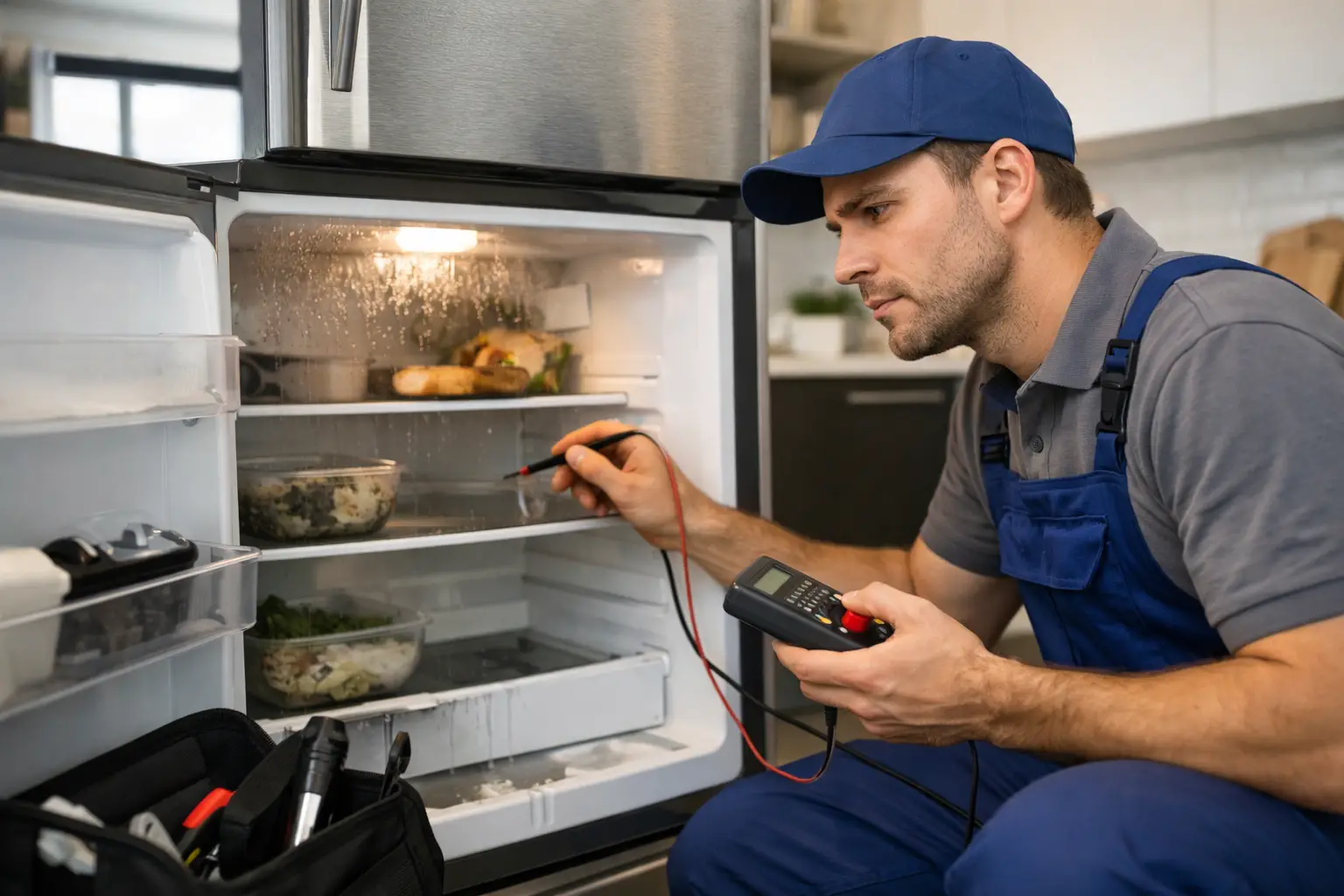
You usually notice refrigerator trouble at the worst possible time – after a grocery run, before guests arrive, or when you open the door and realize the milk is warm. The top signs of refrigerator failure rarely show up all at once. More often, the unit gives you warning signals for days or weeks before it stops cooling properly.
Recognizing those signs early can save food, prevent water damage, and keep a repair from turning into a full replacement. Some issues are minor. Others point to failing components that need prompt professional service.
Top signs of refrigerator failure you should not ignore
A refrigerator does one job that matters more than anything else: it keeps food at a safe temperature. When that starts to slip, the problem moves from inconvenience to urgency fast.
One of the clearest signs is inconsistent cooling. If items in the back are freezing while food near the door feels soft or warm, the refrigerator is no longer maintaining stable temperatures. That can come from airflow problems, a failing thermostat, evaporator fan trouble, or a control issue. It is not something to watch for another week and hope it corrects itself.
Another common warning sign is food spoiling sooner than normal. If produce goes bad quickly, leftovers are not staying cold, or dairy products expire before the date on the carton, your refrigerator may be running but not cooling at the level it should. Many homeowners assume the appliance is still fine because the light comes on and the compressor makes noise. In reality, partial cooling failure is common, and it often gets worse.
Excess condensation is another issue that deserves attention. If you notice beads of water inside the fresh food section, moisture around the door gasket, or damp shelves without an obvious spill, the unit may have a sealing problem or a temperature regulation problem. Warm air getting in forces the refrigerator to work harder and can lead to frost buildup, higher energy use, and more wear on major parts.
Strange noises often mean more than normal wear
Refrigerators are not silent, but they should sound familiar. Most homeowners know the usual hum, click, or occasional cycle noise their unit makes. What matters is a change.
Buzzing that gets louder, repeated clicking, rattling, grinding, or a motor sound that seems to run nonstop can point to mechanical trouble. A failing condenser fan motor, evaporator fan motor, start relay, or compressor can all create unusual sounds. Some noises are less serious than others, but persistent changes should not be ignored.
It depends on the age and condition of the appliance. A brief sound during a cooling cycle may not mean much. A refrigerator that suddenly becomes much louder, especially if cooling performance also drops, needs service sooner rather than later.
When nonstop running is a bad sign
Many modern refrigerators run longer than older models, so longer cycles alone are not always a problem. The concern is when the unit seems to run constantly and still is not holding temperature well.
That usually means the refrigerator is struggling to reach the target temperature. Dirty condenser coils can cause this, but so can sealed system problems, sensor issues, door seal leaks, or a failing compressor. Continued operation under that kind of strain can shorten the life of the appliance.
Water leaks and ice buildup are major red flags
Water under or inside the refrigerator is never something to put off. In some cases, it is a clogged or frozen defrost drain. In others, it could involve a damaged water line, an ice maker issue, or poor door sealing that leads to excess condensation.
What makes leaks more serious is the potential for secondary damage. Flooring, cabinetry, and nearby walls can be affected if moisture continues unnoticed. Even when the repair itself is straightforward, waiting tends to make the total problem more expensive.
Heavy frost buildup is another strong warning sign. If the freezer develops thick ice on the back wall, frost around drawers, or frozen buildup where it did not appear before, the refrigerator may have a defrost system failure. That can involve the heater, defrost thermostat, sensor, or control board. Frost restricts airflow, and once airflow is affected, both the freezer and fresh food compartments can start having temperature problems.
A warm refrigerator and a cold freezer
This is one of the most misleading symptoms homeowners see. If the freezer still feels cold but the refrigerator section is getting warm, many people assume the appliance is partly working and can wait.
In reality, this often points to airflow or defrost problems that need prompt diagnosis. A refrigerator relies on proper circulation from the freezer side into the fresh food section on many models. When that airflow is blocked or the fan is not doing its job, the refrigerator compartment is usually the first area to show the problem.
Electrical and control issues can signal deeper failure
A refrigerator that turns off unexpectedly, trips breakers, resets itself, or has a nonresponsive display should be checked by a trained technician. Electrical symptoms can come from a faulty control board, damaged wiring, compressor startup problems, or other failing components.
Another warning sign is interior lights working while cooling performance drops or stops. People often take the working light as proof that power is reaching the appliance normally, but the cooling system is separate. The refrigerator may be receiving power while a key cooling component has already failed.
If the digital controls are flashing, changing settings on their own, or not responding correctly, do not assume it is just a minor glitch. Electronic control problems can affect temperature regulation, defrost timing, fan operation, and compressor cycling.
Bad smells can point to hidden refrigerator problems
Not every refrigerator odor means there is something old in the crisper drawer. A persistent chemical smell, burning odor, or musty smell that returns after cleaning can indicate a mechanical or drainage issue.
Burning smells should be treated with urgency. Electrical parts that overheat can create a noticeable odor before total failure happens. A musty smell may come from standing water caused by drainage problems. Sour or stale odors can also become more noticeable when the refrigerator is not holding a safe temperature consistently.
If the smell is paired with noise, leaking, or weak cooling, it is time to stop guessing and schedule service.
Higher energy bills can be one of the top signs of refrigerator failure
A struggling refrigerator often works harder and longer to do the same job. That extra run time shows up in wear on parts, but it can also show up on your utility bill.
This sign is easy to miss because energy costs vary from month to month for other reasons. Still, if your bill climbs and your refrigerator has also become louder, warmer, or more prone to frost and condensation, the appliance could be the source.
Older refrigerators can become less efficient with age, but a sudden change usually means something is wrong. A repair may restore performance if caught early enough. If the unit is older and facing a major sealed system or compressor issue, replacement may make more financial sense. That is why accurate diagnosis matters.
When repair makes sense and when it may not
Not every refrigerator problem means the appliance is at the end of its life. Fan motors, thermostats, ice maker components, defrost parts, and door gaskets are often repairable. When the refrigerator is otherwise in good condition, fixing those issues can be the practical choice.
The decision changes when the appliance has multiple failing components, advanced age, or a major compressor or sealed system problem. Brand, model, part availability, and repair cost all matter. The right answer depends on what is actually failing, not just the symptom you can see from the outside.
That is one reason homeowners benefit from professional diagnosis instead of waiting for total breakdown. Early service gives you more options. It can also reduce the chances of food loss and emergency replacement under pressure.
What to do if you notice these warning signs
If your refrigerator is showing one or more of these symptoms, the safest move is to act before the problem escalates. Keep the doors closed as much as possible, monitor food temperature closely, and avoid overloading the unit while it is struggling to cool.
Do not assume the issue will stay minor just because the refrigerator is still partly working. Many failures start that way. A unit that cools unevenly today can stop altogether tomorrow.
For homeowners in Irvine and across Orange County, quick diagnosis matters when a refrigerator starts showing clear warning signs. Prostar Appliance Service provides professional refrigerator repair with trained technicians, stocked genuine parts, and service backed by experience. If your refrigerator is running warm, leaking, making unusual noise, or showing other signs of failure, you can check our Google Business Profile to contact a local team that understands urgent appliance problems.