


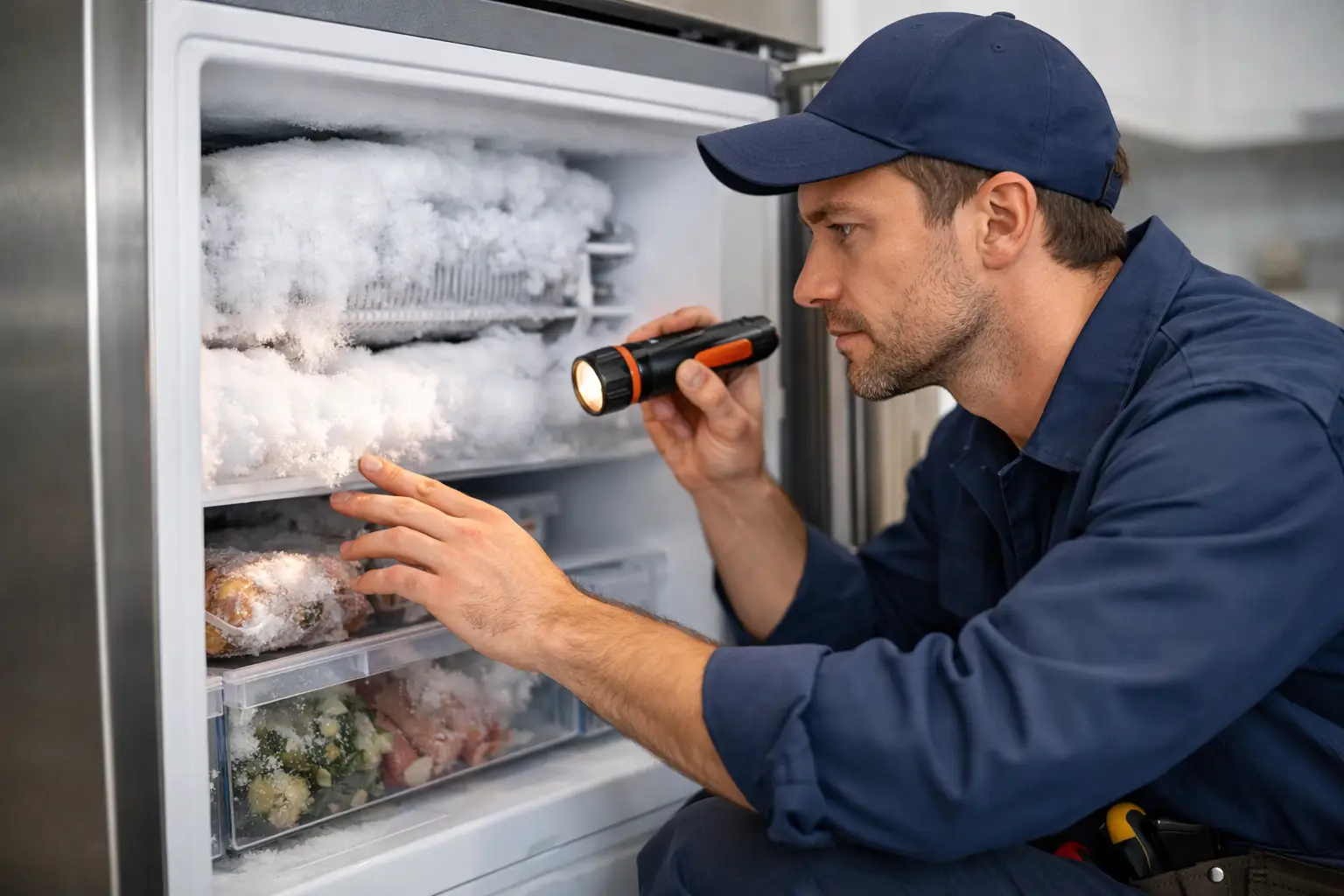
A freezer wall covered in a light dusting of frost can become a solid sheet of ice surprisingly fast. If you are asking, why is my freezer frosting, the short answer is that warm, humid air is getting inside or the appliance is not completing its automatic defrost cycle. Either problem can restrict airflow, reduce storage space, and eventually put frozen food at risk.
A frost-free freezer should remove normal moisture during regular defrost cycles. When frost keeps returning, the issue deserves attention before ice builds up around vents, drawers, the evaporator cover, or the door itself.
Why Is My Freezer Frosting? The Most Common Causes
Frost forms when moist air enters the freezer and freezes on cold interior surfaces. Every time the door opens, a small amount of humidity comes in. Under normal conditions, that moisture is limited and the defrost system handles it. Persistent or heavy frost usually points to a door-sealing issue, use habit, temperature problem, or failed component.
The freezer door is not sealing fully
A worn, torn, dirty, or warped door gasket is one of the most common reasons for frost. The gasket is the flexible rubber seal around the door. If it cannot make full contact with the cabinet, warm kitchen air enters continuously, even when the door appears closed.
Check for food packages, ice buildup, or a drawer that is preventing the door from shutting all the way. Wipe the gasket and the cabinet contact surface with a soft cloth and mild soapy water. If the seal is cracked, loose, flattened, or remains open at one corner, it may need replacement.
A quick paper test can help: close the door on a strip of paper and gently pull it out. If the paper slides freely in several spots around the door, the gasket may not be sealing well. This is not a complete diagnosis, but it is a useful sign that service may be needed.
The door is being left open or opened too often
Busy households naturally open the freezer more often, especially when preparing meals or searching through crowded drawers. The concern is not one quick opening. It is repeated or extended openings that allow enough humid air inside to create visible frost.
Make sure the door closes on its own after use. Avoid placing large items where they interfere with shelves, bins, or door closure. If children use the freezer frequently, confirm that the door is not being left slightly ajar.
Hot or uncovered food is adding moisture
Placing steaming leftovers, warm containers, or uncovered food in the freezer introduces moisture that later freezes into frost. Let food cool safely before storing it, and use sealed containers or freezer bags whenever possible.
This factor can contribute to light frost, but it usually does not cause thick, recurring ice by itself. If frost returns quickly after you defrost the unit, there is likely another issue involved.
The temperature setting is too cold
Most household freezers perform best at 0°F. A setting that is much colder can make existing moisture freeze faster and may cause the compressor to run longer than necessary. However, an overly cold setting is not always the true source of severe frost.
Use an appliance thermometer if you are unsure of the actual temperature. A freezer display or dial can be inaccurate, particularly on an aging refrigerator. If the freezer is struggling to hold a stable temperature, a technician can determine whether the issue is a sensor, control board, fan, airflow restriction, or sealed-system problem.
When Frost Points to a Defrost System Failure
Frost-free freezers rely on several parts working together: a defrost heater, defrost thermostat or sensor, control board or timer, and evaporator fan. During a defrost cycle, the heater melts frost from the evaporator coil behind the interior rear panel. Water then drains away through a tube into a pan beneath the appliance.
When one of these parts fails, frost accumulates on the coil rather than melting. At first, the freezer may still seem cold. Over time, ice blocks airflow and the refrigerator section may become warm while the freezer develops heavy frost.
Signs that the defrost system may be the problem include:
- Thick frost or snow on the rear interior freezer wall
- Frost returning within days or weeks after a manual defrost
- A freezer that runs constantly or becomes unusually noisy
- Weak airflow from interior vents
- A refrigerator section that is warmer than usual while the freezer is iced over
These symptoms require more than adjusting a temperature dial. Replacing the wrong part can waste time and money, so accurate diagnosis matters. A trained technician can test the heater circuit, sensors, fan motor, controls, and wiring to identify the source of the failure.
Other Problems That Can Cause Ice Buildup
A blocked or frozen defrost drain can also create ice in the freezer. Instead of flowing away during defrost, melted water refreezes at the bottom of the compartment. You may see a sheet of ice under the lower basket, water leaking onto the floor, or ice interfering with drawers.
Poor airflow is another concern. Overpacking the freezer can block vents and prevent cold air from circulating correctly. Leave clearance around visible vents and avoid pressing bags or boxes against the rear wall. That said, a reasonably full freezer is generally efficient. The goal is not an empty freezer – it is unobstructed airflow.
An appliance that is not level can sometimes affect door closure or drainage. If the cabinet rocks, the door shifts, or the freezer door does not stay closed reliably, checking the leveling legs may help. For built-in units, complex installations, or appliances that have been moved recently, professional inspection is often the safer choice.
What You Can Safely Check Before Calling for Freezer Repair
Start with the simple conditions that do not require disassembly. Confirm that the door closes completely, clean the gasket, remove items blocking the door or vents, and verify the temperature is set near 0°F. Look for obvious frost patterns, especially on the rear wall and bottom of the freezer.
If there is a heavy layer of frost, a manual defrost may temporarily restore airflow. Move food to a cooler with ice, unplug the appliance, leave the doors open, and allow all ice to melt naturally. Place towels around the base to manage water. Do not chip ice with knives, screwdrivers, or other sharp tools. It is easy to puncture a liner, damage an evaporator coil, or create a much more expensive repair.
After defrosting, monitor the freezer closely. If frost returns quickly, the door seal is fine, and the unit is used normally, schedule service rather than repeatedly defrosting it. Manual defrosting treats the symptom. It does not correct a failed heater, sensor, control, fan, or drain issue.
Why Prompt Repair Can Save Food and Energy
Frost reduces usable freezer space, but the larger issue is performance. Ice-covered evaporator coils cannot transfer heat efficiently. The appliance may run longer, use more electricity, and have trouble maintaining safe temperatures. Frozen food can develop freezer burn when packaging is exposed to excess air and moisture, while temperature swings can shorten its storage life.
A minor gasket issue may be a straightforward repair. A defrost failure can involve several components and requires testing to avoid unnecessary part replacement. The right repair depends on the frost pattern, appliance model, temperature behavior, and whether the refrigerator section is also affected.
For homeowners in Irvine and across Orange County, recurring freezer frost is a good reason to arrange professional service before airflow becomes blocked or food starts thawing. Prostar Appliance Service provides dependable diagnosis and repair for major household appliance brands, with trained technicians and warranty-backed parts and labor.