


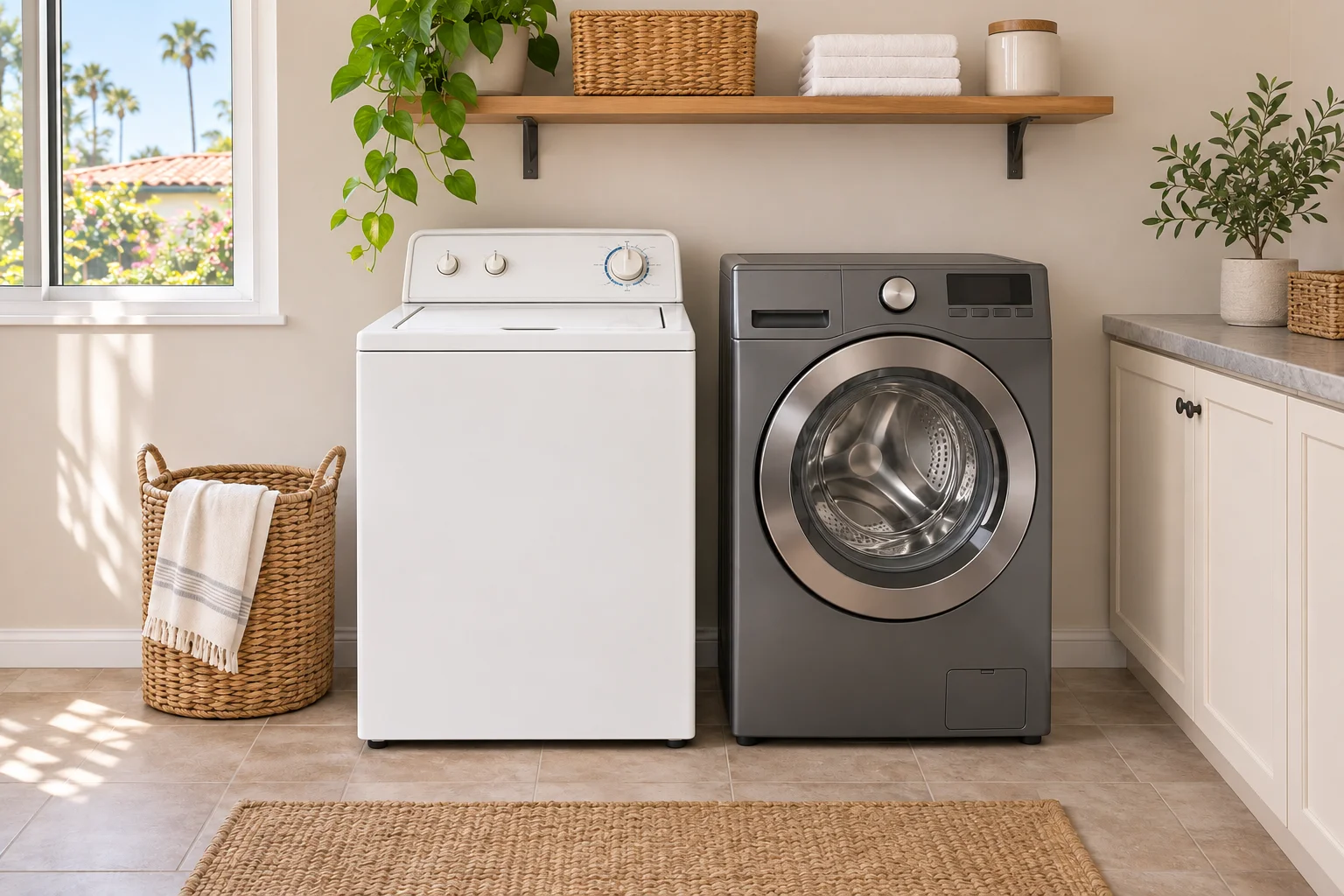
Think of an old top-load washer with a timer dial you can hear clicking. Now picture a new front-loader that weighs the load and adjusts the cycle. Both wash your clothes, but they solve the same problem in different ways. The old machine may be easier to keep running. The new one may use less water and energy. Which is the better buy depends on the machine in front of you.
A simpler design can make a repair smaller
Many older washers use a mechanical timer and a set of switches to control the wash cycle. On some designs, a failed lid switch or drive belt can be replaced separately. Some newer models also have replaceable parts, while others package components into larger assemblies. Two washers can have the same symptom and very different repair bills because of the way the parts are sold.
Think about a washer that fills but won’t spin. The cause could be a switch, a drain problem, or a drive fault. What matters to your wallet is whether the technician can isolate the problem and whether the failed part is available on its own.
Why the older machines we remember seem so durable
The old washers still running today are the ones that made it. The machines that broke early are long gone. And a washer that has been in the family for years may already have had a pump, belt, or timer replaced. A long service life often tells you that the machine was worth maintaining and that parts could be found when it needed them.
A heavy cabinet can feel reassuring. For a repair decision, the condition of the tub, bearings, frame, and wiring tells you more about the years you might get from that particular machine.
What newer washers do better
Many newer washers adjust water use to the load, and some spin faster, leaving clothes less wet before they go into the dryer. Features such as automatic load sensing can be useful for households that do laundry frequently. If you’re shopping, compare the labels for the specific models you’re considering, including capacity and estimated running costs. ENERGY STAR’s clothes washer guide explains what to look for.
Modern controls can also provide fault codes that help guide a diagnosis. The trade-off is that a failed electronic module can be expensive, and availability depends on the model. Ask how common service parts are sold before buying a machine you plan to keep for years.
Two repairs that show why age alone tells you little
In Irvine, an older KitchenAid refrigerator stopped cooling. Testing identified a failed mechanical cold-control thermostat. Replacing that component restored cooling. The repair made sense because the fault could be isolated to a replaceable part. See the KitchenAid cold-control case.
In Corona del Mar, an LG front-load washer went completely dark after a power surge. Testing traced the loss of power to the line noise filter. We replaced the filter and verified normal operation. A blank display could have looked like a control-board problem at first glance. See the LG washer repair with diagnostic photos.
Should you repair your old washer or replace it?
- Find out what failed. A single available part on an otherwise sound washer gives you a clear repair option.
- Ask what else is wearing out. Repeated failures, major tub damage, or serious corrosion can change the decision even if the immediate fault is fixable.
- Compare complete costs. Include diagnosis, parts, and labor for the repair. For the replacement, include delivery, installation, and haul-away. Consider water and energy costs if you run many loads every week.
- Check parts availability first. The full model number matters. Some old machines still have good parts support, while others rely on discontinued or hard-to-find components.
If your washer has served you well and the rest of it is in good condition, get a diagnosis before you shop. If you do replace it, look for a machine that fits your loads, has readily available parts, and offers controls you’ll use.