


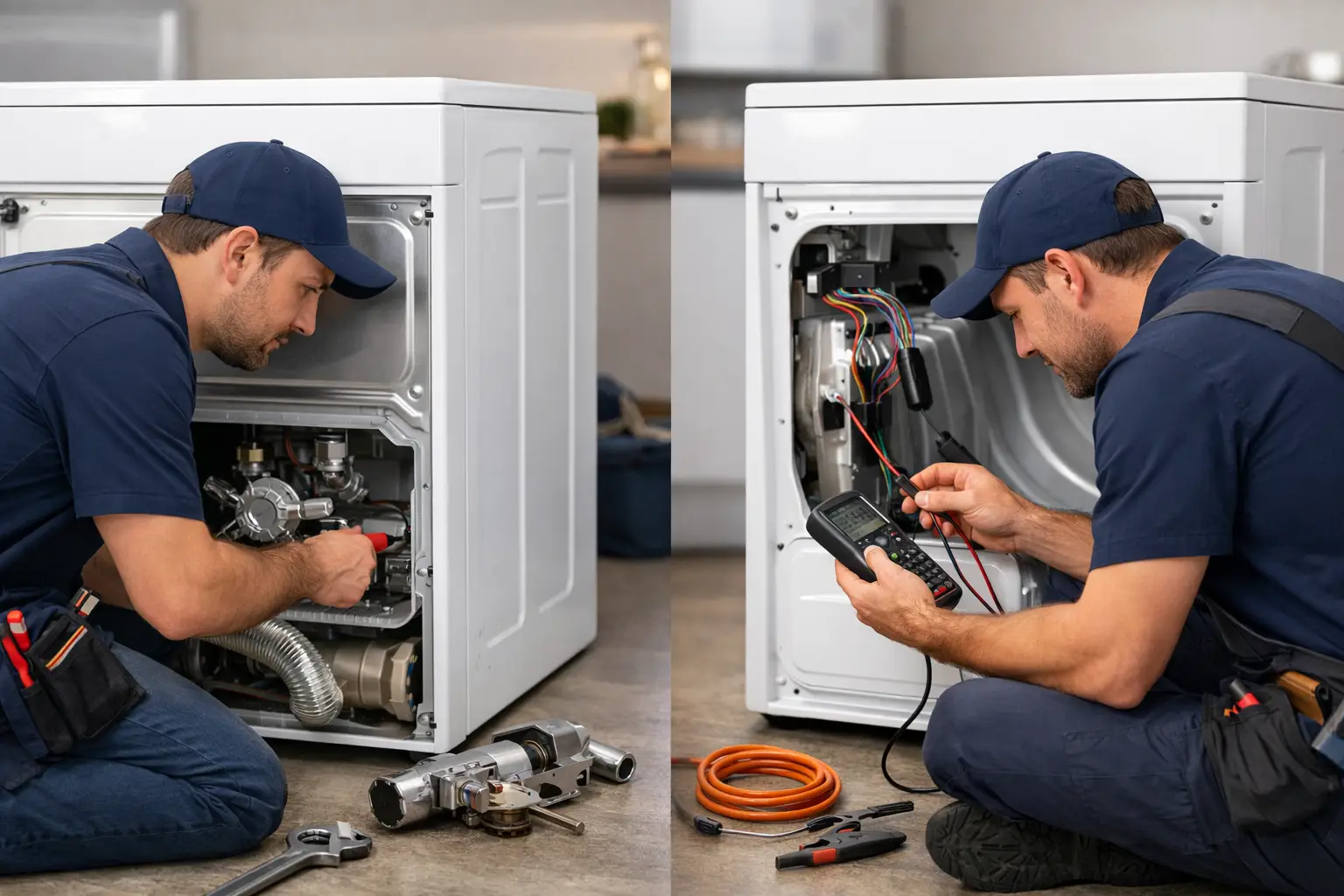
A dryer that tumbles but leaves every load damp can disrupt a household quickly. With gas vs electric dryer repair, the symptom may look similar, but the source of the problem, the safety considerations, and the required repair process can be very different. Knowing which type of dryer you own helps you understand why a professional diagnosis matters, especially when laundry is backing up and you need a dependable fix.
The Main Difference Between Gas and Electric Dryers
Both dryer types use a motor, drum, belt, blower wheel, thermostat, moisture sensors, and airflow system to dry clothing. The biggest difference is how they create heat. An electric dryer uses high-voltage heating elements. A gas dryer uses a burner assembly that combines natural gas or propane with an igniter and safety controls.
That distinction affects every no-heat diagnosis. An electric dryer may have a failed heating element, a damaged terminal block, a tripped breaker, or a failed thermal fuse. A gas dryer may have an igniter that does not glow, faulty gas valve coils, a failed flame sensor, or an issue with the gas supply. Both units can suffer from restricted venting, worn drum support parts, control board failures, and normal wear from frequent use.
For homeowners, the practical takeaway is simple: do not assume that a dryer with the same symptom needs the same repair. The correct repair starts with confirming the dryer type, checking the entire operating sequence, and testing the relevant components safely.
Gas vs Electric Dryer Repair for No-Heat Problems
No heat is one of the most common dryer complaints in Orange County homes. Clothes may feel warm but stay wet, the dryer may run for two or three cycles without drying, or it may stop heating midway through a load. A technician will first verify that the dryer has proper power or gas supply and that air can leave through the vent system.
Electric dryer no-heat repairs
Electric dryers usually require a 240-volt power supply for the heating element, even though the drum and controls may still operate on a partial electrical connection. This is why an electric dryer can tumble normally while producing no heat. A tripped double breaker, loose power cord connection, burned terminal, or failed heating circuit can all create this confusing symptom.
Once the power supply is confirmed, the technician may test the heating element, high-limit thermostat, thermal cutoff, cycling thermostat, and thermal fuse. A blown thermal fuse often points to an airflow issue rather than a random part failure. If the vent is clogged or crushed, replacing the fuse without correcting the airflow problem can lead to another breakdown.
Electric dryer repair can also involve signs of heat damage around wiring or terminals. These issues need prompt attention. Continuing to run a dryer with damaged electrical connections can worsen the failure and create a safety concern.
Gas dryer no-heat repairs
Gas dryer diagnostics follow a different sequence. The dryer must receive electrical power, the gas shutoff valve must be open, the igniter must operate correctly, and the burner must ignite and remain stable. A failure at any point can leave the drum turning with no heat.
A common gas dryer issue is a weak or failed igniter. In other cases, the igniter glows but the burner never lights because the gas valve coils have failed. A defective flame sensor, faulty control board, or gas supply issue may produce similar symptoms. These components must be tested in the proper order rather than replaced based on guesswork.
Any suspected gas leak, gas odor, or burner irregularity deserves immediate professional attention. Turn the dryer off, avoid operating switches or open flames nearby, and arrange for qualified service. Gas appliance repairs involve combustion and fuel supply systems that should not be handled as a trial-and-error household project.
Repairs Both Dryer Types Commonly Need
Not every dryer problem is related to heat. Gas and electric dryers share many mechanical and airflow components, which means some repairs are nearly identical regardless of fuel type.
A loud thumping, scraping, squealing, or grinding sound may point to worn drum rollers, a damaged idler pulley, a stretched belt, or a failing blower wheel. If the dryer runs but the drum does not turn, the belt, motor, door switch, or control system may be involved. A dryer that shuts off too soon can have a sensor issue, airflow restriction, overheating condition, or electronic control problem.
Restricted venting remains one of the most overlooked causes of poor dryer performance. Lint buildup can increase drying time, make the cabinet unusually hot, and cause safety devices to trip. It can also put added strain on heating parts and motors. Cleaning the lint screen after every load helps, but it does not replace inspection of the full exhaust path when drying time suddenly increases.
Modern dryers may also display error codes, but those codes are a starting point, not a complete diagnosis. A code can identify a circuit or system that needs attention without proving which specific part has failed. Proper testing prevents unnecessary parts replacement and helps protect the appliance from repeat problems.
Is a Gas Dryer More Expensive to Repair?
It depends on the failed part, dryer age, model, and whether the problem involves more than one component. Gas dryer parts such as igniters and valve coils are often straightforward repairs when the rest of the appliance is in good condition. However, burner assembly issues require more careful diagnosis because safety systems, electrical controls, and gas supply all work together.
Electric dryer heating elements and thermostats can also be cost-effective repairs, but the price can rise if there is wiring damage, a failed control board, or repeated overheating caused by a venting issue. Premium and smart dryer models may have more expensive electronic components regardless of whether they are gas or electric.
The better question is not whether gas or electric is always cheaper to fix. It is whether the specific repair makes sense for your dryer. A trained technician can evaluate the appliance condition, identify the failed component, and explain whether repair is the practical choice. This is particularly valuable when a dryer is older, has multiple worn parts, or has begun needing repeated service.
When to Schedule Professional Dryer Service
A dryer should be checked promptly if it has no heat, takes more than one cycle to dry normal loads, makes new or worsening noises, trips a breaker, displays recurring error codes, or has a burning smell. For gas models, arrange service immediately if the burner does not ignite consistently or you notice a gas odor.
Waiting can turn a smaller repair into a larger one. For example, a blocked vent can overheat safety components, while a noisy roller can eventually damage other drum-support parts. Early service also reduces the inconvenience of hauling wet laundry through an already busy week.
When scheduling repair, have the dryer brand and model number available if possible. Sharing the symptom clearly is also useful: whether the drum turns, whether heat starts and stops, how long the problem has been happening, and whether there are noises or error codes. This helps the service team prepare for an efficient visit and bring commonly needed genuine parts when available.
Choosing the Right Repair Approach
Gas dryers require specialized attention around ignition, combustion, and gas supply. Electric dryers require careful testing of high-voltage circuits and heating components. In either case, a complete diagnosis should include airflow and safety checks, not simply replacing the first part that appears related to the symptom.
For homeowners, the most reliable approach is to stop using a dryer that shows signs of overheating, electrical damage, or gas-related trouble and have it inspected before the problem grows. A correctly repaired dryer should heat consistently, vent properly, run without unusual noise, and return your laundry routine to normal.
For fast, professional dryer service in Irvine and throughout Orange County, Prostar Appliance Service can diagnose gas and electric dryer problems, use quality replacement parts, and stand behind completed work with a 90-day parts and labor warranty. Schedule dependable local help through our Google Business Profile.