


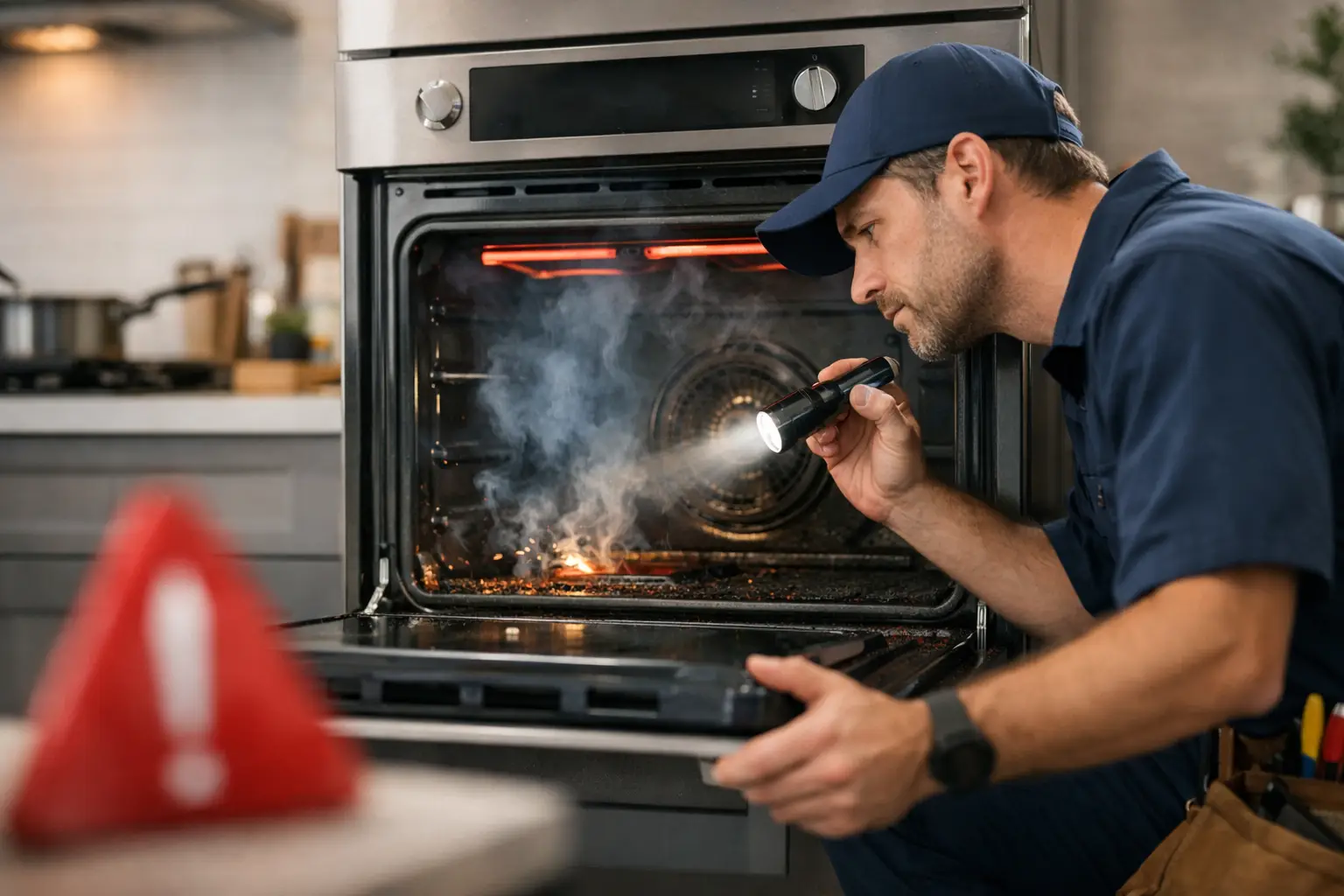
A dinner that will not cook evenly, a range that will not heat, or an oven that suddenly shuts off can disrupt the entire household. Oven repair is not something most homeowners plan for, but acting quickly can prevent ruined meals, avoid safety concerns, and keep a small part failure from becoming a larger repair.
For busy Orange County households, the issue is rarely just the appliance. It is the inconvenience of changing dinner plans, relying on takeout, or trying to manage a kitchen that is no longer dependable. A professional diagnosis identifies what failed, explains the repair options clearly, and helps restore a major appliance with as little disruption as possible.
When Oven Repair Should Not Wait
Some oven problems are inconvenient but manageable for a short time. Others need prompt professional attention, especially when heat, electricity, or gas is involved. If you smell gas, notice sparking, see smoke that is not related to food residue, or suspect an electrical issue, stop using the appliance and arrange service right away.
An oven that does not reach the selected temperature is another common concern. You may set it to 350 degrees, wait for the preheat signal, and still find that food takes much longer than expected. That can point to a failing bake element, broil element, temperature sensor, control board, igniter, or another component. Guessing at the cause often wastes time and may lead to ordering the wrong part.
Uneven cooking is also worth addressing. If one side of a sheet pan browns too quickly, casseroles stay cold in the center, or cookies bake inconsistently from batch to batch, the oven may not be distributing or regulating heat correctly. In some cases, recalibration can help. In others, a worn component needs replacement.
Common Signs of a Failing Oven
A dependable oven should preheat, hold temperature, and respond consistently to its controls. Schedule service when you notice repeated problems such as:
- The oven will not turn on, preheat, or maintain heat.
- Food cooks too fast, too slowly, or unevenly.
- The display shows an error code or the controls stop responding.
- The oven door will not close, lock, or release after a self-clean cycle.
- A burner, element, or igniter does not work correctly.
- The appliance trips a circuit breaker or creates a burning smell.
One isolated cooking mistake does not always mean the oven has failed. Repeated temperature problems, electrical symptoms, or error messages are different. Those patterns usually call for a trained technician who can test the appliance safely and accurately.
What a Professional Oven Repair Diagnosis Includes
A proper service visit should begin with the symptom you have noticed, followed by appliance testing rather than assumptions. The technician may check power supply, heating elements, igniters, sensors, wiring, door switches, relays, and electronic controls. The exact process depends on whether you have an electric wall oven, gas range, double oven, convection model, or another configuration.
For electric ovens, heating elements and electrical connections are frequent sources of trouble. A bake or broil element may look damaged, but not every failed element shows visible blistering or breaks. Testing helps confirm whether the part is receiving power and operating within the expected range.
Gas oven issues often involve the igniter, gas valve, burner assembly, or safety components. An igniter can glow without becoming hot enough to open the gas valve correctly. That is why a glowing igniter does not automatically mean the component is working as it should.
Modern ovens add another layer of complexity. Touch panels, digital displays, Wi-Fi functions, temperature probes, and electronic control boards can all affect normal operation. Error codes are useful clues, but they are not always a final diagnosis. A code may identify a circuit or system that needs testing, not necessarily the single part that needs replacement.
Why the Right Part Matters
An oven repair can be straightforward when the problem is correctly identified and the proper replacement part is available. It becomes more complicated when an incorrect or low-quality part is installed. Components such as elements, igniters, sensors, thermostats, and control boards must match the appliance model and its electrical or gas requirements.
Genuine or manufacturer-approved parts are especially valuable for major appliance repairs because fit and function matter. A part that appears similar may not perform the same way, communicate correctly with electronic controls, or hold up under normal cooking temperatures.
Availability also affects how quickly the repair can be completed. Technicians who carry commonly needed parts may be able to resolve many issues without multiple return visits. For specialty components or older appliance models, ordering may still be necessary. A reliable service provider should explain that timeline before work begins.
Repair or Replace: What Makes Sense?
The right answer depends on the age of the oven, the cost of the repair, the condition of the appliance, and the type of failure. A newer oven with a failed igniter, heating element, sensor, or door hinge is often a strong candidate for repair. These are common service issues, and correcting them can restore normal operation for a reasonable cost.
Replacement may be more practical when the appliance has repeated major failures, requires an expensive control board, has unavailable parts, or is near the end of its expected service life. Built-in ovens also require additional consideration because replacing one can involve cabinet dimensions, electrical requirements, installation costs, and matching the surrounding kitchen design.
Do not base the decision on age alone. A well-maintained premium oven may be worth repairing even after many years, while a newer appliance with extensive damage or a costly unavailable part may not be. A professional assessment gives you the information needed to compare the options without pressure.
Avoid DIY Oven Repairs Around Gas and Electricity
Homeowners can safely handle basic upkeep such as cleaning spills, replacing an oven light bulb when the manual permits it, and checking whether a circuit breaker has tripped. Beyond that, oven repairs can involve high voltage, live electrical connections, sharp metal edges, gas lines, and components that retain heat.
Removing panels or replacing parts without proper testing can create a safety risk or cause additional damage. It may also void manufacturer coverage or make future diagnosis more difficult. This is particularly true with gas appliances, electronic control boards, and self-cleaning oven door lock systems.
If the appliance is not working, avoid repeatedly cycling it on and off or continuing to use it after it trips a breaker. Make a note of the model number, error code, and symptoms you observed. Those details can help speed up the service process and support a more accurate diagnosis.
How to Help Your Service Appointment Go Smoothly
Before a technician arrives, clear cookware and storage items from the oven and surrounding work area. If possible, have the appliance model and serial number available. Let the technician know whether the problem happens every time, only during preheating, after a self-clean cycle, or with a particular cooking mode.
It also helps to mention prior repairs, recent power outages, and any changes in performance. For example, an oven that began overheating after a power surge may need a different diagnostic path than one that has gradually taken longer to preheat over several months.
Professional service should leave you with a clear understanding of the issue, the recommended repair, and any warranty coverage on parts and labor. That clarity matters when your household depends on the kitchen every day.
When your oven is not heating, cooking evenly, or responding to its controls, prompt service can protect your schedule and your kitchen routine. Prostar Appliance Service provides dependable oven repair for homeowners in Irvine and across Orange County, with trained technicians, genuine parts, and warranty-backed workmanship.