


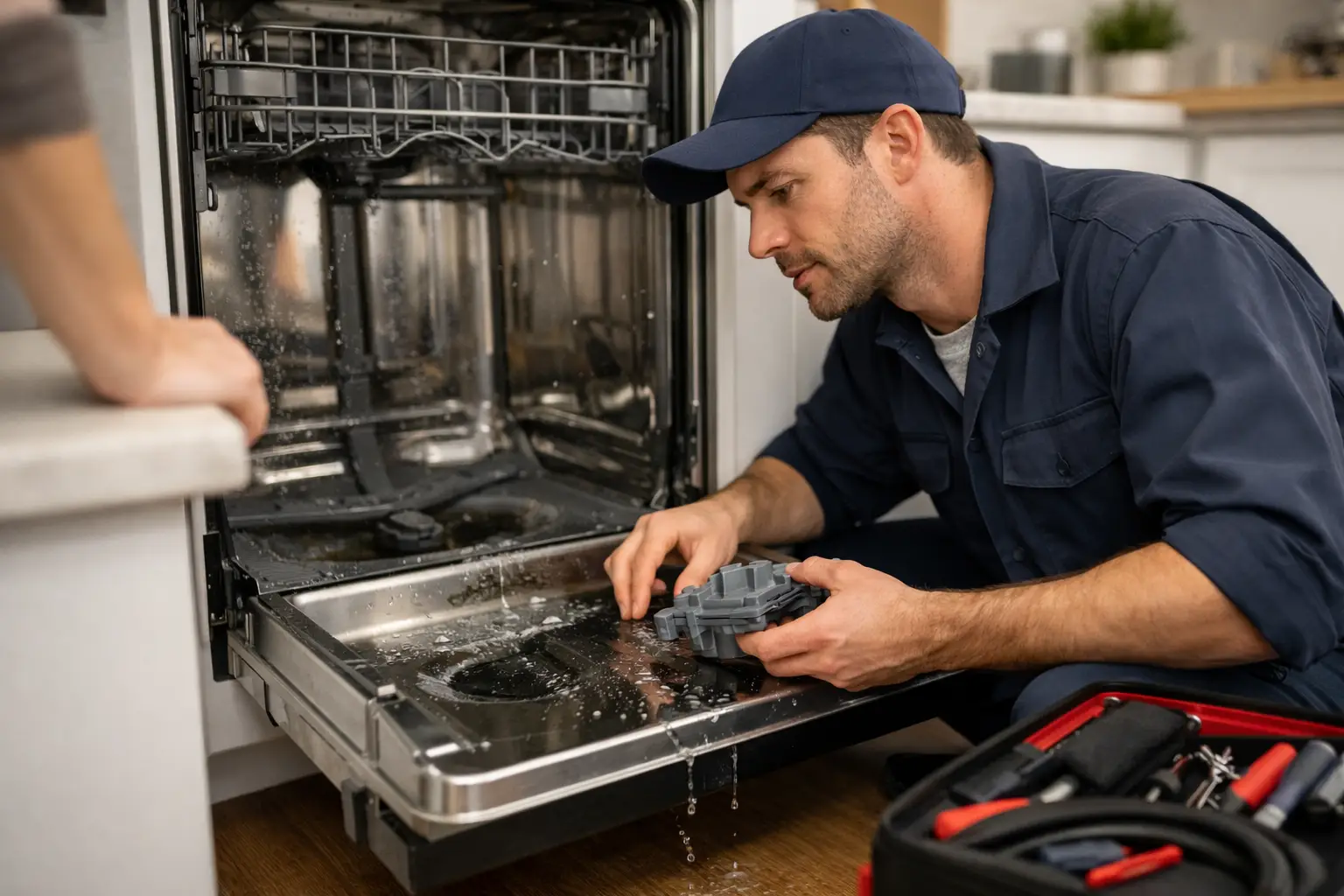
A dishwasher that finishes a cycle with dirty water pooled at the bottom is more than an inconvenience. It can leave dishes unclean, create odors, and interrupt a busy household routine. Knowing the top signs of dishwasher pump failure helps you act before a small drainage problem turns into a leak, a damaged floor, or repeated failed cycles.
Your dishwasher has two pump-related jobs: circulating water through the spray arms and draining used water out of the tub. Depending on the model, these functions may use separate pumps or a combined pump assembly. A professional diagnosis matters because a clogged filter, blocked hose, faulty drain valve, or disposal connection can create symptoms that look very similar to pump failure.
1. Water Remains in the Bottom of the Dishwasher
Standing water after a completed cycle is one of the most common signs of a drain pump problem. A small amount of clean water around the filter area may be normal on certain models, but a visible pool of cloudy, food-filled water is not.
Before assuming the pump has failed, a technician will check for a blocked filter, debris in the sump, a kinked drain hose, or a clog where the dishwasher connects to the garbage disposal. If those parts are clear and the dishwasher still will not remove water, the drain pump may be jammed, electrically failed, or worn out.
Do not keep running cycles with standing water in the tub. The dishwasher may overflow during the next fill, and old water can leave odors and residue on dishes.
2. The Dishwasher Makes a Loud Humming, Grinding, or Whining Sound
A drain pump normally makes a low, steady sound while it pushes water out. A loud hum with no draining can mean the pump motor is receiving power but cannot turn. This sometimes happens when a piece of glass, a label, a seed, or another small object reaches the pump area.
Grinding or rattling can point to debris striking the pump impeller. A high-pitched whine may indicate a worn motor or impeller. These noises are not always caused by the pump – a circulation motor, spray arm, or loose item in the tub can also be noisy – but unusual sounds that occur specifically near the end of the cycle deserve prompt attention.
Turning the dishwasher off and scheduling service is usually the safer choice. Continuing to operate a struggling motor can cause it to overheat or turn a repairable obstruction into a failed pump assembly.
3. Your Dishwasher Stops Mid-Cycle or Will Not Advance
Many dishwashers are programmed to drain at specific points during a wash cycle. If the control detects that water is not leaving the tub as expected, it may pause, display an error code, or stop before the cycle is complete.
This symptom can be confusing because the dishwasher may still fill with water and run briefly. It may even wash dishes reasonably well at first. The failure becomes more noticeable when the machine reaches a drain portion of the cycle and cannot clear the tub.
A failed pump is one possibility, but the cause could also involve the control board, wiring, door switch, water-level sensor, or drain hose. Error codes can be useful, but they are not a complete diagnosis. The same code may identify a drain condition rather than the exact failed part.
4. Dishes Come Out Dirty Even Though the Dishwasher Runs
A circulation pump moves wash water through the spray arms. When that pump loses strength or stops working, the dishwasher may fill and appear to run, but water pressure inside the tub is too weak to clean dishes properly.
You may see food particles left on plates, detergent residue in the dispenser cup, or dry areas on items that should have been sprayed. In some cases, the spray arms do not rotate because there is not enough water pressure behind them.
Poor cleaning can also result from overloaded racks, clogged spray-arm holes, incorrect detergent, low water temperature, or a failing water inlet valve. Still, when poor cleaning occurs alongside a weak motor sound, repeated error codes, or water left in the tub, the pump should be checked.
5. Water Leaks From the Bottom or Front of the Dishwasher
A leaking dishwasher does not automatically mean the pump has failed. Door gaskets, loose hose connections, cracked tubs, and worn inlet valves are all possible sources. However, pump seals and pump housings can leak as they age, especially if the motor has been straining or debris has damaged the assembly.
Look for water near the front corners, under the center of the dishwasher, or on the floor after a cycle. Some leaks only appear while the machine is actively washing or draining, which makes them difficult to locate without safely pulling the appliance and inspecting it during operation.
If you see water on the floor, stop using the dishwasher until the source is found. Water can damage cabinetry, flooring, and nearby electrical connections. A quick repair is usually less costly than dealing with concealed moisture damage later.
6. The Dishwasher Smells Bad or Has Recurring Drainage Odors
A sour or sewer-like smell often starts when dirty water remains trapped in the dishwasher. Food debris can collect in the filter and sump, but a weak or intermittent drain pump may allow wastewater to sit after each cycle even when the tub does not look completely full.
A dishwasher connected to a garbage disposal can also develop odors if the disposal drain is clogged or if the knockout plug was never removed after a new disposal installation. That is why the pump should not be replaced based on odor alone.
When cleaning the accessible filter does not solve the problem and the odor returns with slow draining or standing water, it is time for a proper inspection. The technician can determine whether the issue is inside the appliance or in the drain path connected to it.
7. The Dishwasher Does Not Drain, but You Can Hear the Pump Try
This is one of the clearest pump-related symptoms. You press cancel or drain, hear the motor engage, and the water stays put. The motor may be seized, the impeller may be damaged, or something may be preventing it from turning.
On the other hand, no sound at all during a drain command may point to an electrical problem. The pump may not be receiving power because of damaged wiring, a failed control board, or a faulty door latch. Testing these components requires the right equipment and should be handled by a qualified appliance technician.
What to Do Before Scheduling Dishwasher Pump Repair
You do not need to dismantle the dishwasher to make the service visit more efficient. Turn off the appliance if there is a leak, burning smell, or repeated breaker trip. If it is safe to do so, remove dishes and check the accessible filter for food buildup. Avoid reaching into the sump or attempting to disassemble the pump, as sharp glass and electrical components may be present.
It also helps to note when the problem happens. Does the dishwasher fail only at the end of a cycle? Does it leave water after every load? Is there a noise, error code, or leak? Those details help narrow the diagnosis quickly.
When Pump Repair Makes Sense
For many dishwashers, replacing a failed drain or circulation pump is a practical repair that restores normal operation without replacing the appliance. The decision depends on the dishwasher’s age, overall condition, brand, availability of genuine parts, and whether other major components are also failing.
A newer or well-maintained dishwasher with a single pump issue is often a strong candidate for repair. If an older unit has a failing pump along with rusted racks, a damaged control board, recurring leaks, or multiple performance issues, replacement may be the more sensible long-term choice. An experienced technician can explain the condition of the appliance and the repair options clearly before work begins.
For fast, dependable dishwasher diagnosis and repair in Irvine and across Orange County, Prostar Appliance Service can identify the source of drainage, cleaning, and pump-related problems and provide warranty-backed repair options.