


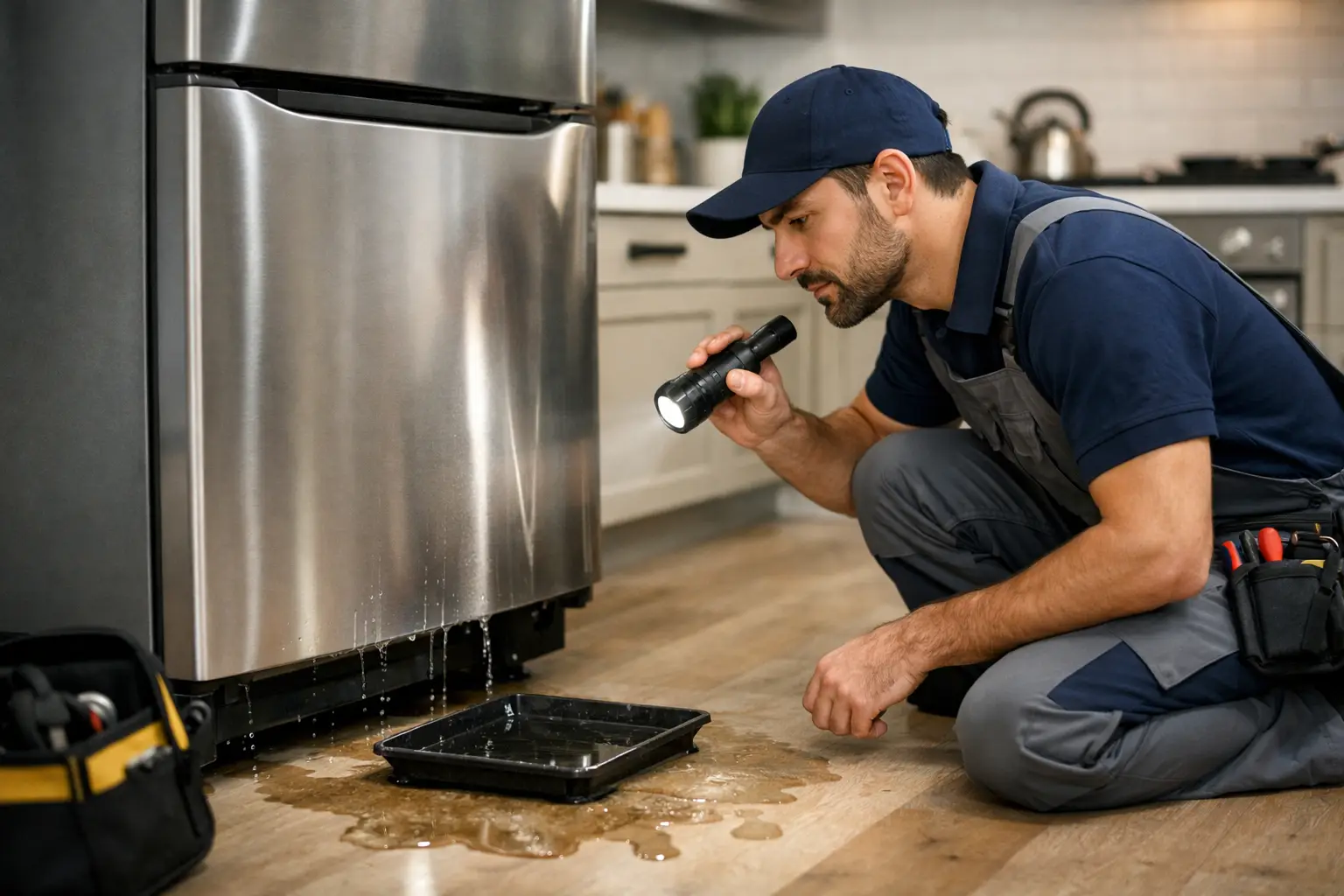
A puddle under the refrigerator is rarely something to ignore. When homeowners ask what causes refrigerator leaking, the answer can range from a simple drainage issue to a failing water line or a problem that puts food storage at risk. The location, timing, and amount of water offer useful clues, but a refrigerator leak can spread beneath flooring or damage nearby cabinets before the source is obvious.
What Causes a Refrigerator to Leak?
Most refrigerator leaks come from condensation that is not draining properly, a water supply connection, or a component inside the appliance that is no longer working as designed. A refrigerator naturally creates moisture during normal cooling and defrost cycles. That moisture must be directed safely into a drain pan or away from the appliance. When a drain clogs, a seal fails, or a water line loosens, water can end up on the kitchen floor instead.
The first priority is to protect your home. Move towels around the leak, keep children and pets away from standing water, and avoid touching electrical connections. If water is pooling near an outlet, refrigerator cord, or wall connection, turn off the appliance only if it is safe to do so and arrange for professional service.
A Clogged or Frozen Defrost Drain
A blocked defrost drain is one of the most common reasons a refrigerator leaks from the bottom or inside the fresh-food compartment. During the automatic defrost cycle, melted frost should flow through a small drain opening and tube into a pan below the refrigerator. Food particles, ice, or debris can block that pathway.
When the drain is clogged, water backs up and may freeze along the bottom of the freezer. As it melts, it can run into the refrigerator section or spill onto the floor. You may notice a sheet of ice under freezer drawers, water collecting beneath produce bins, or a recurring puddle near the front of the appliance.
This issue may appear simple, but it is worth having diagnosed correctly. A technician can clear the drain, inspect the drain tube, and check whether a defrost system problem is causing ice to return.
A Leaking Water Supply Line
Refrigerators with an ice maker or water dispenser rely on a water line running from the household supply to the appliance. A loose fitting, cracked plastic tube, worn valve, or damaged connector can release water behind or underneath the refrigerator.
Leaks from a water line often become more noticeable when the dispenser is used or when the ice maker refills. However, a small supply-line leak may drip slowly all day, making it harder to identify. Pulling a refrigerator away from the wall without care can also strain an older line and make a minor weakness worse.
A water supply issue requires prompt attention. Even a slow drip can damage baseboards, flooring, drywall, and cabinetry over time. If the leak is clearly coming from the back of the refrigerator, shut off the refrigerator water supply valve if you can safely access it, then schedule service.
A Faulty Water Inlet Valve
The water inlet valve controls the flow of water to the ice maker and dispenser. If the valve cracks, sticks, or no longer seals completely, water can leak from the back of the refrigerator or pool underneath it. Mineral buildup is a common contributor in areas with hard water, but normal wear can also cause the valve to fail.
A faulty inlet valve may come with other symptoms. The ice maker may overfill, produce unusually small cubes, stop making ice, or dispense water inconsistently. Because the valve is connected to both plumbing and electrical components, replacement is best handled by a trained appliance technician using the correct part for the refrigerator model.
A Full, Cracked, or Misaligned Drain Pan
Most refrigerators have a drain pan near the compressor area. It collects small amounts of defrost water, which normally evaporates with the help of heat and airflow from the appliance. Under ordinary conditions, homeowners should not see this water or need to empty the pan.
If the pan is cracked, out of position, or receiving more water than it can handle, it can leak onto the floor. Excess water in the pan may point to a separate issue, such as a clogged defrost drain or unusually humid conditions. The pan itself may not be the root cause.
Accessing the drain pan differs by refrigerator design. On many newer models, it is difficult to inspect without moving panels or components. Professional diagnosis helps avoid replacing the wrong part or overlooking the reason the pan is overflowing.
Door Gaskets That Let Warm Air In
The rubber gasket around each refrigerator and freezer door creates an airtight seal. When it is dirty, torn, warped, or loose, warm humid kitchen air can enter the compartment. That moisture turns into condensation and frost, creating more water during defrost cycles than the system is prepared to manage.
A failing door gasket does not always cause a visible floor leak immediately. You may first notice condensation around the door, frost buildup in the freezer, food that does not stay consistently cold, or a refrigerator that seems to run more often. Over time, the extra moisture can contribute to drainage problems and water accumulation.
Keeping the gasket clean can help it seal properly, but a split or deformed gasket generally needs replacement. Door alignment may also need adjustment, especially if the door sags or does not close firmly.
A Refrigerator That Is Not Level
Refrigerators are designed to sit level, often with a slight tilt toward the back depending on the manufacturer’s specifications. If the appliance leans too far forward or to one side, doors may not close correctly and water may not travel toward the intended drain path.
An unlevel refrigerator can also cause the drain pan to sit improperly. This is more likely after new flooring is installed, the refrigerator is moved, or adjustable front legs shift over time. Leveling may sound minor, but it can affect door seals, drainage, and overall performance.
Condensation From High Humidity or Frequent Door Use
Orange County kitchens can experience moisture from cooking, open windows, and frequent refrigerator use. In a busy household, doors may be opened repeatedly for snacks, meals, school lunches, and entertaining. Every opening brings warmer air into the refrigerator, which can create condensation.
Humidity alone should not create a large puddle on the floor. But it can expose an existing problem with a door gasket, drain system, or insulation. If moisture is forming inside the refrigerator or around the exterior doors, it is wise to have the appliance checked before the issue affects cooling performance.
A Damaged Ice Maker or Dispenser Assembly
An ice maker can leak when its fill tube freezes, its mold cracks, or its water flow is not properly controlled. Dispenser components can also develop leaks around tubing connections inside the refrigerator door or behind the unit. These problems may leave water under the refrigerator, behind lower panels, or inside the ice bin area.
Ice maker leaks are often intermittent, which makes them frustrating to track down. The appliance may leak only during a refill cycle or after the freezer has been closed for several hours. A technician can test the valve, fill tube, ice maker assembly, and related water lines to identify the actual failed component.
When a Refrigerator Leak Needs Immediate Repair
Call for service promptly if the leak is recurring, water is coming from the back of the refrigerator, cooling is inconsistent, or you see ice building up where it should not be. You should also arrange repair if the floor remains wet after cleaning or if the refrigerator is making unusual sounds while leaking.
Avoid assuming the problem is harmless because the refrigerator still cools. A unit can maintain temperature while a drain, valve, or line slowly fails. Waiting can turn a targeted repair into damaged flooring, food loss, or a larger appliance problem.
For dependable refrigerator leak diagnosis in Irvine and throughout Orange County, Prostar Appliance Service can inspect the source, explain the needed repair, and use quality replacement parts when required. For prompt local help, visit our Google Business Profile.