


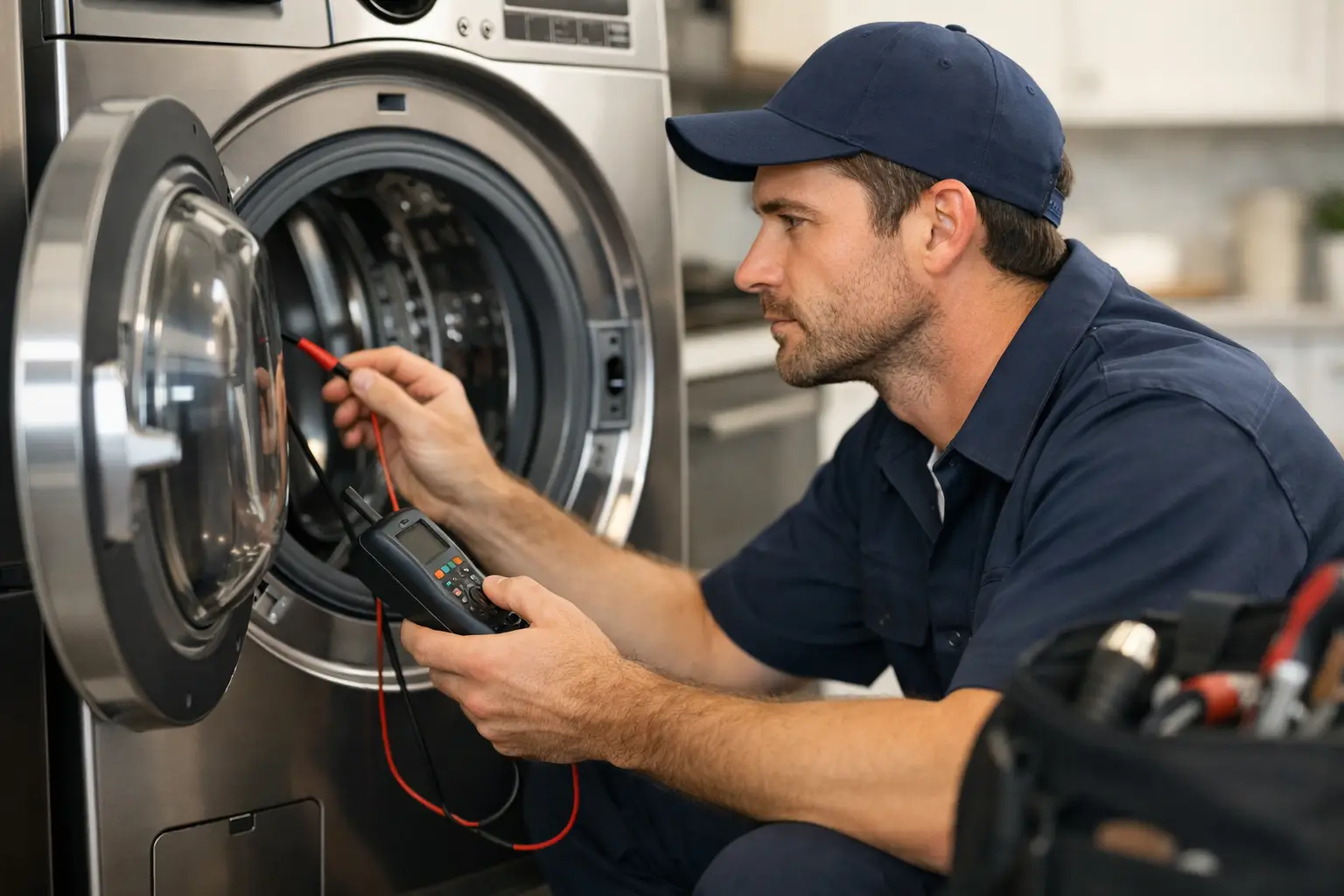
A refrigerator that stops cooling or a washer that will not drain creates a problem that cannot wait. So, what does appliance diagnosis cost? In Orange County, a professional diagnostic visit commonly costs about $79 to $150, although the exact amount depends on the appliance, the service company, location, and timing of the appointment.
That fee is not simply for someone to look at the machine. It covers a trained technician’s trip to your home, time spent testing the appliance, professional tools, and the expertise needed to identify the actual failure. The goal is to replace guesswork with a clear repair recommendation before you spend money on parts or labor.
What Does Appliance Diagnosis Cost at a Typical Service Visit?
Most appliance repair companies charge a service-call or diagnostic fee for an in-home visit. For many standard residential appliances, homeowners can expect a fee in the $79 to $150 range during regular business hours. Some companies charge more for premium appliances, complex built-in units, difficult access, or after-hours emergency service.
The important question is not only the diagnostic fee itself. Ask whether the company applies that fee toward the repair if you approve the work. Many professional repair companies do. When the fee is credited to a completed repair, the diagnostic visit becomes part of the overall service cost rather than a separate expense.
A lower advertised fee can look appealing, but it is worth confirming what is included. A proper diagnosis should involve checking the appliance’s operation, testing relevant components, identifying the likely cause of the failure, and explaining the repair options. A quick visual inspection without testing may not give you a dependable answer.
Why Diagnostic Fees Vary
Appliances do not fail in identical ways, even when the symptom sounds simple. A dishwasher that will not start could have a door-latch issue, failed control board, wiring problem, blown thermal fuse, or power supply concern. Each possibility takes a different amount of testing to confirm.
Several factors can affect the price of appliance diagnosis:
- Appliance type: Refrigerators, built-in ovens, ice makers, and high-end laundry units often require more detailed testing than a basic garbage disposal.
- Brand and model: Premium and smart appliances may use specialized electronics, diagnostic modes, or less accessible components.
- Problem complexity: An obvious broken belt is usually quicker to identify than an intermittent electrical fault or cooling problem.
- Access to the appliance: Built-in refrigerators, stacked washer-dryer units, wall ovens, and appliances installed in tight spaces can require additional time.
- Appointment timing: Same-day, weekend, holiday, and after-hours service can carry a higher rate because of technician availability.
A professional should explain any added cost before proceeding when the job falls outside a standard diagnostic visit. Clear pricing is part of trustworthy service.
Diagnosis Is Different From the Repair Cost
The diagnostic fee tells you what is wrong. The repair quote covers what it will take to fix it.
After the diagnosis, the total repair price may include replacement parts, labor, taxes, and any service fee that is not credited. For example, a dryer that needs a thermal fuse may be a relatively straightforward repair. A refrigerator with a failed compressor, sealed-system leak, or main control board can be substantially more expensive because the parts and labor are more involved.
This distinction matters because no honest technician can provide an exact repair total before testing the appliance. The same symptom can have several possible causes. A washer that will not spin may need a lid switch, drain pump, drive belt, motor, or control board. Giving a guaranteed repair price before identifying the failed part would be speculation.
The best approach is to request a diagnosis first, then review a written estimate before authorizing the repair. You should know what part is being replaced, what the labor charge covers, whether the diagnostic fee is credited, and what warranty applies to the completed work.
When Paying for a Diagnosis Makes Financial Sense
A diagnostic visit is usually worthwhile when the appliance is otherwise in good condition, the issue is recent, and replacement would be inconvenient or expensive. This is especially true for refrigerators, wall ovens, ranges, and higher-quality washers and dryers that may have years of useful life remaining.
Diagnosis can also prevent a costly wrong turn. Replacing a part based on an online symptom search may not resolve the problem. A refrigerator that is warm, for example, is not automatically a compressor failure. It could be related to airflow, a fan motor, defrost components, a sensor, a control issue, or dirty condenser conditions. The right repair begins with confirming the cause.
There are times when repair may not be the best value. If an older appliance has multiple major failures, a very expensive part requirement, or repeated breakdowns, a technician may recommend considering replacement. That recommendation should be based on the actual repair cost, appliance age, expected reliability, and the cost of a comparable new unit – not a one-size-fits-all rule.
For homeowners, the diagnosis provides the information needed to make that decision confidently. Even if you choose not to repair, you avoid buying a replacement based solely on an assumption.
What a Professional Appliance Diagnosis Should Include
A thorough service visit starts with the symptom you have noticed: unusual noise, leaking water, error codes, poor cooling, failure to heat, burning smell, or an appliance that will not power on. The technician should then inspect the unit and perform tests appropriate for that model and issue.
Depending on the appliance, that may include checking electrical connections, water supply, drainage, heating components, thermostats, motors, sensors, switches, fuses, seals, control boards, and error-code history. For refrigeration equipment, testing may also involve airflow, fans, temperature performance, defrost operation, and sealed-system indicators.
Once the cause is identified, the technician should explain the recommended repair in plain terms. You do not need a technical lecture, but you should understand what failed, why it affects the appliance, and what the repair will cost. If a part needs to be ordered, ask about expected availability and whether a return trip is included in the quoted labor.
Questions to Ask Before Scheduling Service
Before booking, ask the company for its current diagnostic fee and whether it is applied to the repair. Confirm whether there are additional charges for your type of appliance, same-day service, or a location outside the company’s normal area.
It is also reasonable to ask about technician qualifications, whether genuine or manufacturer-approved parts are used when available, and what warranty covers the parts and labor. These details matter more than saving a small amount on the initial visit. An incorrect diagnosis or low-quality replacement part can lead to another service call and more disruption at home.
When you call, have the appliance brand, model number, age if known, and a brief description of the problem ready. If there is an error code, write it down exactly. This helps the service company prepare for the appointment and may improve the chance of completing the repair with fewer visits.
The Cost of Waiting Can Be Higher
For some appliance problems, delaying service can increase the final bill. A small refrigerator cooling issue can lead to food loss. A leaking dishwasher or washer can damage flooring, cabinets, or nearby walls. A dryer making a scraping sound may continue to wear internal components until a smaller repair becomes a larger one.
Turn off the appliance and water supply when a leak is active, and stop using any appliance that smells burnt, trips breakers, or produces smoke. Then arrange professional service promptly. Fast action protects your home and gives the technician the best chance of addressing the problem before related damage develops.
For homeowners in Irvine and surrounding Orange County communities, a professional diagnosis offers a practical starting point: a clear explanation, a repair estimate, and a decision based on facts. Prostar Appliance Service provides trained, insured technicians, genuine parts when available, and a 90-day warranty on parts and labor to help restore essential appliances with minimal disruption.