


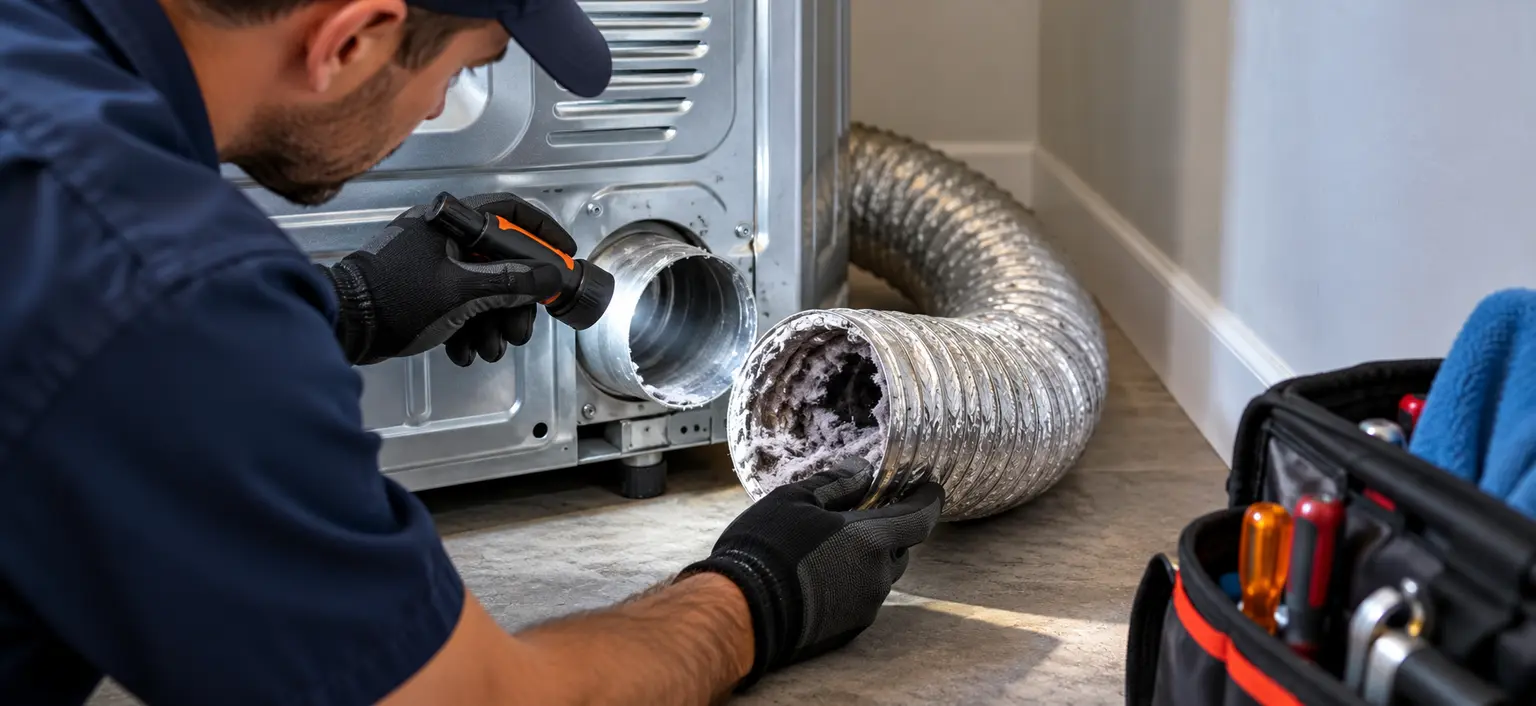
What is the most common problem with dryers? The complaint technicians hear most often is that clothes take too long to dry or come out damp. Sometimes the dryer produces weak heat; sometimes it tumbles normally but does not heat at all. Restricted airflow is a frequent cause, but heating components, sensors, power supply, and worn mechanical parts can create similar symptoms.
Because several failures look alike from the outside, the symptom should be treated as a starting point—not a diagnosis. The safest and most cost-effective repair begins by checking airflow, heat, drum movement, electrical supply, and the dryer’s safety controls together.
The most common dryer complaint: long drying times
A normal load should not require repeated full cycles. When drying time gradually increases, many homeowners assume the machine is simply getting old. In reality, the problem may be restricted airflow from lint buildup, a crushed transition duct, a blocked exterior vent, a weak blower, or an internal obstruction.
Moist air must leave the drum for clothes to dry. When it cannot escape, the dryer may stay hot while the laundry remains damp. The machine runs longer, uses more energy, and exposes heating and safety components to additional stress. Review the signs of dryer vent trouble if the cabinet feels unusually hot or loads need multiple cycles.
Why a dryer runs but does not heat
No heat is another very common dryer problem. In an electric dryer, possible causes include a failed heating element, thermal cutoff, thermostat, wiring connection, or loss of one side of the 240-volt power supply. The drum can still turn even when the circuit needed for heat is incomplete.
In a gas dryer, the igniter, flame sensor, gas valve coils, thermostat, or control circuit may prevent the burner from operating correctly. A dryer that heats briefly and then turns cold may have a different failure from one that never heats. Our guide to why dryers stop heating explains these differences in more detail.
Restricted airflow can damage more than performance
Airflow problems are important because they can create both poor drying and overheating. A dryer is designed to move a steady volume of heated air through the drum and out of the home. When that path is restricted, temperatures can rise until a thermostat cycles excessively or a thermal fuse opens.
Replacing a blown fuse without correcting the airflow problem can lead to another failure. A complete diagnosis should identify why the safety component opened and confirm that the exhaust path is working properly after the repair.
Common dryer noises and what they may mean
Squealing, thumping, scraping, and rumbling are among the next most frequent dryer complaints. Worn drum support rollers can create a repeating thump. A dry or damaged idler pulley may squeal. A worn belt can slip or break, while damaged glides or bearings may cause scraping.
Small objects from pockets can also become trapped near the drum or blower. Noise rarely improves by continuing to run the dryer. If metal is grinding, the drum is moving unevenly, or the sound is quickly getting worse, stop the machine before additional parts are damaged.
Why the dryer will not start
A dryer that appears completely dead may have a power problem, tripped breaker, failed door switch, blown thermal fuse, damaged start switch, wiring fault, motor issue, or control failure. If the display works but the cycle will not begin, the door-locking and start circuits still need to be tested.
Homeowners can safely confirm that the door is fully closed and check the circuit breaker once. Repeatedly resetting a breaker is not a repair. If it trips again, leave the dryer off and schedule service.
Why a dryer stops during the cycle
Intermittent shutdowns may be caused by overheating, restricted ventilation, a motor that fails after warming up, loose wiring, or an electronic control problem. The exact timing is useful information. Tell the technician whether the dryer restarts immediately, restarts only after cooling, or remains completely unresponsive.
A dryer that repeatedly stops because of heat should not be forced through more cycles. Continued use may turn a repairable component problem into broader damage.
Moisture sensors and control problems
Modern dryers use moisture and temperature sensors to adjust cycle length. Dirty sensor bars, damaged wiring, or a control fault can end a cycle too early or keep it running longer than necessary. Before assuming the control board has failed, the technician should verify airflow, temperature, sensor response, and the simpler components in the circuit.
What can a homeowner check safely?
Clean the lint screen after every load and inspect it for waxy residue from dryer sheets. Make sure the dryer is not overloaded and confirm that the exterior vent flap opens strongly while the dryer runs. Check that a flexible transition duct is not crushed behind the machine.
Do not bypass thermal fuses or safety switches, disassemble a gas system, or test live high-voltage circuits without proper training. Burning odors, smoke, sparks, repeated breaker trips, or an excessively hot cabinet require immediate shutdown.
Is the most common dryer problem worth repairing?
Often, yes. Airflow corrections, heating elements, igniters, thermostats, gas coils, belts, rollers, and switches are commonly serviceable failures. The answer depends on the dryer’s age, condition, repair estimate, parts availability, and whether other major problems are developing.
For a complete repair-versus-replacement comparison, read Is It Worth Getting a Dryer Repaired?. A good diagnosis should explain both the immediate failure and the overall condition of the machine.
Get the cause confirmed before replacing parts
The most common dryer problem is poor drying performance, but the underlying cause is not always the same. Testing the full heat-and-airflow system prevents unnecessary part replacement and reduces the chance of a repeat failure.
ProStar Appliance Service provides professional dryer repair in Irvine and Orange County. Completed repairs include a 90-day warranty on installed parts and labor, and the $95 service-call fee is applied toward the completed repair.